

Jeff Schechtman talks with authors, journalists, and thought leaders.
Episodes
Monday May 13, 2013
Monday May 13, 2013
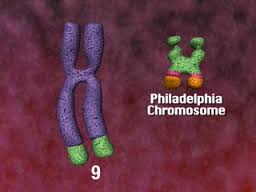 Someday, perhaps 20 or 30 years from now, or maybe even sooner, we will look back at the way we treat most cancers today and be shocked at the barbarism of it all. The surgery, the killer chemicals of chemo, all will be looked at the way we view the leaching of the middle ages.
At the forefront of this transition is a discovery made in 1959. A chromosomal mutation dubbed the Philadelphia Chromosome, that caused a deadly form of leukemia. Ultimately a drug would be developed that stopped the cancer at it’s source.
Science journalist Jessica Wapner has written The Philadelphia Chromosome: A Mutant Gene and the Quest to Cure Cancer at the Genetic Level. It is both the story of 50 years of the march of science on cancer and also a mystery thriller that lifts the veil on how drugs get developed and make it to the marketplace.
My conversation with Jessica Wapner:
Someday, perhaps 20 or 30 years from now, or maybe even sooner, we will look back at the way we treat most cancers today and be shocked at the barbarism of it all. The surgery, the killer chemicals of chemo, all will be looked at the way we view the leaching of the middle ages.
At the forefront of this transition is a discovery made in 1959. A chromosomal mutation dubbed the Philadelphia Chromosome, that caused a deadly form of leukemia. Ultimately a drug would be developed that stopped the cancer at it’s source.
Science journalist Jessica Wapner has written The Philadelphia Chromosome: A Mutant Gene and the Quest to Cure Cancer at the Genetic Level. It is both the story of 50 years of the march of science on cancer and also a mystery thriller that lifts the veil on how drugs get developed and make it to the marketplace.
My conversation with Jessica Wapner:
Saturday May 11, 2013
Saturday May 11, 2013
 We face a vast array of global problems. Not the least of which is our environment and the way in which the expanding western industrial model of abundance, seems certain to geometrically grow these problems.
Many think that somewhere, in some abstract way, technology will help of solve these problems. But perhaps the same industrial system that created the problems, is not the place to start looking for solutions. In short, it seems we can’t fix the problems of industrial technology with the same tools that created them.
That’s where the work of K. Eric Drexler comes in. In his new book Radical Abundance: How a Revolution in Nanotechnology Will Change Civilization,
My conversation with K. Eric Drexler:
Thursday May 09, 2013
Thursday May 09, 2013
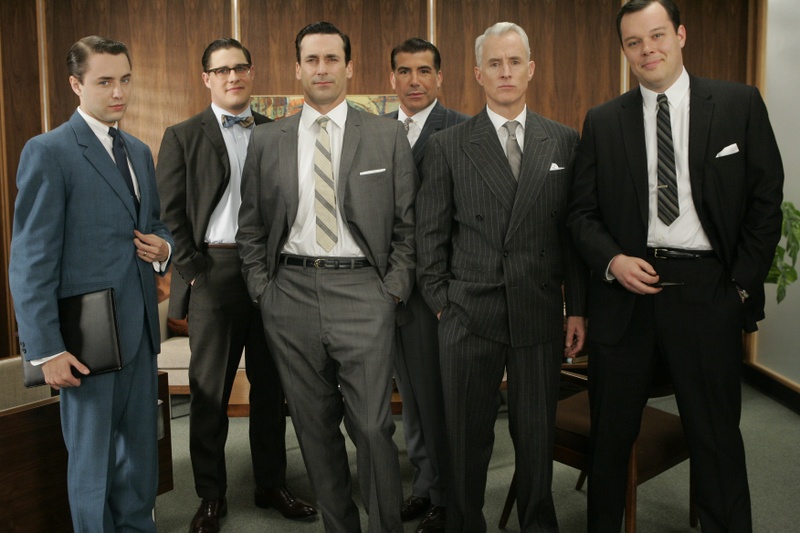 On the surface, it seems that the men of Mad Men have it all. Great jobs, lots of money, smart attractives wives and families, even more attractive mistresses and, as long as the paychecks keep coming, unlimited freedom.
But is it possible these men represented the one percent of their day? And that the paradigm and expectations they set up, men with power and money, created a set of responsibilities that made it hard for other men to live up to? And how did this play out against the rising tide of 60’s feminism? Was the landscape for men portrayed by Matthew Weiner and Richard Yates and Cheever and Updike, one that, in the long run, had a very negative impact on the men of the Greatest Generation?
These are just some of the questions and ideas taken up by author and cultural seer Susan Jacoby. The author of The Age of American Unreason, Freethinkers as well as books about Alger Hiss and Robert Ingersoll, she has now written a new ebook entitled The Last Men on Top.
My conversation with Susan Jacoby:
On the surface, it seems that the men of Mad Men have it all. Great jobs, lots of money, smart attractives wives and families, even more attractive mistresses and, as long as the paychecks keep coming, unlimited freedom.
But is it possible these men represented the one percent of their day? And that the paradigm and expectations they set up, men with power and money, created a set of responsibilities that made it hard for other men to live up to? And how did this play out against the rising tide of 60’s feminism? Was the landscape for men portrayed by Matthew Weiner and Richard Yates and Cheever and Updike, one that, in the long run, had a very negative impact on the men of the Greatest Generation?
These are just some of the questions and ideas taken up by author and cultural seer Susan Jacoby. The author of The Age of American Unreason, Freethinkers as well as books about Alger Hiss and Robert Ingersoll, she has now written a new ebook entitled The Last Men on Top.
My conversation with Susan Jacoby:
Tuesday May 07, 2013
Tuesday May 07, 2013

Monday May 06, 2013
Monday May 06, 2013
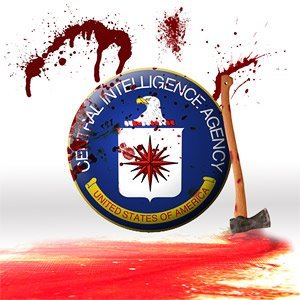 We all grew up with our own impressions of what covert actions were all about. John le Carre talked about the moral twilight in which these activities operated. But never has that line between military, espionage and covert actions been more blurred than it is today. From 9/11 to the bin Laden raid, the CIA has been front and center as the agency of first resort, to carry out difficult and controversial missions.
Now Pulitzer Prize winning journalist Mark Mazzetti lays bear much of this activity in The Way of the Knife: The CIA, a Secret Army, and a War at the Ends of the Earth
We all grew up with our own impressions of what covert actions were all about. John le Carre talked about the moral twilight in which these activities operated. But never has that line between military, espionage and covert actions been more blurred than it is today. From 9/11 to the bin Laden raid, the CIA has been front and center as the agency of first resort, to carry out difficult and controversial missions.
Now Pulitzer Prize winning journalist Mark Mazzetti lays bear much of this activity in The Way of the Knife: The CIA, a Secret Army, and a War at the Ends of the Earth
Sunday May 05, 2013
Sunday May 05, 2013

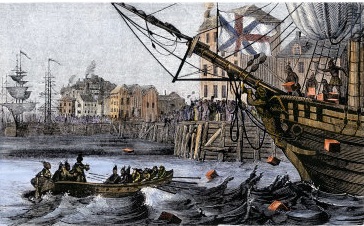 For the past several week all eyes have been on Boston. In some ways it’s a good reminder of the important role that city has played in our nation's history. Boston is the fulcrum from which the revolution was launched.
Now, bestselling author Nathaniel Philbrick, author of In The Heart of the Sea and Mayflower, tells the story of Bunker Hill: A City, a Siege, a Revolution
For the past several week all eyes have been on Boston. In some ways it’s a good reminder of the important role that city has played in our nation's history. Boston is the fulcrum from which the revolution was launched.
Now, bestselling author Nathaniel Philbrick, author of In The Heart of the Sea and Mayflower, tells the story of Bunker Hill: A City, a Siege, a Revolution
Thursday May 02, 2013
Thursday May 02, 2013
 Suppose we found out that most of what we know about history and what shapes it, is wrong. That the traditional manichean world view, that history only marched forward on the feet of soldiers, is not the whole story.
In fact we didn’t get to our globalized, 21st century world via the battlefield, but through cooperation and a sense of our shared humanity. This is the view of distinguished historian David Cannadine, as laid out in his new work, The Undivided Past: Humanity Beyond Our Differences
Suppose we found out that most of what we know about history and what shapes it, is wrong. That the traditional manichean world view, that history only marched forward on the feet of soldiers, is not the whole story.
In fact we didn’t get to our globalized, 21st century world via the battlefield, but through cooperation and a sense of our shared humanity. This is the view of distinguished historian David Cannadine, as laid out in his new work, The Undivided Past: Humanity Beyond Our Differences
Wednesday May 01, 2013
Wednesday May 01, 2013
.gif) There is an old saying that says that if the only tool you have is a hammer, you tend to treat every problem as if it is a nail. So too for American policy in the Arab world. If every problem looks like an existential threat, then perhaps it’s because we often see the military as the only tool we have.
In fact, as Bill Clinton famously said, “it’s the economy stupid.” Perhaps if we found new ways to deal with the Middle East in terms of its economics, its desire for goods, jobs for the 60% of it’s population under 30, we’d have a better outcome.
Few know the region better than two time Pulitzer Prize winning journalist David Rohde. He lays out his ideas in Beyond War: Reimagining American Influence in a New Middle East
There is an old saying that says that if the only tool you have is a hammer, you tend to treat every problem as if it is a nail. So too for American policy in the Arab world. If every problem looks like an existential threat, then perhaps it’s because we often see the military as the only tool we have.
In fact, as Bill Clinton famously said, “it’s the economy stupid.” Perhaps if we found new ways to deal with the Middle East in terms of its economics, its desire for goods, jobs for the 60% of it’s population under 30, we’d have a better outcome.
Few know the region better than two time Pulitzer Prize winning journalist David Rohde. He lays out his ideas in Beyond War: Reimagining American Influence in a New Middle East
Wednesday May 01, 2013
Wednesday May 01, 2013
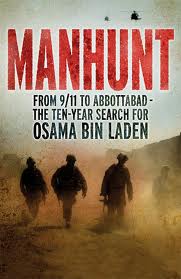 The events of Sept. 11, 2001, would set off the ten year search for Osama bin Laden. That manhunt would end exactly two years ago today, on May 1st, 2011. In between, was one of the greatest detective stories of our time.

My conversation with Peter Bergen:
Tuesday Apr 30, 2013
Tuesday Apr 30, 2013
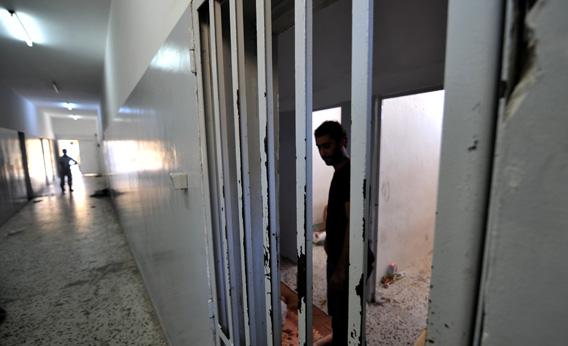 One of the consequences of the vast numbers of men we incarcerate in America is that over 700,000 people each year are being released from prisons. Many have served long sentences and are woefully unprepared to integrate back into society. Especially a society that has little willingness to receive them.
As changes in society come more rapidly, its harder and harder for these individuals to adjust. The result is often increased rates of recidivism, and a revolving door into the prison/industrial complex.
Sabine Heinlein has taken both a micro and macro look the public policy consequences of this behavior. Her new book is Among Murderers: Life after Prison
My conversation with Sabine Heinlein:
Tuesday Apr 30, 2013
Tuesday Apr 30, 2013
 When we look at a photograph or a piece of art there are usually two imaginations at work. The artist or photographer, and the viewer whose interpretation gives the work life, energy and meaning.
Author and filmmaker Marisa Silver has taken a single, iconic photograph, the “Migrant Mother” by Dorothea Lange, as her inspiration for her own story and her own reinterpretation. It now allows all of us, to bring our own imagination and understanding to her novel, Mary Coin
When we look at a photograph or a piece of art there are usually two imaginations at work. The artist or photographer, and the viewer whose interpretation gives the work life, energy and meaning.
Author and filmmaker Marisa Silver has taken a single, iconic photograph, the “Migrant Mother” by Dorothea Lange, as her inspiration for her own story and her own reinterpretation. It now allows all of us, to bring our own imagination and understanding to her novel, Mary Coin
Monday Apr 29, 2013
Monday Apr 29, 2013
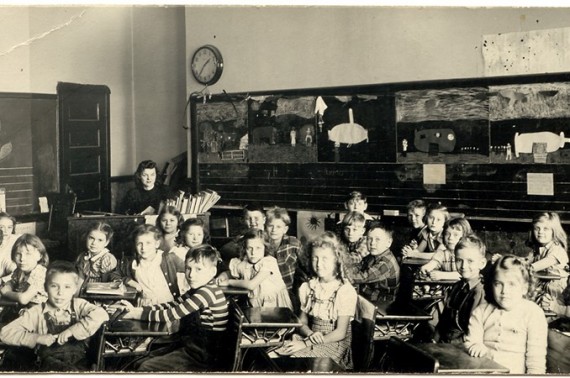 There is an apocryphal story about the state of education, which tells the tale of a man who falls asleep, ala Rip Van Winkle, 100 years ago. He wakes up today and is totally disoriented. Everything is new and different. Transportation, technology, design, fashion, entertainment....then he stumbles into a school, into a 21st century classroom and suddenly he feels calm, at home....because, well because almost nothing has changed.
Some would argue that this is part of the problem of education today. Others would argue for the value of those fundamentals; that we’ve long had many of the right ideas, but that we just needed to execute them
better.
This is where we join the conversation with UC Berkley Professor and education expert, David Kirp and his latest work Improbable Scholars: The Rebirth of a Great American School System and a Strategy for America's Schools
My conversation with David Kirp:

Wednesday Apr 24, 2013
Wednesday Apr 24, 2013
 In the world of extreme right wing rhetoric, particularly on the subject of immigration, it often seems that the practitioners are always upping the ante in order to get attention. Listen to any hour of talk radio and you get the idea. However, what happens when that rhetoric gets out of control. When the listeners, particularly those that are scared, marginalized or worse yet, psychotic, become easy pray to act on that rhetoric and take matters into their own hands?
Over the years we’ve seen many examples of this, and unfortunately a lot of them, for various reasons, seem to take place in Arizona.
Dave Neiwert, the founding editor of the blog Crooks and Liars, takes us inside one such group of extremists in And Hell Followed With Her: Crossing the Dark Side of the American Border
My conversation with Dave Neiwert:
Wednesday Apr 24, 2013
Wednesday Apr 24, 2013
 Wherever we live, we all, to some extent live in Hollywood. We are shaped and influenced by its messages, its ideas and by connection, to it’s people. Perhaps by having a better understanding of the people that populate and drive that community, we might better understand our culture.
A good place to start that process is a new novel by Matthew Specktor entitled American Dream Machine
My conversation with Matthew Specktor:

Monday Apr 22, 2013
Monday Apr 22, 2013
The book catapulted David Sheff into becoming one of the country's most prominent and sane voices on addiction — not as a doctor, an addict or an academic, but as a father with real world experience. Now he takes a broader view of what we, as a society, are doing right and wrong in dealing with the still growing rates of addiction in this country. His new book is Clean: Overcoming Addiction and Ending America's Greatest Tragedy
 .
.My conversation with David Sheff
Monday Apr 22, 2013
Monday Apr 22, 2013
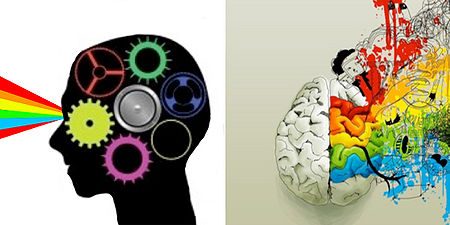 Every hour, 72 more hours of video are uploaded onto Youtube. The moving image has become the literature of our time. Perhaps not since the development of moveable type has the context of our world and our understanding of it, changed so dramatically.
But what do we really know and understand about the “grammar” and the structure of visual communication? How are stories and our appreciation of them, different when we watch them, as opposed to reading them?
How will this new realm of visual literacy shape our children and how they see and set out to change the world?
These are some of the issues examined by Stephen Apkon, the Founder and Executive Director of The Jacob Burns Film Center, in his book The Age of the Image: Redefining Literacy in a World of Screens
My conversation with Stephen Apkon:
Sunday Apr 21, 2013
Sunday Apr 21, 2013
,_work_as_a_team_i.jpg) Some of our soldiers have come back from the wars in Iraq and Afghanistan missing arms and legs. We’ve heard about the phantom pain that often accompanies those losses. The feeling of pain in a limb that is no longer there. In many ways the same is true for mental anguish. For the mind also feels pain. Where once normal life occupied a space, now for many who have long since left the war zone, the psychological pain is all consuming and fills that once peaceful space.
This is part of the story of Brian Castner. Brian Castner served three tours of duty in the Middle East, two of them in Iraq as the head of the Explosive Ordinance Disposal Unit. He’s written about his difficult experiences returning home, in his book The Long Walk: A Story of War and the Life That Follows
Some of our soldiers have come back from the wars in Iraq and Afghanistan missing arms and legs. We’ve heard about the phantom pain that often accompanies those losses. The feeling of pain in a limb that is no longer there. In many ways the same is true for mental anguish. For the mind also feels pain. Where once normal life occupied a space, now for many who have long since left the war zone, the psychological pain is all consuming and fills that once peaceful space.
This is part of the story of Brian Castner. Brian Castner served three tours of duty in the Middle East, two of them in Iraq as the head of the Explosive Ordinance Disposal Unit. He’s written about his difficult experiences returning home, in his book The Long Walk: A Story of War and the Life That Follows
Thursday Apr 18, 2013
Thursday Apr 18, 2013
 We baby boomers are aging. With all the talk about health care and retirement and 401k's and endless mail from the AARP, the one subject that seems to get skipped, is what it will be like being a grandparent.
We’ve spent so many years doting on and protecting and encouraging our own children, we almost forget that we get to do it again, sort of, with our grandkids.
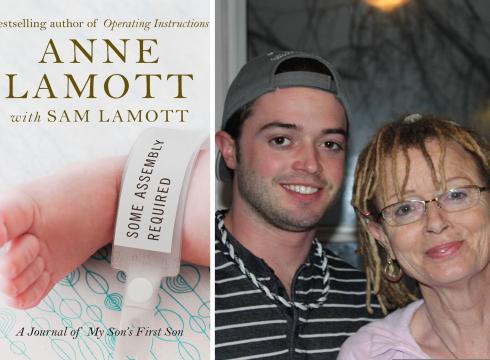
Fortunately for those of us that do forget, we have Anne Lamott to remind us. Always a powerful and soothing voice for her generation, Anne Lamott, in her new book Some Assembly Required: A Journal of My Son's First Son, takes us on the new and unexpected chapter in her life, her own grandmotherhood.
My conversation with Anne Lamott:
Tuesday Apr 16, 2013
Tuesday Apr 16, 2013
 1989 New York was a time in which social systems were breaking down. The crime rate was peaking, crack was a serious epidemic, racial animus was strong and it was safer for black and latino teenagers to hang out in Central Park, than to hang out on the mean streets of their own neighborhoods.
Amidst this atmosphere the body of a white woman was found in the park; beaten, raped and left for dead.
This is the backdrop for what would become one of New York and the country's most infamous crimes, what was dubbed at the time as the Central Park jogger. Sarah Burns has written The Central Park Five: The Untold Story Behind One of New York City's Most Infamous Crimes
1989 New York was a time in which social systems were breaking down. The crime rate was peaking, crack was a serious epidemic, racial animus was strong and it was safer for black and latino teenagers to hang out in Central Park, than to hang out on the mean streets of their own neighborhoods.
Amidst this atmosphere the body of a white woman was found in the park; beaten, raped and left for dead.
This is the backdrop for what would become one of New York and the country's most infamous crimes, what was dubbed at the time as the Central Park jogger. Sarah Burns has written The Central Park Five: The Untold Story Behind One of New York City's Most Infamous Crimes
Saturday Apr 13, 2013
Saturday Apr 13, 2013
 One of the all too many problems with education today, is its relentless focus on what kids can’t do, as opposed to what they do well. This is particularly profound when it come to children with special needs.
If we need evidence of this, we need look no further than the story of Kristine Barnett and her son Jacob. At age two experts said Jacob would never be able to tie his shoes. Today at 14 he’s pursuing a PhD in physics.
Unfortunately, changing the system is not enough. It takes a mother deeply committed, not only to her son, but to turning the old paradigms on their head, and not caring whose proverbial apple cart she turns over. She tells her story and Jacob’s story in The Spark: A Mother's Story of Nurturing Genius
One of the all too many problems with education today, is its relentless focus on what kids can’t do, as opposed to what they do well. This is particularly profound when it come to children with special needs.
If we need evidence of this, we need look no further than the story of Kristine Barnett and her son Jacob. At age two experts said Jacob would never be able to tie his shoes. Today at 14 he’s pursuing a PhD in physics.
Unfortunately, changing the system is not enough. It takes a mother deeply committed, not only to her son, but to turning the old paradigms on their head, and not caring whose proverbial apple cart she turns over. She tells her story and Jacob’s story in The Spark: A Mother's Story of Nurturing Genius
Saturday Apr 13, 2013
Saturday Apr 13, 2013
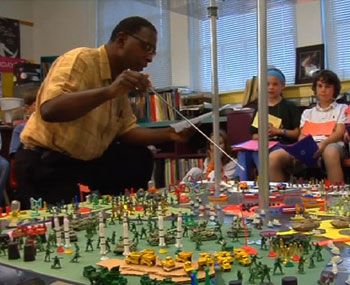 Amidst all the talk about the importance of education, and all the endless debates about public policy, we often forget that at the heart of the debate, is what it means to be a teacher and the awesome power and responsibility that comes with that job.
Imagine a teacher who does not lecture, but leads; who teaches world peace by studying war; who respects students enough to instill in them the confidence to make the world anew...even while still in the 4th grade.
This has been the work of John Hunter. John is a teacher and musician and the inventor of the World Peace Game. He is the star of the new documentary and author of the new book World Peace and Other 4th-Grade Achievements
My conversation with John Hunter:

Wednesday Apr 10, 2013
Wednesday Apr 10, 2013

If we understand this, if our legislators understand this, then perhaps we can undertake to redefine modern copyright and envision useful legislation and protection for the 21st Century.
Alex Sayf Cummings, at Georgia Sate University, has been looking at this issues and examines its past, present and future in Democracy of Sound: Music Piracy and the Remaking of American Copyright in the Twentieth Century
 .
.My conversation with Alex Sayf Cummings:
Tuesday Apr 09, 2013
Tuesday Apr 09, 2013
 In November of 2011, a British businessman by the name of Neil Heywood was found dead in a hotel room in China. The reverberations of that death would reveal both deep and systemic corruption as well as surprising layers of conflict within the Chinese Communist Party.
It’s a human story of lust and greed, that also gives us some unique insights into a society and a political system, often cloaked in enigma and mystery.
Chinese writer, journalist and translator Wenguang Huang, in his book A Death in the Lucky Holiday Hotel: Murder, Money, and an Epic Power Struggle in China,
In November of 2011, a British businessman by the name of Neil Heywood was found dead in a hotel room in China. The reverberations of that death would reveal both deep and systemic corruption as well as surprising layers of conflict within the Chinese Communist Party.
It’s a human story of lust and greed, that also gives us some unique insights into a society and a political system, often cloaked in enigma and mystery.
Chinese writer, journalist and translator Wenguang Huang, in his book A Death in the Lucky Holiday Hotel: Murder, Money, and an Epic Power Struggle in China,
Monday Apr 08, 2013
Monday Apr 08, 2013
 Just as the politics our our time, often makes it difficult for science to find its way, so too was this the case in Victorian times. No where is this more in evidence than in the adventurers of a young man who would emerge from the jungles of Africa with evidence of great mysteries. Mysteries that would be co opted by one of the greatest scientific debates of the time; the arguments about evolution.
This the the story that former Washington Post reporter Monte Reel lays out in Between Man and Beast: An Unlikely Explorer, the Evolution Debates, and the African Adventure that Took the Victorian World by Storm
Just as the politics our our time, often makes it difficult for science to find its way, so too was this the case in Victorian times. No where is this more in evidence than in the adventurers of a young man who would emerge from the jungles of Africa with evidence of great mysteries. Mysteries that would be co opted by one of the greatest scientific debates of the time; the arguments about evolution.
This the the story that former Washington Post reporter Monte Reel lays out in Between Man and Beast: An Unlikely Explorer, the Evolution Debates, and the African Adventure that Took the Victorian World by Storm
Saturday Apr 06, 2013
Saturday Apr 06, 2013
 The great French novelist Andre Malraux once wrote that “man is not what he thinks he is, he is what he hides.” Certainly the secrets we all keep as individuals and as families place a heavy burden on us. Too often we think we are keeping secrets, when all we really are doing is hiding truth them from ourselves.
For a long time this was Michael Hainey story, as he knew that someday he had to find out what really happened with respect to his fathers death. He was only six at the time, by years later he would know that something was not right about what he had been told. As he approached his fathers age, when he died, he would work hard to uncover that secret and in so doing free himself, his mother and his brother.He lays out his story in this memoir After Visiting Friends: A Son's Story.

Friday Apr 05, 2013
Friday Apr 05, 2013

Thursday Apr 04, 2013
Thursday Apr 04, 2013
 We are always talking about how some area of our lives has been changed by creative destruction. We know that it’s widespread and impactful. In fact, even dictators today have felt the results of this creative destruction.
It’s much harder and more complex to be a dictator today. Dictatorships have had to become more sophisticated and savvy. Brutal repression has been largely replaced with subtle coercion. But at the same time, the individuals challenging dictatorships have also evolved. And while popular movements may seem spontaneous and romantic, they are in reality very strategic and organized, sometimes for years before we pay any attention.
Journalist William Dobson, foreign affairs editor of Slate and a former editor at Foreign Affairs, Newsweek International and Foreign Policy, has been looking deeply into these changes. He argues in his book The Dictator's Learning Curve: Inside the Global Battle for Democracy,
We are always talking about how some area of our lives has been changed by creative destruction. We know that it’s widespread and impactful. In fact, even dictators today have felt the results of this creative destruction.
It’s much harder and more complex to be a dictator today. Dictatorships have had to become more sophisticated and savvy. Brutal repression has been largely replaced with subtle coercion. But at the same time, the individuals challenging dictatorships have also evolved. And while popular movements may seem spontaneous and romantic, they are in reality very strategic and organized, sometimes for years before we pay any attention.
Journalist William Dobson, foreign affairs editor of Slate and a former editor at Foreign Affairs, Newsweek International and Foreign Policy, has been looking deeply into these changes. He argues in his book The Dictator's Learning Curve: Inside the Global Battle for Democracy,
Wednesday Apr 03, 2013
Wednesday Apr 03, 2013
 Families are a little like snowflakes. No two are exactly alike. That’s why it often seems so ridiculous that so many people think they know what is best for families. The strict structure of the Chinese, the laissez faire of the French, the coolness of the British...all work and all don’t. It seems no one really has the magic formula. Therefore, maybe a little common sense is a good idea.
That's what best selling author Bruce Feiler set out to discover. He set out on a three-year journey to find the smartest ideas, cutting-edge research, and novel solutions to make his family happier. Instead of the usual psychologists and family “experts,” he sought out the most creative minds from Silicon Valley to top negotiators at Harvard. Feiler then tested these ideas with his own wife and kids and writes about it in The Secrets of Happy Families: Improve Your Mornings, Rethink Family Dinner, Fight Smarter, Go Out and Play, and Much More
My conversation with Bruce Feiler:
Wednesday Apr 03, 2013
Wednesday Apr 03, 2013
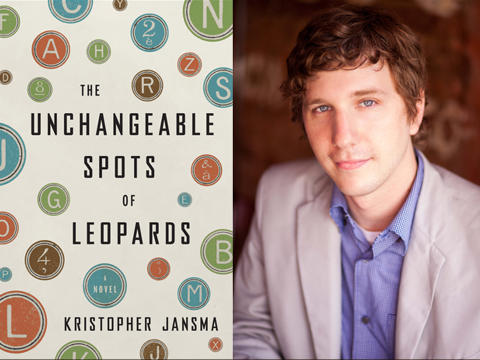 We’ve talked often about the obligations and responsibilities of memoir and the way in which our memory, more than our truth, shapes our past. Imagine if fiction took on this confusion. If even in the context of fiction, we would lose sight of the truth, in favor of memory, experience and peer pressure. That's some of the backdrop for a new novel, The Unchangeable Spots of Leopards, by Kristopher Jansma.
My conversation with Kristopher Jansma:
We’ve talked often about the obligations and responsibilities of memoir and the way in which our memory, more than our truth, shapes our past. Imagine if fiction took on this confusion. If even in the context of fiction, we would lose sight of the truth, in favor of memory, experience and peer pressure. That's some of the backdrop for a new novel, The Unchangeable Spots of Leopards, by Kristopher Jansma.
My conversation with Kristopher Jansma:
Tuesday Apr 02, 2013
Tuesday Apr 02, 2013
 Why do certain products and ideas become so popular? Why are some stories and rumors more infectious than others, and what makes some online content go viral?
These are just a few of the questions that Wharton marketing professor Jonah Berger takes up in his new book Contagious: Why Things Catch On
Berger has spent 10 years studying social influence and according to Berger, the key to making things really popular happens long before it’s discussed at the water cooler, or “liked” online. It starts with the message.
My conversation with Jonah Berger:
Sunday Mar 31, 2013
Sunday Mar 31, 2013
 The song says "money can’t buy me love." But we know that’s not really true. The fact is, the same market forces that drive our economy, also drive our search for sex and love. Issues like abundance, scarcity, the price of commodities...like beer, all contribute to who we choose and the success and failure of those relationships.
In 2008 Marina Adshade launched an undergraduate course, at the University of British Columbia, titled Economics of Sex and Love, which invited her students to approach questions of sex and love through an economist's lens. The class was an immediate hit with students and, by the time the first term started, had generated international media attention. Now the book, Dollars and Sex.
My conversation with Marina Adshade:

Saturday Mar 30, 2013
Saturday Mar 30, 2013
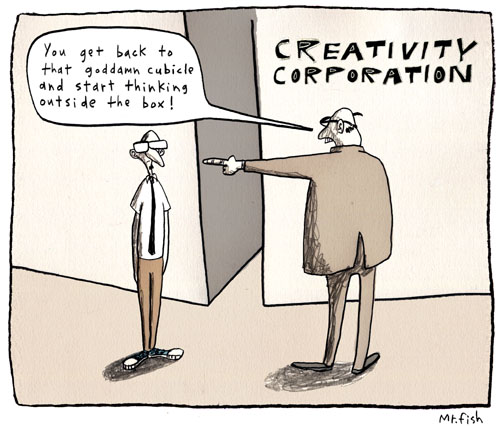 No one questions that we are going through a period of dramatic change. The world, the nature of work and relationships are changing faster than at any other time in human history. Succeeding and managing in this environment, will require a degree of nimbleness and creativity in order to sustain or create any economic value.
But how creative are we, and do the old paradigms of education, work and leisure allow us to foster and bring out that creativity? Bruce Nussbaum, a Professor of Innovation and Design at Parsons The New School of Design in New York City, and a former Managing Editor at BusinessWeek thinks we have to reset our approach to creativity. He outlines it in Creative Intelligence: Harnessing the Power to Create, Connect, and Inspire
My conversation with Bruce Nussbaum:
Wednesday Mar 27, 2013
Wednesday Mar 27, 2013
 Forty plus years ago, in Vietnam, we saw how the best and the brightest could ignore history, ignore truths and facts and conduct one of our nation's most disastrous wars.
Ten years ago this month, we saw how lies, inept personnel and poor and corrupt execution destroyed any hope of success in Iraq. These decisions still plague us today.
Four years ago, back into 2009, we thought that the Obama administration was fighting "The Good War," when it decided to surge US troops and civilians in Afghanistan. Yet again, we ignored history, didn’t send the best personnel, engaged in bureaucratic infighting and thought money could buy our way out. It did not.
Why do we keep making these same mistakes? Is it that the fault is not in stars, but in ourselves? These are some of the issues examined by esteemed and award winning journalist Rajiv Chandrasekaran in his book Little America: The War Within the War for Afghanistan.
My conversation with Rajiv Chandrasekaran:
Forty plus years ago, in Vietnam, we saw how the best and the brightest could ignore history, ignore truths and facts and conduct one of our nation's most disastrous wars.
Ten years ago this month, we saw how lies, inept personnel and poor and corrupt execution destroyed any hope of success in Iraq. These decisions still plague us today.
Four years ago, back into 2009, we thought that the Obama administration was fighting "The Good War," when it decided to surge US troops and civilians in Afghanistan. Yet again, we ignored history, didn’t send the best personnel, engaged in bureaucratic infighting and thought money could buy our way out. It did not.
Why do we keep making these same mistakes? Is it that the fault is not in stars, but in ourselves? These are some of the issues examined by esteemed and award winning journalist Rajiv Chandrasekaran in his book Little America: The War Within the War for Afghanistan.
My conversation with Rajiv Chandrasekaran:Thursday Mar 21, 2013
Thursday Mar 21, 2013
 All the talk about drones lately seems to miss the larger point. What compels us, what disturbs us, is the sanitized way in which we conduct warfare today. The disconnect from death, violence and the human suffering that is war.
Kurtz understood war by journeying into its Heart of Darkness. Today, it’s from 30,000 feet. It’s a different view of war. It’s also a metaphor for how we as Americans have witnessed the wars in Iraq and Afghanistan. In neat, pre-packaged sound bites. Disconnected from combat, body counts and the horror.
Now, ten years after the start of these wars, were beginning to hear the real stories of what went on, from the men and women who were there.
Matt Gallagher and Roy Scranton, two veterans of the wars, have written for and edited a new collection of stories entitled Fire and Forget: Short Stories from the Long War
My conversation with Roy Scranton and Matt Gallagher:
Tuesday Mar 19, 2013
Tuesday Mar 19, 2013

Tuesday Mar 19, 2013
Tuesday Mar 19, 2013
 We live in a culture where victimhood is too often embraced. Usually, because we seem to lack internal motivation, we look to it to galvanize our actions. Buy why is this culture of victimhood so pervasive now?
Perhaps it springs from the early Christian myth of martyrdom, and the degree to which that Christian mythology and those who subscribe to it, are trying to shape our politics and our culture. This is the heart of a provocative new book, The Myth of Persecution: How Early Christians Invented a Story of Martyrdom
My conversation with Candida Moss:
Saturday Mar 16, 2013
Saturday Mar 16, 2013
 We know that companies like Amazon have vast amounts of data on our purchases and that they use it in order to recommend other products to us; just as Netflix can recommend our movies. But imagine aggregating millions of pieces of medical data, all with their genomic information, so that our generic profile can, with a high degree of probability, tell us what diseases we might get and how to treat them. Think about how Google was able to head off a worldwide flu pandemic by aggregating vast amount of search data about flu.
This is the kind of data that can tell when we will be sick, even before we know it; or when our car will need service, even before it breaks down. Or, as in the movie Minority Report, data that can predict who will be a criminal, even before the crime is committed. These are just a few of thing we should be thinking about with respect to what’s referred to today as big data.
Ken Cukier is the data editor of the Economist and takes a look at these issues in Big Data: A Revolution That Will Transform How We Live, Work, and Think
We know that companies like Amazon have vast amounts of data on our purchases and that they use it in order to recommend other products to us; just as Netflix can recommend our movies. But imagine aggregating millions of pieces of medical data, all with their genomic information, so that our generic profile can, with a high degree of probability, tell us what diseases we might get and how to treat them. Think about how Google was able to head off a worldwide flu pandemic by aggregating vast amount of search data about flu.
This is the kind of data that can tell when we will be sick, even before we know it; or when our car will need service, even before it breaks down. Or, as in the movie Minority Report, data that can predict who will be a criminal, even before the crime is committed. These are just a few of thing we should be thinking about with respect to what’s referred to today as big data.
Ken Cukier is the data editor of the Economist and takes a look at these issues in Big Data: A Revolution That Will Transform How We Live, Work, and Think
Friday Mar 15, 2013
Friday Mar 15, 2013
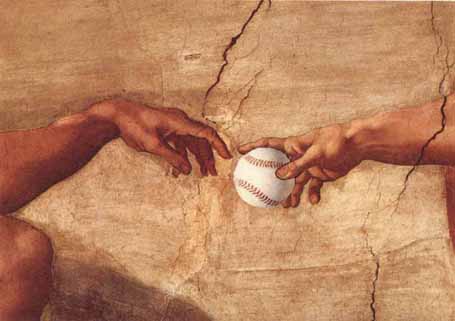 This past week saw the pageantry of religion in the selection of a new Pope. Next month we will experience a different kind of pageantry, as the baseball season opens and for many it will be a kind of religious experience in its own right.
Long the national pastime, baseball has a special place in the pantheon of sports and entertainment. But with all of the competition these days, does baseball still have the same kind of appeal? Has it’s superstitions, streaks, luck, and it’s sense of “you gotta believe," been flattened by metrics? Has William James been replaced by Bill James, and has the inspiration fostered by a father and son praying at the altar of driveway catch, given way to Nate Silver and Billy Bean?
This is part of the story told by controversial NYU President John Sexton in Baseball as a Road to God: Seeing Beyond the Game. 
My conversation with John Sexton:
Thursday Mar 14, 2013
Thursday Mar 14, 2013
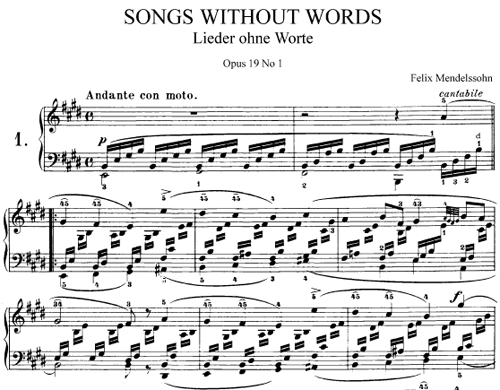 Remember, as a kid, playing the old game of telephone? Someone says something, and passes it on. After it goes through 5, 6 or more people, it often comes out very different on the other end. Well imagine if everything you heard had to go through that kind of process.
That’s just part of what Gerald Shea went though; dealing with partial deafness since he was six. He still managed to sing, play football and get through Andover, Yale and Columbia Law.
Gerald Shea has written about his experience in Song Without Words: Discovering My Deafness Halfway through Life.
My conversation with Gerald Shea:
Wednesday Mar 13, 2013
Wednesday Mar 13, 2013

 :
: