
Jeff Schechtman talks with authors, journalists, and thought leaders.
Episodes
Jan 27, 2012
Jan 27, 2012
19 min
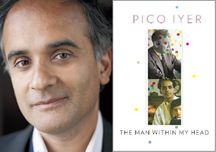
 he shares with us his own internal journey of a life lived not behind a screen, but in the real world, interfacing with real people and real experience. My conversation with Pico Iyer:
Jan 26, 2012
Jan 26, 2012
26 min
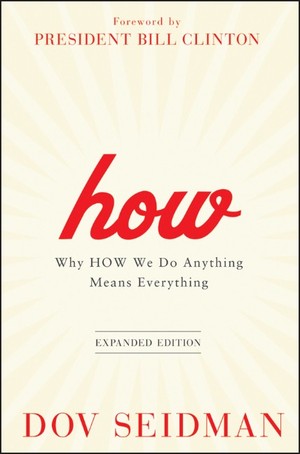
 , argues that "our world is being dramatically reshaped. The rules of the past no longer apply. In the 21st century, it's no longer what you do that matters most but how you do it." My conversation with Dov Seidman:
Jan 25, 2012
Jan 25, 2012
20 min
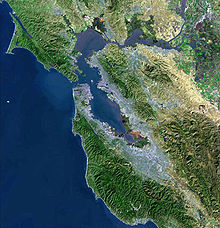 San Francisco Bay is a remarkably resilient body of water. In spite of the urbanization and cosmopolitan life of the 46 cities that surround it, the ethos of the Bay Area continues to make sure that the environmental restoration is ongoing. Ariel Rubissow Okamoto's book Natural History of San Francisco Bay takes us on a tour of this remarkable body of water.
Jan 23, 2012
Jan 23, 2012
30 min
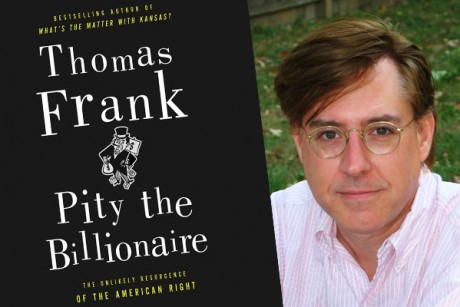 Just as we often use living viruses to cure disease, so the Right argues that the cure for financial crises, environmental degradation, minimal national investment and no energy policy is less of all of them. The idea, which the country bought into in 2010, is that only by less regulation, more crony capitalism and more rewards for the economies winner, can we solve the problems of the average American. Sounds like Alice in Wonderland, but it's the basis of the platform of this years Republican candidates. Thomas Frank, bestselling author of "What's the Matter with Kansas," explains what's going on in his new book Pity the Billionaire: The Hard-Times Swindle and the Unlikely Comeback of the Right
Jan 19, 2012
Jan 19, 2012
27 min
 . My conversation with Connie Rice:
Jan 18, 2012
Jan 18, 2012
21 min
 . My conversation with William Shawcross:
Jan 16, 2012
Jan 16, 2012
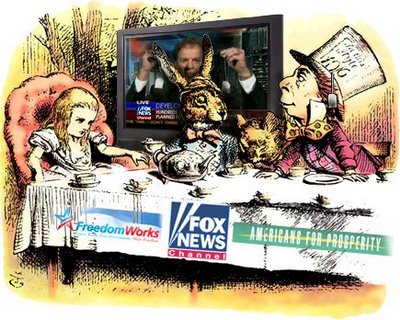
 .My conversation with Theda Skocpol:
Jan 12, 2012
Jan 12, 2012
32 min
If nothing else is clear about this years Presidential election, it’s certain that not only our economy, but our current forms of capitalism are going to be on trial. From the early rhetoric of the campaign, to the Occupy and Tea Party movements; the success of Ron Paul, even a recent piece by Lawrence Summers in the Financial Times assessing that state of capitalism, prove that our current systems and institutions are seeing pressure as never before.  But how will all of this play out? Will we be asking the right questions and will the politics keep up with the reality of technology and our changing and interconnected world?
These are just some of the questions as by University of Maryland Professor Gar Alperovitz in his new book America Beyond Capitalism: Reclaiming Our Wealth, Our Liberty, and Our Democracy
But how will all of this play out? Will we be asking the right questions and will the politics keep up with the reality of technology and our changing and interconnected world?
These are just some of the questions as by University of Maryland Professor Gar Alperovitz in his new book America Beyond Capitalism: Reclaiming Our Wealth, Our Liberty, and Our Democracy
Jan 10, 2012
Jan 10, 2012
24 min
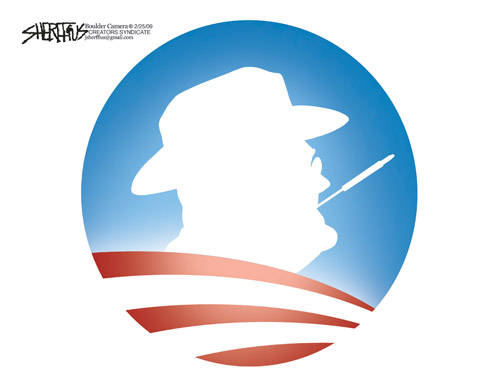 The shocks of the current economic crises have confused the country. Historically like all such confusion, it can give rise to fear and allow demagogues of both the left and the right to exploit those fears.
Back in 1932 we were in a similar situation. At the depths of the Great Depression, FDR came to office with a basket full of ideas to try and solve the nation’s problems. Not unlike today, many of those ideas infuriated both the left and the right. Today, Wall Street bankers have become public enemy number one, while gun ownership is at an all time high. In the 1930s, the results of a similar crises resulted in similar dangers. Historian and journalist Sally Denton looks back at a time that all to closely parallels our current situation.
My conversation with Sally about her new work The Plots Against the President: FDR, A Nation in Crisis, and the Rise of the American Right
The shocks of the current economic crises have confused the country. Historically like all such confusion, it can give rise to fear and allow demagogues of both the left and the right to exploit those fears.
Back in 1932 we were in a similar situation. At the depths of the Great Depression, FDR came to office with a basket full of ideas to try and solve the nation’s problems. Not unlike today, many of those ideas infuriated both the left and the right. Today, Wall Street bankers have become public enemy number one, while gun ownership is at an all time high. In the 1930s, the results of a similar crises resulted in similar dangers. Historian and journalist Sally Denton looks back at a time that all to closely parallels our current situation.
My conversation with Sally about her new work The Plots Against the President: FDR, A Nation in Crisis, and the Rise of the American Right
Jan 9, 2012
Jan 9, 2012
23 min
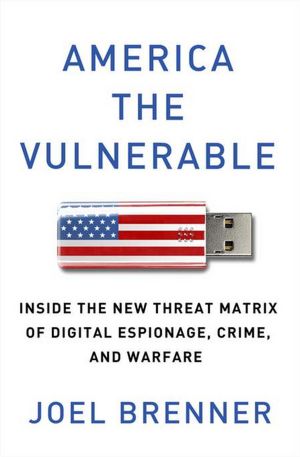
 . My conversation with Joel Brenner:
Jan 2, 2012
Jan 2, 2012
33 min
 It estimated that in the next decade as much as seventy percent of the world's population will be living in cities. How we make those cities safe, may very well determine the quality of life for future generations. There is no better example of keeping crime down than what happened in New York where, over nineteen years, the crime rate dropped 80 percent! Criminologists and urban planners have been at a loss to explain the dramatic drop in crime, but in his book The City that Became Safe: New York's Lessons for Urban Crime and Its Control, U.C. Berkeley's Franklin Zimring explains the tactics and techniques that have challenged long-held notions about law enforcement. My conversation with Franklin Zimring:
Dec 28, 2011
Dec 28, 2011
21 min
 Around 1835 Alexis de Tocqueville revealed a unique set of American character traits. Traits that in total, would come to define the American experience. Today most of those traits are still with us; but we often lose sight or forget about them. Like de Tocqueville, sometimes it takes an outsider to remind us of those things that make us, if not exceptional, at least unique in what we've been able to achieve.
Daniel Hannan, is a Conservative member of the European Parliament and first came to international prominence when he took on then British Prime Minister, Gordon Brown, regarding his economic polices.
In his recently published book The New Road to Serfdom: A Letter of Warning to America, Hannan sounds a clarion call to America not to be seduced by all that seems attractive about the European system. Since the original publication of his book, he has proved prescient in several ways.
Around 1835 Alexis de Tocqueville revealed a unique set of American character traits. Traits that in total, would come to define the American experience. Today most of those traits are still with us; but we often lose sight or forget about them. Like de Tocqueville, sometimes it takes an outsider to remind us of those things that make us, if not exceptional, at least unique in what we've been able to achieve.
Daniel Hannan, is a Conservative member of the European Parliament and first came to international prominence when he took on then British Prime Minister, Gordon Brown, regarding his economic polices.
In his recently published book The New Road to Serfdom: A Letter of Warning to America, Hannan sounds a clarion call to America not to be seduced by all that seems attractive about the European system. Since the original publication of his book, he has proved prescient in several ways.
Dec 22, 2011
Dec 22, 2011
23 min

Dec 19, 2011
Dec 19, 2011
25 min
Now that the war in Iraq is officially ending, just maybe we can go back and look at why there really was an Iraq war. Not because of the so called “weapons of mass destruction” that Sadam allegedly had; but because one man had made it his life's mission, from the time he was a teenager, to overthrow Sadam. Over the years he tried many ways, but none would be more successful for Ahmad Chalabi than co-opting the Bush administration, the CIA, the New York Times, and the Defense Department. How did pull it off, and in so doing precipitate what may very well be the biggest and most expensive foreign policy blunder in us history?
Five time Emmy winner and 60 Minutes Producer Richard Bonin takes us up close and personal to Ahmad Chaabi and how be lead the US into a calamitous nine-year war. He lays it out in Arrows of the Night: Ahmad Chalabi's Long Journey to Triumph in Iraq
Dec 16, 2011
Dec 16, 2011

Dec 14, 2011
Dec 14, 2011
25 min
 Scientists announced Tuesday that they had found hints, but not quite definitive proof of the particle that is believed to be a basic component of the universe. Clearly physicists are closing in on an elusive subatomic particle that, if found, would confirm a long-held understanding about why matter has mass and how the universe's fundamental building blocks behave.
Few people outside of physics can fully comprehend the search for the Higgs boson, which was first hypothesized 40 years ago. However, Oxford University physicist Frank Close, in his new book The Infinity Puzzle, takes us inside this very human and high pressure quest to uncover the order of the universe.
Scientists announced Tuesday that they had found hints, but not quite definitive proof of the particle that is believed to be a basic component of the universe. Clearly physicists are closing in on an elusive subatomic particle that, if found, would confirm a long-held understanding about why matter has mass and how the universe's fundamental building blocks behave.
Few people outside of physics can fully comprehend the search for the Higgs boson, which was first hypothesized 40 years ago. However, Oxford University physicist Frank Close, in his new book The Infinity Puzzle, takes us inside this very human and high pressure quest to uncover the order of the universe.
Dec 13, 2011
Dec 13, 2011
25 min
This weekend it was reported that movie attendance is at a recent low. Our interest in politics and politicians couldn't be lower. However the one area where where both attendance and interest continue to explode is the world of sports. In part, it's the clarity of story, the colorful, volatile and often egotistical personalities and also a whole new perking order of quality sports reporting. Perched atop that order is John Feinstein. The author of twenty-eight books, most notably A Season on the Brink and A Good Walk Spoiled, he is also a commentator on NPR's Morning Edition, a regular on ESPNs The Sports Reporters, and a regular contributor to The Washington Post. His new book, One on One: Behind the Scenes with the Greats in the Game
Dec 12, 2011
Dec 12, 2011
31 min
 At the Republican debate, this past Saturday night, the question was raised about the impact of fidelity and by connection trustworthiness, on Presidential character. Perhaps that was the wrong question. Perhaps the better question was not on how trustworthiness impacts character, but how a sense of trust and moral understanding might actually impact public policy, economies and fairness? How does trust, morality and a sense of fairness shape our view of how the economy should work? To answer, we only need look at how greed and pure opportunism has shaped the events of the past two years. Professor David C. Rose, in The Moral Foundation of Economic Behavior
Dec 8, 2011
Dec 8, 2011
28 min
 . My conversation with Richard Rhode
Dec 7, 2011
Dec 7, 2011
25 min
 In the movie Wall Street, Oliver Stone told us that "the only thing worse than not having money, is to have had it and lost it." Such is certainly the case with the family of Bernie Madoff. But the question still remains, for this family that lived high on the hog for so long, "what did they know and when did they know it?"
Journalist Laurie Sandell was the first to really get inside the Madoff family and tried to ascertain whether or not we should have any sympathy for Ruth, Mark and Andrew; or should we simply share a sense of schadenfreude for the destruction of this American family. In her new book Truth and Consequences
In the movie Wall Street, Oliver Stone told us that "the only thing worse than not having money, is to have had it and lost it." Such is certainly the case with the family of Bernie Madoff. But the question still remains, for this family that lived high on the hog for so long, "what did they know and when did they know it?"
Journalist Laurie Sandell was the first to really get inside the Madoff family and tried to ascertain whether or not we should have any sympathy for Ruth, Mark and Andrew; or should we simply share a sense of schadenfreude for the destruction of this American family. In her new book Truth and Consequences
Dec 6, 2011
Dec 6, 2011
21 min
Nov 30, 2011
Nov 30, 2011
31 min
 . My conversation with Jospeh McCartin:
Nov 28, 2011
Nov 28, 2011
34 min
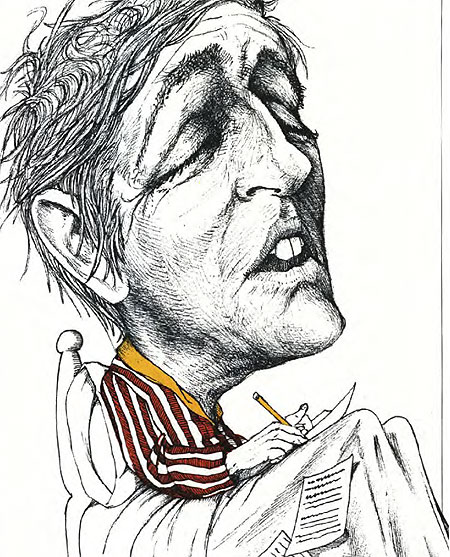 As Republican candidates move around the country trying define their conservative credentials, it's worth noting, as perhaps they should, that this year marks the sixtieth anniversary of the publication, by a then 26 year old William F. Buckley, of GOD AND MAN AT YALE. A book that many consider the seminal text of the modern conservative movement. It was a book that would redefine Conservatism in the cold war era and beyond. It was a conservatism that had evolved from Edmund Burke and the French Revolution, and was near death in the late 40's and would be given new life by Buckley. Buckley would go on to found National Review, provide the intellectual heft to continue to drive conservatism, provide the ideological underpinnings of Barry Goldwater, run for Mayor of New York, write over 50 books, appear in almost 1500 episodes of Firing Line and all the while define the difference between the passion of ideas and passion of friendship. Roger Williams University Law Professor Carl T. Bogus gives us a modern view of Buckley in this new book Buckley: William F. Buckley Jr. and the Rise of American Conservatism
Nov 22, 2011
Nov 22, 2011
20 min
 While the American Revolution was primarily about political independence, there were a strain of individuals who wanted the United States to gain cultural and social differentiation from its former colonial masters. But it proved not so easy cutting loose from a nation that for two centuries, had set the standard of civilization, not only for the colonies, but for the world. In many respects these issues of trade, of inferiority, of race and of exceptionalism, are still issues we as a nation, are still dealing with today, three hundred plus year later.
Keriann Akemi Yokota takes us back to the roots in Unbecoming British: How Revolutionary America Became a Postcolonial Nation
While the American Revolution was primarily about political independence, there were a strain of individuals who wanted the United States to gain cultural and social differentiation from its former colonial masters. But it proved not so easy cutting loose from a nation that for two centuries, had set the standard of civilization, not only for the colonies, but for the world. In many respects these issues of trade, of inferiority, of race and of exceptionalism, are still issues we as a nation, are still dealing with today, three hundred plus year later.
Keriann Akemi Yokota takes us back to the roots in Unbecoming British: How Revolutionary America Became a Postcolonial Nation
Nov 21, 2011
Nov 21, 2011
27 min
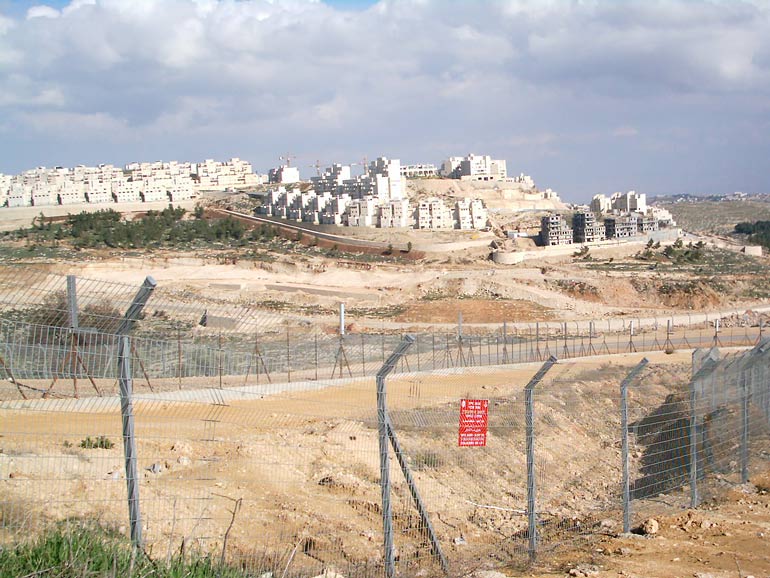 Over the past several years millions of words have been written and spoken about the Israeli-Palestinian conflict. Rarely in history has a conflict gone on this long, without a resolution, or without taking some kind of corrosive toll on its participants. Today, it seems clear that the intransigence of Israel's leaders threatens not only Israeli and American relations, internal American politics, the stability of the region itself but also threatens Israel's future as an enlightened democratic nation. This is the premise of Israeli journalist Gershom Gorenberg, in his Book The Unmaking of Israel
Nov 18, 2011
Nov 18, 2011
29 min
 "To thine own self be true" Shakespeare tells us. Little did he know that in calling for this, he was going up against centuries of evolutionary behavior. In fact, renowned biologist and anthropologist Robert Trivers argues, in his new work The Folly of Fools: The Logic of Deceit and Self-Deception in Human Life,
Nov 17, 2011
Nov 17, 2011
19 min
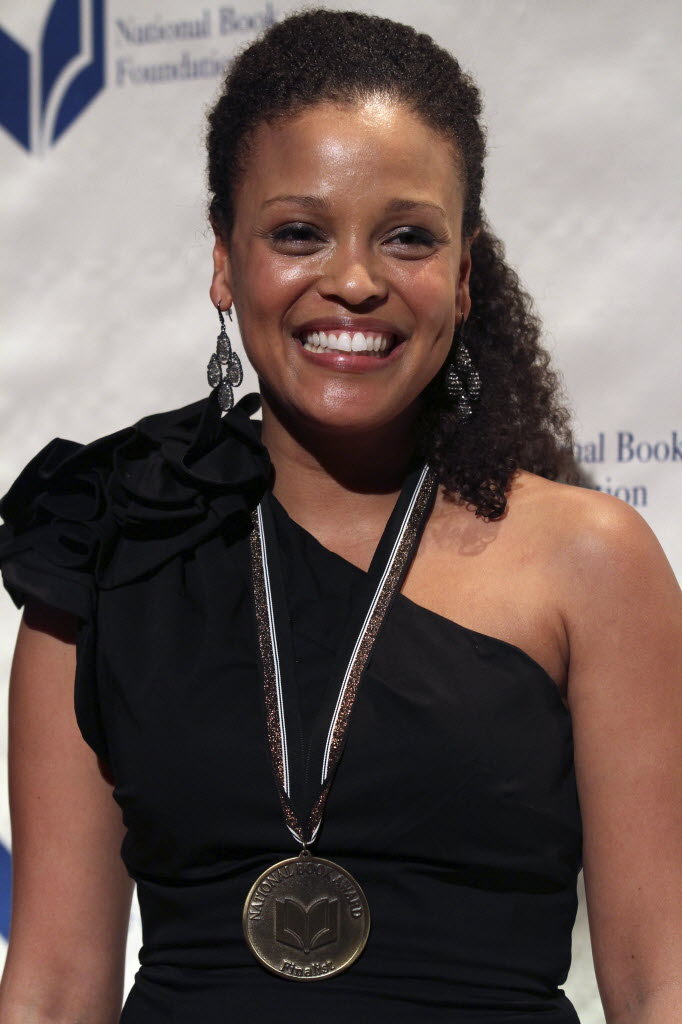 There is a reason that Hurricane Katrina still resonates with us. Not just because of the magnitude of the catastrophe, but because it signaled something profound about the American condition. Because it brought into bold relief the lives of many who lived behind a curtain of poverty, suffering and innate courage. This is the backdrop for the winner of this years National Book Award for Fiction Jesmyn Ward and her novel Salvage the Bones. My conversation with Jesmyn Ward:
Nov 14, 2011
Nov 14, 2011
24 min
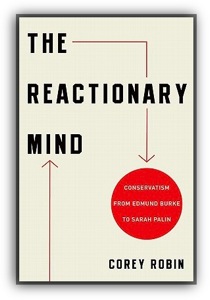 What is conservatism and does today's conservatism bear any resemblecne to it's European roots? Why does conservatism today seem so often un-conservative, so radical and nontraditional? From its reaction against the French Revolution, to the intransigence of today's GOP, who do conservative thinkers have in common? Brooklyn College Political Science Professor Corey Robin has sparked a new and needed public conversation about the past, present and future of the conservative movement, in his new book The Reactionary Mind: Conservatism from Edmund Burke to Sarah Palin
Nov 10, 2011
Nov 10, 2011
30 min
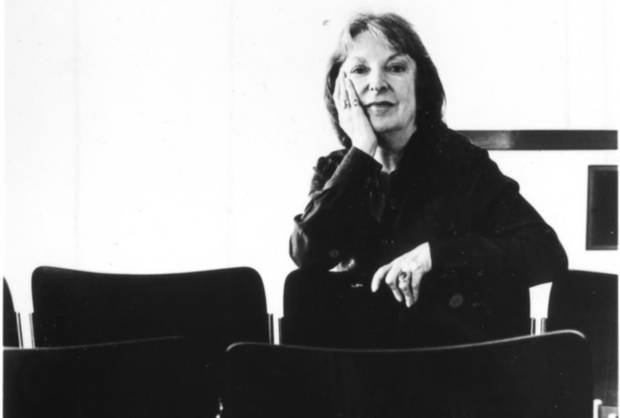
 , Brian Kellow gives us that first look behind the lens of Pauline Kael. She liked to say that her work was her biography, but Kellow gives us so much more. My conversation with Brian Kellow:
Nov 8, 2011
Nov 8, 2011
22 min
 Columbine, Virginia Tech, Northern Illinois University, Cleveland High School. They all conjure up painful images of boys gone bad. We’ve all heard the teacher or the neighbor talk about what a good student or a nice boy some of these perpetrators were. But nice boys, normal boys, don’t kill their fellow students or themselves. So what happened? Can we ever really fully understand what goes on in the minds of these boys and what they tell us about ourselves? Was Cesar right, that “the fault is in ourselves.” Few have looked deeper into this abyss than novelist and journalist David Vann in his original Esquire article about Steven Kazmierczak and the Northern Illinois University shooting and in his most recent book Last Day on Earth: A Portrait of the NIU School Shooter. My conversation with David Vann:
Nov 7, 2011
Nov 7, 2011
18 min
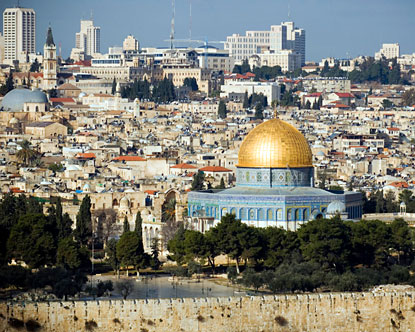
 My conversation with Simon Sebag Monetfiore:
Nov 3, 2011
Nov 3, 2011
27 min
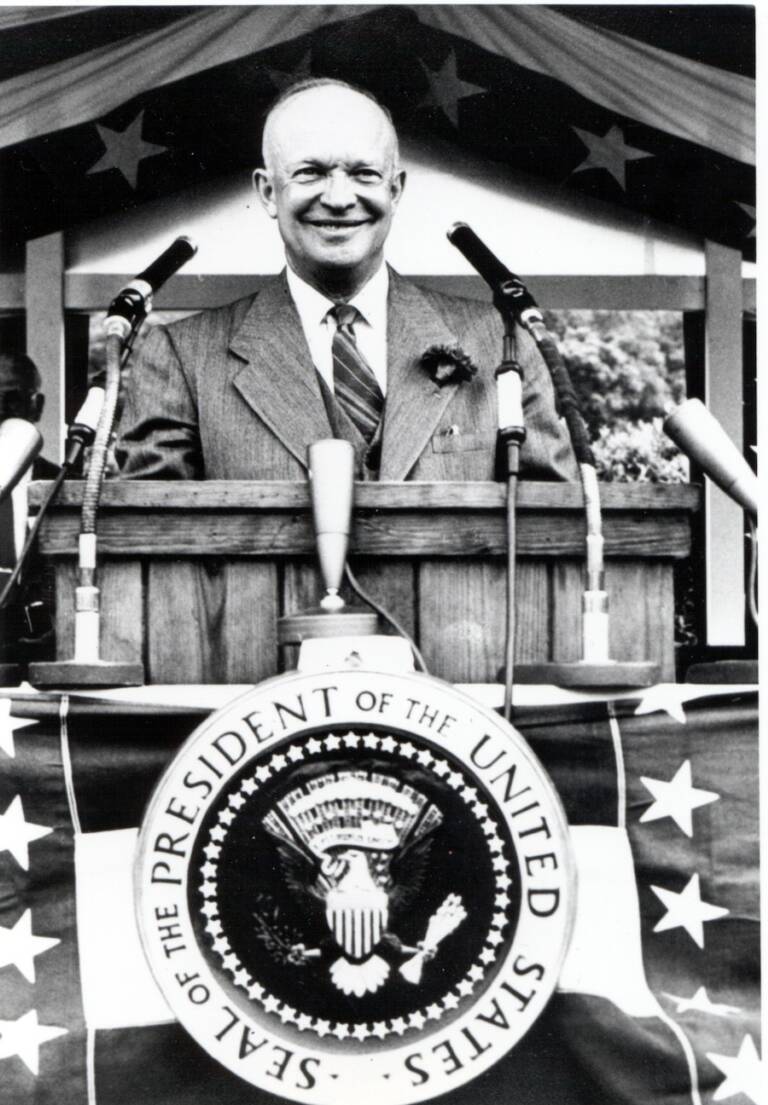 We've spent some time lately talking about the 70's. Today we go back even further. When once asked about the impact of the French Revolution, former Chinese Premiere Chou En-lai said it "was too soon to know." Certainly the scope and impact of history is always evolving. So too is the reputation of the thirty-fourth President. Originally thought to be modest, in the wake of the Kennedy excitement of the early 1960's, history has come to appreciate the calm, no drama approach of the Eisenhower Presidency and what it actually accomplished. Looking at today's leaders, a well seasoned grown up might look pretty attractive.
Veteran journalist Jim Newton, takes a look at Eisenhower: The White House Years
We've spent some time lately talking about the 70's. Today we go back even further. When once asked about the impact of the French Revolution, former Chinese Premiere Chou En-lai said it "was too soon to know." Certainly the scope and impact of history is always evolving. So too is the reputation of the thirty-fourth President. Originally thought to be modest, in the wake of the Kennedy excitement of the early 1960's, history has come to appreciate the calm, no drama approach of the Eisenhower Presidency and what it actually accomplished. Looking at today's leaders, a well seasoned grown up might look pretty attractive.
Veteran journalist Jim Newton, takes a look at Eisenhower: The White House Years
Nov 2, 2011
Nov 2, 2011
29 min
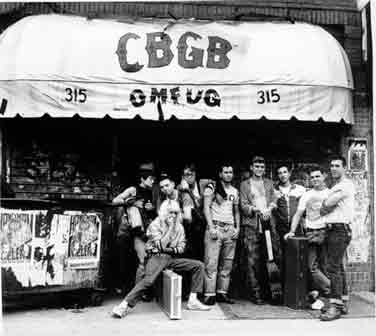
 My conversation with James Wolcott:
Nov 2, 2011
Nov 2, 2011
31 min

 Nessen, who is currently a journalist-in-residence at the Brookings Institution talks to me about those days.
Oct 31, 2011
Oct 31, 2011
21 min
 At no time in human history have we been better at fighting disease. Yet modern life has also made us so much more vulnerable to the threat of global pandemic. The speed of human travel and interaction, in short globalization, makes it imperative that we stay focused of where the next disease or pandemic might come from. For disease too has also become globalized.
No one is more on top this issue than Dr. Nathan Wolfe, who has been referred to as the "Indiana Jones of virus hunters." In fact, Wolfe is a Professor in Human Biology at Stanford, the founder and CEO of Global Viral Forecasting, with degrees from Stanford and Harvard the author of The Viral Storm: The Dawn of a New Pandemic Age
At no time in human history have we been better at fighting disease. Yet modern life has also made us so much more vulnerable to the threat of global pandemic. The speed of human travel and interaction, in short globalization, makes it imperative that we stay focused of where the next disease or pandemic might come from. For disease too has also become globalized.
No one is more on top this issue than Dr. Nathan Wolfe, who has been referred to as the "Indiana Jones of virus hunters." In fact, Wolfe is a Professor in Human Biology at Stanford, the founder and CEO of Global Viral Forecasting, with degrees from Stanford and Harvard the author of The Viral Storm: The Dawn of a New Pandemic Age
Oct 28, 2011
Oct 28, 2011
31 min
 The benefits of living in a digital, globalized society are enormous; so too are the dangers. Governments and the private sector are losing billions of dollars each year, fighting an ever-morphing, often invisible, often super-smart new breed of criminal: the hacker. Misha Glenny's fascinating new book, DarkMarket: Cyberthieves, Cybercops and You
Oct 27, 2011
Oct 27, 2011
20 min
 Many have spoken of the structural problems we face in our economy and in our democracy. Individually, our broken financial system, the power of money in politics, our failure to meet the global challenge of 21st century education, and our decaying infrastructure are all very real problems. But collectively what do these problems, and the degree to which they have been neglected for so long, tell us about our society, our values and and what it means to be a citizen of this country?
Have we in fact reached a tipping point where failure to address these issues will will result in what Tom Friedman calls a very bad century for America. This is the starting point for The Price of Civilization: Reawakening American Virtue and Prosperity
Many have spoken of the structural problems we face in our economy and in our democracy. Individually, our broken financial system, the power of money in politics, our failure to meet the global challenge of 21st century education, and our decaying infrastructure are all very real problems. But collectively what do these problems, and the degree to which they have been neglected for so long, tell us about our society, our values and and what it means to be a citizen of this country?
Have we in fact reached a tipping point where failure to address these issues will will result in what Tom Friedman calls a very bad century for America. This is the starting point for The Price of Civilization: Reawakening American Virtue and Prosperity
Oct 26, 2011
Oct 26, 2011
19 min
 With the rapid 21st Century growth of globalization, we've witnessed one of the great migrations of history. Millions of people have moved from rural areas to the cities of the developing world. These cities, some of which didn't even exist twenty years ago, have populations in the millions. In China, for example, there are cities of 10 million people; cities that we don't even know the name of.
The growth of these so called "instant cites" has provided great opportunity, but they also pose enormous challenges, problems and risks. One such city is Karachi in Pakistan. A city that sits not only in a center of development, but also straddles the geopolitical fault lines of its region.
The co-host of NPR's Morning Edition, Steve Inskeep, has been traveling to Karachi since 2002 and has witnessed its growth up close and personal. In his first book, Instant City: Life and Death in Karachi
With the rapid 21st Century growth of globalization, we've witnessed one of the great migrations of history. Millions of people have moved from rural areas to the cities of the developing world. These cities, some of which didn't even exist twenty years ago, have populations in the millions. In China, for example, there are cities of 10 million people; cities that we don't even know the name of.
The growth of these so called "instant cites" has provided great opportunity, but they also pose enormous challenges, problems and risks. One such city is Karachi in Pakistan. A city that sits not only in a center of development, but also straddles the geopolitical fault lines of its region.
The co-host of NPR's Morning Edition, Steve Inskeep, has been traveling to Karachi since 2002 and has witnessed its growth up close and personal. In his first book, Instant City: Life and Death in Karachi
Oct 25, 2011
Oct 25, 2011
27 min
 . Lessig goes to heart of what's fueling the current "occupy" movement and what they might do to achieve real success. My conversation with Lawrence Lessig:
Oct 24, 2011
Oct 24, 2011
20 min

 he looks at human nature, psychology, and history to explain how this has happened. My conversation with Steven Pinker: