
Jeff Schechtman talks with authors, journalists, and thought leaders.
Episodes
Tuesday Oct 18, 2011
Tuesday Oct 18, 2011
 Yeats wrote of a time when "the best lacked all conviction, while the worst were full of passionate intensity." He might have been writing about today as it’s true that "the falcon cannot hear the falconer; Things fall apart; the center cannot hold; Mere anarchy is loosed upon the world."
How then do we get out of this, how do we begin to move on? The answer can perhaps best be found in that old saying, that the only way to predict the future is to create it. That is exactly what Frances Moore Lappe is suggesting in her new work EcoMind: Changing the Way We Think, to Create the World We Want
Yeats wrote of a time when "the best lacked all conviction, while the worst were full of passionate intensity." He might have been writing about today as it’s true that "the falcon cannot hear the falconer; Things fall apart; the center cannot hold; Mere anarchy is loosed upon the world."
How then do we get out of this, how do we begin to move on? The answer can perhaps best be found in that old saying, that the only way to predict the future is to create it. That is exactly what Frances Moore Lappe is suggesting in her new work EcoMind: Changing the Way We Think, to Create the World We Want
Monday Oct 17, 2011
Monday Oct 17, 2011
When our founders set up a federal system, one of their goals was to allow the States to be laboratories of policy, to find what worked and what didn't and then use that in shaping our national policy. As we look out at the landscape of all the problem we face today; globalization, the onset and impact of technology, the need to improve education and infrastructure, all of these problems seem to happen first in Michigan.
While there were some who wanted Michigan and Detroit to go bankrupt, rather than get a bail out for the auto industry, Michigan and Detroit preserved. This was in some measure, through the efforts of their two term Governor Jennifer Granholm
Today, Detroit is experiencing a kind of renascence, that even goes beyond the Tigers and Lions. Detroit today is becoming a city of what Richard Florida calls the Creative Class, with even a Whole Foods opening in downtown Detroit. How did this happen and what can we all learn from Detroit's and Michigan's experience? Governor Jennifer Granholm explains in her new book A Governor's Story: The Fight for Jobs and America's Economic Future
Thursday Oct 13, 2011
Thursday Oct 13, 2011
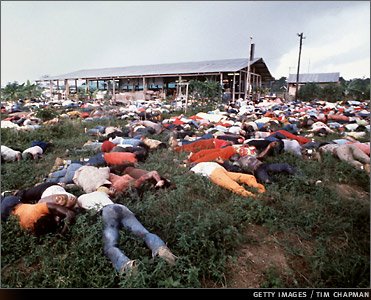 Occasionally there are events, that even 33 years latter, we remember as if they were yesterday. When this happens, its usually because of both the enormity of the event, as well as some deeper resonance inherent in that event itself.
Such was the massacre of one thousand people in Jonestown on November 18, 1978. What perplexes us to this day is both how so many people, from diverse backgrounds, could be taken in by one demagogue and how could that man who was once the darling of San Francisco in the early ‘70s and a human rights activist, become so deranged. In understanding this perhaps we’ll have a keener insight into both the human need to belong and into individual psychopathology
With the benefit of 50,000 pages of recently declassified documents, Julia Scheeres takes us back to that fateful time in A Thousand Lives: The Untold Story of Hope, Deception, and Survival at Jonestown
Occasionally there are events, that even 33 years latter, we remember as if they were yesterday. When this happens, its usually because of both the enormity of the event, as well as some deeper resonance inherent in that event itself.
Such was the massacre of one thousand people in Jonestown on November 18, 1978. What perplexes us to this day is both how so many people, from diverse backgrounds, could be taken in by one demagogue and how could that man who was once the darling of San Francisco in the early ‘70s and a human rights activist, become so deranged. In understanding this perhaps we’ll have a keener insight into both the human need to belong and into individual psychopathology
With the benefit of 50,000 pages of recently declassified documents, Julia Scheeres takes us back to that fateful time in A Thousand Lives: The Untold Story of Hope, Deception, and Survival at Jonestown
Tuesday Oct 11, 2011
Tuesday Oct 11, 2011
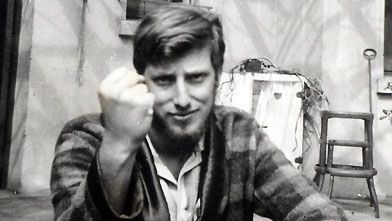 We all view the world from our own personal experience. For most of us that means we understand September 11th to mean one particular thing. For Ariel Dorfman, September 11th was in 1973 and represents a day that his dream was also deferred. But it was a different dream; that of a free and democratic Chile, which would begin to end on that day. Subsequent events would ultimately lead him into exile and into a 17 year search to define himself, define what it means to be human and what compassion courage and reconciliation are really all about.
Dorfman takes us with him on that journey in his new memoir Feeding on Dreams: Confessions of an Unrepentant Exile
We all view the world from our own personal experience. For most of us that means we understand September 11th to mean one particular thing. For Ariel Dorfman, September 11th was in 1973 and represents a day that his dream was also deferred. But it was a different dream; that of a free and democratic Chile, which would begin to end on that day. Subsequent events would ultimately lead him into exile and into a 17 year search to define himself, define what it means to be human and what compassion courage and reconciliation are really all about.
Dorfman takes us with him on that journey in his new memoir Feeding on Dreams: Confessions of an Unrepentant Exile
Monday Oct 10, 2011
Monday Oct 10, 2011
 In 1968 a 26 year old reporter by the name of Joe McGinniss wrote a book that took us inside the Nixon campaign and in so doing, redefined how we viewed politics and the media. As Theodore White did in 1960, McGinniss redefined the genre of long-form political journalism. Since then, he has continued to push the bounders of journalism, from the case of Jeffery MacDonald to the veracity of Janet Malcolm.
Today, he's taken on a subject that frankly most journalists have been afraid of, trying to find the real Sara Palin. It's amazing really, that after years in public life, no other reporter has gotten anywhere near as close to the Wasilla that McGinniss explores. He did so by practicing one of the oldest rules of journalism; go there! In going to Alaska to seek out the real Palin, he would find a life that is trashy, cheap and ignorant and in many ways genuinely American. In Alaska he would find The Rogue: Searching for the Real Sarah Palin
In 1968 a 26 year old reporter by the name of Joe McGinniss wrote a book that took us inside the Nixon campaign and in so doing, redefined how we viewed politics and the media. As Theodore White did in 1960, McGinniss redefined the genre of long-form political journalism. Since then, he has continued to push the bounders of journalism, from the case of Jeffery MacDonald to the veracity of Janet Malcolm.
Today, he's taken on a subject that frankly most journalists have been afraid of, trying to find the real Sara Palin. It's amazing really, that after years in public life, no other reporter has gotten anywhere near as close to the Wasilla that McGinniss explores. He did so by practicing one of the oldest rules of journalism; go there! In going to Alaska to seek out the real Palin, he would find a life that is trashy, cheap and ignorant and in many ways genuinely American. In Alaska he would find The Rogue: Searching for the Real Sarah Palin
Thursday Oct 06, 2011
Thursday Oct 06, 2011
 Some say that America's best days are behind it. That Americans have become to resistant to change, that the ethos of personal sacrifice that helped grow our nation, has become a thing of the past, that we are at an inflection point in which the values and tools of 21st century success belong to others. In short, that the American century is over.
However, the facts can be marshaled to make a very different case. A case that says that the same values and tools that made us great; immigration, creative destruction, quality infrastructure and world class education, are exactly the tools we need for the future. We don’t need new tools, we simply have to reinvent and reinvigorate the old ones to work for a new globalized, hyper-connected century.
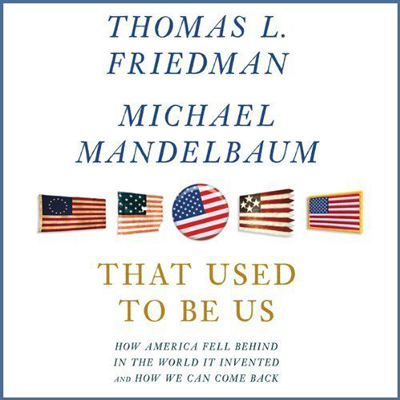
This is the underlying idea behind a NY Times columnist Tom Friedman and Johns Hopkins Professor Michael Mandelbaum's new book That Used to Be Us: How America Fell Behind in the World It Invented and How We Can Come Back
Some say that America's best days are behind it. That Americans have become to resistant to change, that the ethos of personal sacrifice that helped grow our nation, has become a thing of the past, that we are at an inflection point in which the values and tools of 21st century success belong to others. In short, that the American century is over.
However, the facts can be marshaled to make a very different case. A case that says that the same values and tools that made us great; immigration, creative destruction, quality infrastructure and world class education, are exactly the tools we need for the future. We don’t need new tools, we simply have to reinvent and reinvigorate the old ones to work for a new globalized, hyper-connected century.
This is the underlying idea behind a NY Times columnist Tom Friedman and Johns Hopkins Professor Michael Mandelbaum's new book That Used to Be Us: How America Fell Behind in the World It Invented and How We Can Come Back
Wednesday Oct 05, 2011
Wednesday Oct 05, 2011
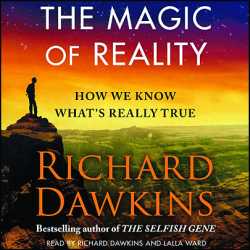 Today, more than ever, we seem to have lost our appreciation for science, for reality, for facts. It should be no surprise, since from our earliest years we learn how to suspend disbelief, to embrace myth and fantasy and then it's only one step away to be captured by religious hogwash. In fact, the real story of science and evolution is far and away the more exciting narrative, yet it continues to fight for its rightful place in the pantheon of ideas. Few have fought this battle more passionately than Richard Dawkins.
His new book, The Magic of Reality: How We Know What's Really True
Today, more than ever, we seem to have lost our appreciation for science, for reality, for facts. It should be no surprise, since from our earliest years we learn how to suspend disbelief, to embrace myth and fantasy and then it's only one step away to be captured by religious hogwash. In fact, the real story of science and evolution is far and away the more exciting narrative, yet it continues to fight for its rightful place in the pantheon of ideas. Few have fought this battle more passionately than Richard Dawkins.
His new book, The Magic of Reality: How We Know What's Really True
Tuesday Oct 04, 2011
Tuesday Oct 04, 2011
 When you take a twenty year old American student, living alone in Italy; add in her Italian boyfriend, a brutal, sexually charged murder and an overreaching Italian prosecutor, all set amidst the fantasy like small, hillside town of Perugia, it's no wonder it would produce a case that would become an international sensation.
The case of Amanda Knox captured not only America's attention but the worlds. Did this case warrant such attention, or did the tabloid media simply create the case and its charged atmosphere? Finally, did the case of Amanda Knox really become the first globalized “Trail of the Century?” Award winning journalist Nina Burleigh takes us inside the case in The Fatal Gift of Beauty: The Trials of Amanda Knox
When you take a twenty year old American student, living alone in Italy; add in her Italian boyfriend, a brutal, sexually charged murder and an overreaching Italian prosecutor, all set amidst the fantasy like small, hillside town of Perugia, it's no wonder it would produce a case that would become an international sensation.
The case of Amanda Knox captured not only America's attention but the worlds. Did this case warrant such attention, or did the tabloid media simply create the case and its charged atmosphere? Finally, did the case of Amanda Knox really become the first globalized “Trail of the Century?” Award winning journalist Nina Burleigh takes us inside the case in The Fatal Gift of Beauty: The Trials of Amanda Knox
Friday Sep 30, 2011
Friday Sep 30, 2011
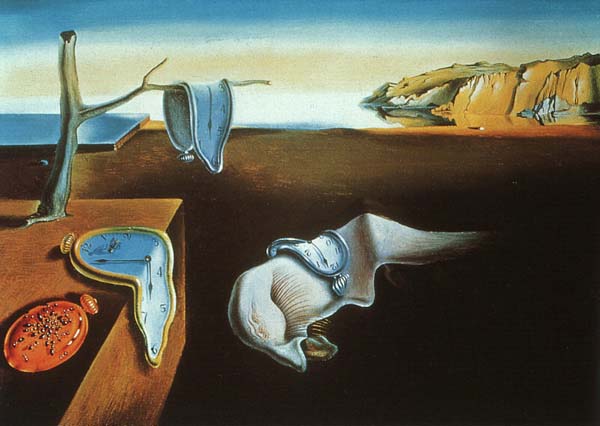 In an age of memoir, blogs and Facebook, where we seemingly have the compulsion to document every aspect of our lives, perhaps it's important to ask ourselves whether it's the moments we remember, or the ones we forget that are really important.
Nothing brings this into bold relief more than dealing with Alzheimer's. Kate Whouley had to confront this idea with her mother and it's given her a whole new perspective on life, family and what living in the moment is really about.
My conversation with Kate Whouley about her memoir Remembering the Music, Forgetting the Words: Travels with Mom in the Land of Dementia
In an age of memoir, blogs and Facebook, where we seemingly have the compulsion to document every aspect of our lives, perhaps it's important to ask ourselves whether it's the moments we remember, or the ones we forget that are really important.
Nothing brings this into bold relief more than dealing with Alzheimer's. Kate Whouley had to confront this idea with her mother and it's given her a whole new perspective on life, family and what living in the moment is really about.
My conversation with Kate Whouley about her memoir Remembering the Music, Forgetting the Words: Travels with Mom in the Land of Dementia
Thursday Sep 29, 2011
Thursday Sep 29, 2011
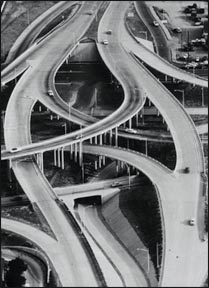 Joan Didion once referred to the freeways as the only secular communion that what we have. Certainly the freeway, more specifically our Interstate Highway System, is the concrete fabric that may be the only thing holding our nation together. But how did this system, the largest public works project in history, ever get done? Certainly, it could never be accomplished today!
Today, when we pay lip service to improving our infrastructure, and then doing nothing about, its a particularly good time to go back and look at the creation of that Interstate Highway System and the vision and courage it took to get it done. Journalist and author Earl Swift explains it all in The Big Roads: The Untold Story of the Engineers, Visionaries, and Trailblazers Who Created the American Superhighways
Joan Didion once referred to the freeways as the only secular communion that what we have. Certainly the freeway, more specifically our Interstate Highway System, is the concrete fabric that may be the only thing holding our nation together. But how did this system, the largest public works project in history, ever get done? Certainly, it could never be accomplished today!
Today, when we pay lip service to improving our infrastructure, and then doing nothing about, its a particularly good time to go back and look at the creation of that Interstate Highway System and the vision and courage it took to get it done. Journalist and author Earl Swift explains it all in The Big Roads: The Untold Story of the Engineers, Visionaries, and Trailblazers Who Created the American Superhighways
Tuesday Sep 27, 2011
Tuesday Sep 27, 2011
 A couple of weeks ago we marked the events of 9/11/01. But what were we really marking? What did we celebrate? More than the physical landscape of Ground Zero and the 2755 who perished, it’s important that we also remember those that gave the last full measure of their devotion in the efforts to rescue those inside the building. The first responders and those engaged in the clean up, often mark 9/11 not as an ending, but as the beginning of the physical and emotional problems that scar them to this day.
But what about their story? Their names are not etched in the granite of Ground Zero, but Dr. Benjamin Luft did find a way for their stories to be equally enduring. He created the 9/11 Oral History Project. It's part of his book We're Not Leaving: 9/11 Responders Tell Their Stories of Courage, Sacrifice, and Renewal
A couple of weeks ago we marked the events of 9/11/01. But what were we really marking? What did we celebrate? More than the physical landscape of Ground Zero and the 2755 who perished, it’s important that we also remember those that gave the last full measure of their devotion in the efforts to rescue those inside the building. The first responders and those engaged in the clean up, often mark 9/11 not as an ending, but as the beginning of the physical and emotional problems that scar them to this day.
But what about their story? Their names are not etched in the granite of Ground Zero, but Dr. Benjamin Luft did find a way for their stories to be equally enduring. He created the 9/11 Oral History Project. It's part of his book We're Not Leaving: 9/11 Responders Tell Their Stories of Courage, Sacrifice, and Renewal
Monday Sep 26, 2011
Monday Sep 26, 2011
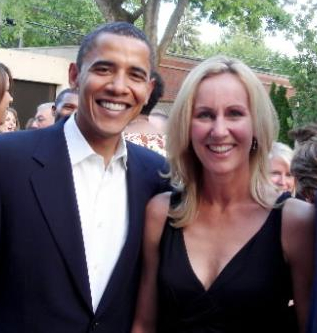 It used to be that the military style of leadership, top down command and control, was how the world operated. Today, in the military as well as business and life, leadership is about how we connect with each other. How we inspire others, how we collaborate effectively, how we incorporate the new values of our time into entrepreneurship and leadership. Few understand these principles better than Betsy Meyers. She has been Executive Director of the Center for Public Leadership at Harvard's Kennedy School of Government, Director of the Office of Women's Business Ownership at the US Small Business Administration. She served as a COO and senior adviser to Barack Obama's Presidential Campaign and was a senior official in the Clinton Administration. She distills her wisdom in her new book Take the Lead: Motivate, Inspire, and Bring Out the Best in Yourself and Everyone Around You
Friday Sep 23, 2011
Friday Sep 23, 2011
My conversation from June 2001, with Wendy Wasserstein on the publication of her book Shiksa Goddess: (Or, How I Spent My Forties) Essays
Friday Sep 23, 2011
Friday Sep 23, 2011
 Many novelists and playwrights are simply keen observes of the world around them. They watch, they feel, they think and they create and aggregate wonderful stories. But for some, (think Fitzgerald, Hemmingway, Tom Wolf,) they themselves embody their work and their time. There is a kind of almost impenetrable membrane between them and the stories and characters they create. Wendy Wasserstein, author of such plays as The Heidi Chronicles and The Sisters Rosensweig, was such a writer. She was a true baby boomer, who captured the essence of the post feminist angst of the 80's and gave voice to so many woman who felt as if she knew them personally. Her death at the age of 55, shorted circuited a truly creative life. Journalist and former WSJ film critic Julie Salamon captures all of Wasserstein in Wendy and the Lost Boys: The Uncommon Life of Wendy Wasserstein

Wednesday Sep 21, 2011
Wednesday Sep 21, 2011
 . My conversation with Ali Soufan:
Tuesday Sep 20, 2011
Tuesday Sep 20, 2011

Monday Sep 19, 2011
Monday Sep 19, 2011
 We study history not only to tell us what we should do, but also what we should avoid. For it is the task of succeeding generation to escape history, to escape its repetition, that is to avoid the mistakes of other times. The problem is that too often the history we study and try and learn from is seeped in mythology and falsehood.
Today as we continue to face the most severe and complex financial crises since the Great Depression, we look back at Roosevelt's New Deal for guidance and answers. The problem is, often the rehorthic and reality of that time are at odds. That's why Pulitzer Prize winner and LA Times columnist Michael Hiltzik's new book The New Deal: A Modern History
We study history not only to tell us what we should do, but also what we should avoid. For it is the task of succeeding generation to escape history, to escape its repetition, that is to avoid the mistakes of other times. The problem is that too often the history we study and try and learn from is seeped in mythology and falsehood.
Today as we continue to face the most severe and complex financial crises since the Great Depression, we look back at Roosevelt's New Deal for guidance and answers. The problem is, often the rehorthic and reality of that time are at odds. That's why Pulitzer Prize winner and LA Times columnist Michael Hiltzik's new book The New Deal: A Modern History 
Thursday Sep 15, 2011
Thursday Sep 15, 2011
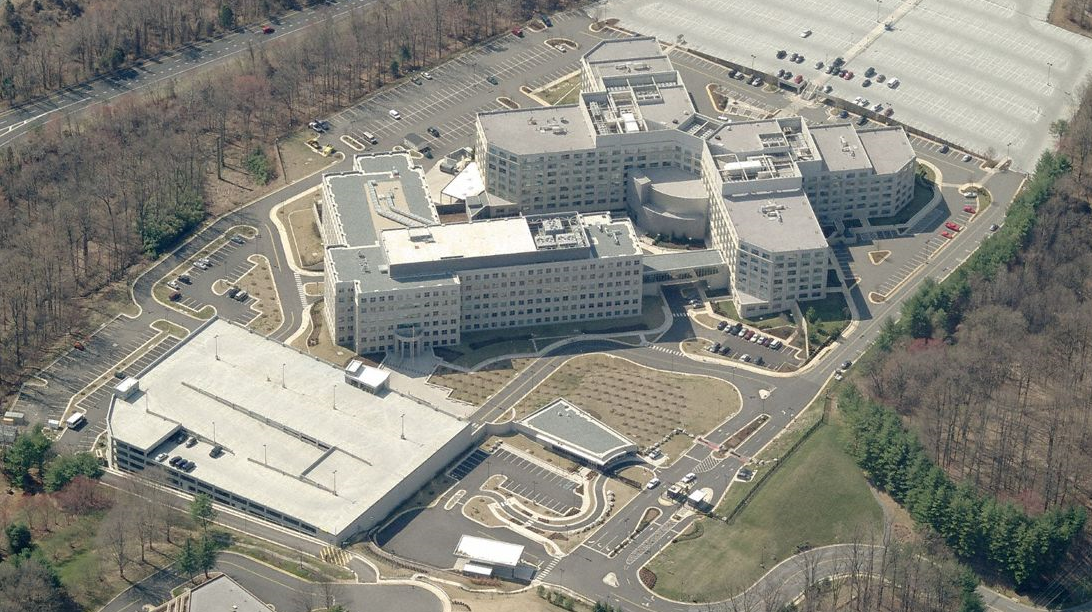 After 9/11 we thought we did everything to protect ourselves from another terrorist attack. In fact, we may have done too much. We created multiple security programs, hired hundreds of thousand of people, all with top secret clearances and in so doing, may have created an intelligence bureaucracy, the size, scope and duplication of which has put us at even greater risk.
So argues Washington Post journalist William Arkin who, along with multi Pulitzer Prize winning journalist Dana Priest, examines all of this in their new book Top Secret America: The Rise of the New American Security State
After 9/11 we thought we did everything to protect ourselves from another terrorist attack. In fact, we may have done too much. We created multiple security programs, hired hundreds of thousand of people, all with top secret clearances and in so doing, may have created an intelligence bureaucracy, the size, scope and duplication of which has put us at even greater risk.
So argues Washington Post journalist William Arkin who, along with multi Pulitzer Prize winning journalist Dana Priest, examines all of this in their new book Top Secret America: The Rise of the New American Security State
Wednesday Sep 14, 2011
Wednesday Sep 14, 2011

 . My conversation with Janet Reitman:
Tuesday Sep 13, 2011
Tuesday Sep 13, 2011
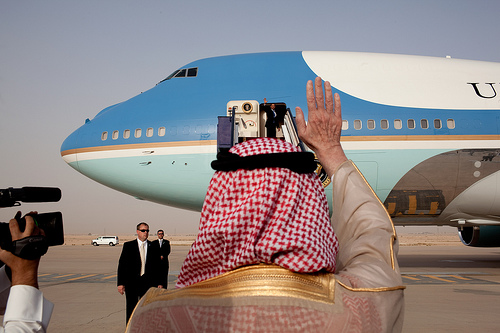 The events we marked on 9/11 were not isolated. They have their roots deep in the history of American foreign policy. At the heart of that policy lies our dependence on Middle Eastern oil, the economic crises we faced as a result in the 1970's, our support of the Shah and decisions made by Presidents' Nixon, Ford and Secretary of State Henry Kissinger. To better understand this lineage, we need to look closely at the history altering chain of events that saw its apogee on 9/11 and from which we've unfortunately learned very little. Andrew Scott Cooper lays it all out for us in his new work The Oil Kings: How the U.S., Iran, and Saudi Arabia Changed the Balance of Power in the Middle East. My conversation with Andrew Scott Copper:
Monday Sep 12, 2011
Monday Sep 12, 2011
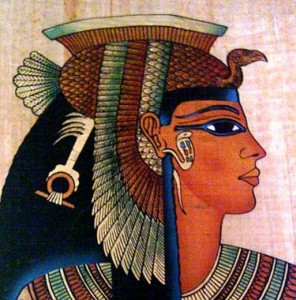 In her time she was the most powerful woman in the Western World. She was not afraid to use her feminine powers in ways that today, would be considered politically incorrect. She was highly educated and sophisticated, the richest woman of her time and her story wold be the subject of propaganda and revisionism. She was Cleopatra and although her story takes place over two thousand years ago, many of her life themes are as contemporary as today’s headlines. Pulitzer Prize winning biographer Stacy Schiff's best selling biography Cleopatra: A Life
Friday Sep 09, 2011
Friday Sep 09, 2011
 The statistics are powerful. Today, one in every 110 children is diagnosed with autism, making it more common than childhood cancer, juvenile diabetes and pediatric AIDS combined. Statistics further suggest that the rate of autism is increasing 10-17 percent annually. Studies suggest boys are more likely than girls to develop autism and receive the diagnosis. Yet we still don't know the cause or causes, but research is making great progress. On the forefront of that research is Dr. Clara Lajonchere, currently serves as VP of Clinical Programs at Autism Speaks. My recent conversation with Dr. Lajonchere:
Wednesday Sep 07, 2011
Wednesday Sep 07, 2011
 American have a schizophrenic relationship with retail. On the one hand we want choice. We feel we are entitled to boundless choices and variety. We also want low prices, particularly in these tough economic times. Yet we hold out a soft spot for the little guy, the mom and pop retailer fighting against the big box behemoth. While this may sound like a conflict taken from today's headlines, its roots go back to the l920's, when the Greater Atlantic and Pacific Tea Company, A & P, took on the small town grocer. In almost 100 years we have still not reconciled this dichotomy. In fact, the romanticism for those small mom and pops has become even stronger. Marc Levinson takes us through this history in The Great A&P and the Struggle for Small Business in America
Tuesday Sep 06, 2011
Tuesday Sep 06, 2011
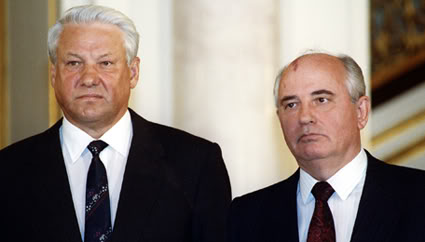 In their new book about the state of America today, Thom Friedman and Michael Mandelbaum talk of the end of the Cold War as perhaps the seminal event that reshaped the America we have today. Suddenly without an enemy, we had to redefine who we were and what we represented as a nation. Yet as important as that event was, we know little about what really went on inside the former Soviet Union that precipitated its breakup, or it’s real impact inside Russia today. Conor O'Clery lived and reported from the former Soviet Union in it's final days, up to and including Moscow, December 25, 1991: The Last Day of the Soviet Union
Friday Sep 02, 2011
Friday Sep 02, 2011
 Suppose you had a youthful passion. Over the years you nurtured that passion, believed in it and even convinced your parents that there might be value in collecting tens of thousands of comic books. Your dad even lets you take over the garage for your comics. At five years old, you fall in love with Batman, and somehow know it might be your future. Over the years you keep that passion as your focus. You become a lawyer as a the only way you know to get into the creative side of show business, and then you parlay that into ownership of the rights to make Batman into a movie. Then, after all of that, you finally get to begin the decade long process to convince someone, in a position of power in Hollywood, to share or even understand your vision for Batman.
In the process you create one of the most successful series in the history of movies. And maybe, just maybe, you keep your sanity while it sometimes seems that those around you are loosing theirs. The man who did of this is Michael Uslan. He shares his story in him new memoir The Boy Who Loved Batman.
Suppose you had a youthful passion. Over the years you nurtured that passion, believed in it and even convinced your parents that there might be value in collecting tens of thousands of comic books. Your dad even lets you take over the garage for your comics. At five years old, you fall in love with Batman, and somehow know it might be your future. Over the years you keep that passion as your focus. You become a lawyer as a the only way you know to get into the creative side of show business, and then you parlay that into ownership of the rights to make Batman into a movie. Then, after all of that, you finally get to begin the decade long process to convince someone, in a position of power in Hollywood, to share or even understand your vision for Batman.
In the process you create one of the most successful series in the history of movies. And maybe, just maybe, you keep your sanity while it sometimes seems that those around you are loosing theirs. The man who did of this is Michael Uslan. He shares his story in him new memoir The Boy Who Loved Batman.
Thursday Sep 01, 2011
Thursday Sep 01, 2011
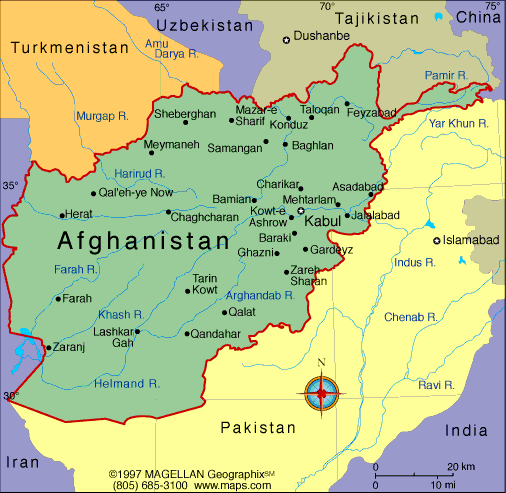 It has been said that Afghanistan has been the graveyard of empires. Certainly, in modern times, the Soviet Union paid a heavy price for it’s adventurism in Afghanistan. More recently American lives and billions dollars have been shed in the service of what may really be local, provincial political interests, inside that country.
Today, ten years after 9/11, what do we really know about this country, its real link to international terror, and its role in the larger regional and geopolitical issues shaping this volatile region? For thirty years few have know this place better than journalist Edward Girardet. Now he has distilled and shared much of that knowledge into his new work Killing the Cranes: A Reporter's Journey Through Three Decades of War in Afghanistan
It has been said that Afghanistan has been the graveyard of empires. Certainly, in modern times, the Soviet Union paid a heavy price for it’s adventurism in Afghanistan. More recently American lives and billions dollars have been shed in the service of what may really be local, provincial political interests, inside that country.
Today, ten years after 9/11, what do we really know about this country, its real link to international terror, and its role in the larger regional and geopolitical issues shaping this volatile region? For thirty years few have know this place better than journalist Edward Girardet. Now he has distilled and shared much of that knowledge into his new work Killing the Cranes: A Reporter's Journey Through Three Decades of War in Afghanistan
Wednesday Aug 31, 2011
Wednesday Aug 31, 2011
 Historians have often said that we always fight new wars with lessons learned from the last one. Ten years ago, after the tragic events of 9/11, we were woefully unprepared for the battle against Al Qaeda. An organization that existed not in the physical space of a nation state, that might be dealt with by brute force, but rather as a 21st century decentralized network, that would require new methods and a new geopolitical mindset. This would be a war requiring intelligence, patience, technology and whole new ways of looking at the world. Long before the death of Bin Laden, US efforts had been effectively shrinking and neutralizing Al Qaeda. How we did this has been a little known story that is now told by Eric Schmitt and Thom Shanker of the New York Times, in their book Counterstrike: The Untold Story of America's Secret Campaign Against Al Qaeda
Monday Aug 29, 2011
Monday Aug 29, 2011
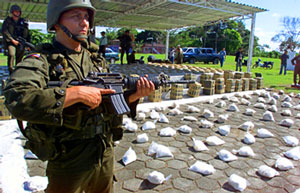
 tells us the full story of Salcedo and the drugs wars. My conversation with William Rempel:
Friday Aug 26, 2011
Friday Aug 26, 2011
 While we sometimes enter wars with the best of intentions, (Libya as a case in point,) the reality is often quite different. In almost all wars the dead are not just enemy soldiers, but hundreds of thousand of innocent civilians whose death, at best, becomes a statistic.
Its hard for us to grasp this reality. Perhaps it's our own myopia, our inability to see or relate to those that might be different than ourselves, or a need to look away for fear of feeling a kind of collective guilt. Whatever the individual reasons, the new reality of high tech warfare is arguably making this increase in civilian causalities all the more a reality. John Tirman, Executive Director of the Center for International Studies at MIT, explains in his new work The Deaths of Others: The Fate of Civilians in America's Wars
While we sometimes enter wars with the best of intentions, (Libya as a case in point,) the reality is often quite different. In almost all wars the dead are not just enemy soldiers, but hundreds of thousand of innocent civilians whose death, at best, becomes a statistic.
Its hard for us to grasp this reality. Perhaps it's our own myopia, our inability to see or relate to those that might be different than ourselves, or a need to look away for fear of feeling a kind of collective guilt. Whatever the individual reasons, the new reality of high tech warfare is arguably making this increase in civilian causalities all the more a reality. John Tirman, Executive Director of the Center for International Studies at MIT, explains in his new work The Deaths of Others: The Fate of Civilians in America's Wars
Thursday Aug 25, 2011
Thursday Aug 25, 2011

 . My conversation with Tom Cooper:
Tuesday Aug 23, 2011
Tuesday Aug 23, 2011
 One of the most cliched expressions on Wall Street is, "this time it's different.” Usually, it’s not. The trouble is, some times it really is different. Arguably the current economic dislocation and deconstruction that we face will alter every aspect of our society. The question is, is the bursting of our economic bubble a direct result of economic fundamentals and of the normal business cycle OR is it the result of broader social, economic, technological and societal changes, that have been building up pressure for years, and the results of which will be with us for years, maybe decades to come. If so, are these the problems of a swift moving , modern, global, economy that we simply may not have tools to adjust?
About a year ago Don Peck an editor at The Atlantic wrote a Cover Story for the Atlantic which kindled a national conversation. That story touched a nerve and has become the core of his new book Pinched: How the Great Recession Has Narrowed Our Futures and What We Can Do About It
One of the most cliched expressions on Wall Street is, "this time it's different.” Usually, it’s not. The trouble is, some times it really is different. Arguably the current economic dislocation and deconstruction that we face will alter every aspect of our society. The question is, is the bursting of our economic bubble a direct result of economic fundamentals and of the normal business cycle OR is it the result of broader social, economic, technological and societal changes, that have been building up pressure for years, and the results of which will be with us for years, maybe decades to come. If so, are these the problems of a swift moving , modern, global, economy that we simply may not have tools to adjust?
About a year ago Don Peck an editor at The Atlantic wrote a Cover Story for the Atlantic which kindled a national conversation. That story touched a nerve and has become the core of his new book Pinched: How the Great Recession Has Narrowed Our Futures and What We Can Do About It
Sunday Aug 21, 2011
Sunday Aug 21, 2011
 We often ask the question, "what makes us human?" What we're really asking, is what makes up the complexity of the human personality. Historically the best we've been able to do is understand it through art and literature. Today the advances of modern science and psychiatry have added a whole new dimension to understanding who and how we are.
At the forefront of this effort is Dr. Samuel Barondes, Director of the Center for Neurobiology and Psychiatry at USCSF. Trained in psychiatry and neuroscience at Columbia, Harvard and NIH, he is the author of Making Sense of People: Decoding the Mysteries of Personality. My conversation with Dr. Samuel Barondes:
We often ask the question, "what makes us human?" What we're really asking, is what makes up the complexity of the human personality. Historically the best we've been able to do is understand it through art and literature. Today the advances of modern science and psychiatry have added a whole new dimension to understanding who and how we are.
At the forefront of this effort is Dr. Samuel Barondes, Director of the Center for Neurobiology and Psychiatry at USCSF. Trained in psychiatry and neuroscience at Columbia, Harvard and NIH, he is the author of Making Sense of People: Decoding the Mysteries of Personality. My conversation with Dr. Samuel Barondes:
Wednesday Aug 17, 2011
Wednesday Aug 17, 2011
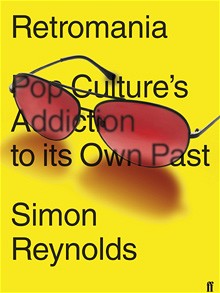 How many times have you heard an old song that brought you back to a particular place and time. The music acted as a kind of transport device that allowed you to short circuit time and make yesterday's events today's reality. But what happens next, what's the impact on the music and pop culture in general? If the past is what make us comfortable, in music, art and fashion, where will we find the creativity to move us forward? What will inspire the creative destruction for our future art and popular culture, if we only hang out in the retro? Music critic Simon Reynolds asks these questions and looks at the state of popular music in Retromania: Pop Culture's Addiction to Its Own Past
Tuesday Aug 16, 2011
Tuesday Aug 16, 2011
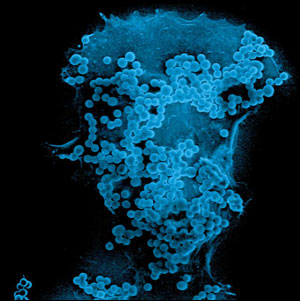 Over the years we've engaged in many "wars." The War on Poverty, the War on Drugs, the recent War on Terror and in the early 1970's, Richard Nixon launched a War on Cancer. It was a war that some said would be won by the turn of the last century. Obviously that war is not won and in some respects we are just at the starting gate. New treatments to take advantage of new genetic research is begging to take hold. The old paradigm of poisoning cancer to death, is finally running it course.
Yet cancer today is growing exponentially. It's estimated that one in three will be directly touch by cancer. It's becoming the number one killer in America. But with all we know, we know very little about this history and origins. Like to many war, we are too often fighting against an enemy we do not know or understand. This was the starting point for Pulitzer Prize winner Siddhartha Mukherjee's brilliant The Emperor of All Maladies: A Biography of Cancer
Over the years we've engaged in many "wars." The War on Poverty, the War on Drugs, the recent War on Terror and in the early 1970's, Richard Nixon launched a War on Cancer. It was a war that some said would be won by the turn of the last century. Obviously that war is not won and in some respects we are just at the starting gate. New treatments to take advantage of new genetic research is begging to take hold. The old paradigm of poisoning cancer to death, is finally running it course.
Yet cancer today is growing exponentially. It's estimated that one in three will be directly touch by cancer. It's becoming the number one killer in America. But with all we know, we know very little about this history and origins. Like to many war, we are too often fighting against an enemy we do not know or understand. This was the starting point for Pulitzer Prize winner Siddhartha Mukherjee's brilliant The Emperor of All Maladies: A Biography of Cancer
Wednesday Aug 10, 2011
Wednesday Aug 10, 2011

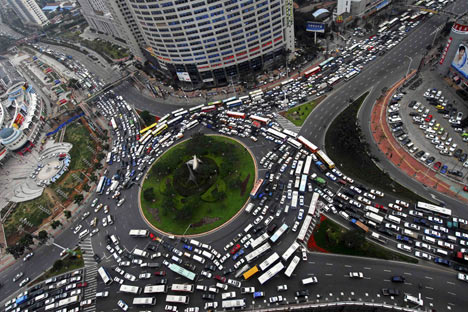 Winston Churchill once referred to the former Soviet Union as a riddle wrapped in a mystery inside an enigma. He was looking for some key to understand that nation. Today, as China rises, we seem to looking for a similar key. A kind of unified filed theory of China that will enable us to better and more simply understand the nation and it’s people. The problem is, it is a nation and a people who thrive on contradiction. A yin and yang that for almost every analysis there seems to be an opposite. Like the story of the blind man and the elephant, where each part that you touch gives you a different picture of the whole, so to with China, its mammoth scale makes it hard to see the whole.
The China we mostly see and talk about is the urban China; Beijing, Shanghai and dozens of other huge cities. These are critical in showing China to the world, as the Olympics did. But still there is also rural china. A place untouched by China’s progress, Almost another country of a billion people.
Two recent conversations portray both sides of China. First Tom Scocca gives us the urban view in Beijing Welcomes You: Unveiling the Capital City of the Future
Winston Churchill once referred to the former Soviet Union as a riddle wrapped in a mystery inside an enigma. He was looking for some key to understand that nation. Today, as China rises, we seem to looking for a similar key. A kind of unified filed theory of China that will enable us to better and more simply understand the nation and it’s people. The problem is, it is a nation and a people who thrive on contradiction. A yin and yang that for almost every analysis there seems to be an opposite. Like the story of the blind man and the elephant, where each part that you touch gives you a different picture of the whole, so to with China, its mammoth scale makes it hard to see the whole.
The China we mostly see and talk about is the urban China; Beijing, Shanghai and dozens of other huge cities. These are critical in showing China to the world, as the Olympics did. But still there is also rural china. A place untouched by China’s progress, Almost another country of a billion people.
Two recent conversations portray both sides of China. First Tom Scocca gives us the urban view in Beijing Welcomes You: Unveiling the Capital City of the Future

Wednesday Aug 10, 2011
Wednesday Aug 10, 2011
Winston Churchill once referred to the former Soviet Union as a riddle wrapped in a mystery inside an enigma. He was looking for some key to understand that nation. Today, as China rises, we seem to looking for a similar key. A kind of unified filed theory of China that will enable us to better and more simply understand the nation and it’s people. The problem is, it is a nation and a people who thrive on contradiction. A yin and yang that for almost every analysis there seems to be an opposite. Like the story of the blind man and the elephant, where each part that you touch gives you a different picture of the whole, so to with China, its mammoth scale makes it hard to see the whole.
The China we mostly see and talk about is the urban China; Beijing, Shanghai and dozens of other huge cities. These are critical in showing China to the world, as the Olympics did. But still there is also rural china. A place untouched by China’s progress, Almost another country of a billion people.
Two recent conversations portray both sides of China. First Tom Scocca gives us the urban view in Beijing Welcomes You: Unveiling the Capital City of the Future
Monday Aug 08, 2011
Monday Aug 08, 2011
 It has been accurately reported that one of the greatest fears people have is that of public speaking. This is particularly unfortunate given that the spoken word is how we best communicate our ideas, our passions and how we get others to understand and follow us. If we truly believe in what we have to say, what is it that we are afraid of? Is there a way to assure our success, to make sure that we understand the importance without letting the stakes impact the performance.
This is the work of Peter Meyers detailed in his work and in his book As We Speak: How to Make Your Point and Have It Stick
It has been accurately reported that one of the greatest fears people have is that of public speaking. This is particularly unfortunate given that the spoken word is how we best communicate our ideas, our passions and how we get others to understand and follow us. If we truly believe in what we have to say, what is it that we are afraid of? Is there a way to assure our success, to make sure that we understand the importance without letting the stakes impact the performance.
This is the work of Peter Meyers detailed in his work and in his book As We Speak: How to Make Your Point and Have It Stick
Friday Aug 05, 2011
Friday Aug 05, 2011
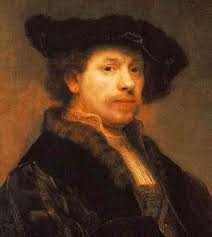 Art theft is one of the most profitable criminal enterprises in the world, exceeding $6 billion in losses to galleries and art collectors annually. Last May, five paintings worth over $125 million were stolen from the Paris Museum of Modern Art. They have not been recovered. Still unsolved in the $500 million robbery of Boston's Isabella Stewart Gardner Museum. Who steals art, why and how do they get rid of it? All are part of the story told by Anthony Amore and Tom Mashberg in their book Stealing Rembrandts: The Untold Stories of Notorious Art Heists
Tuesday Aug 02, 2011
Tuesday Aug 02, 2011

 that we all can develop insights about the future by looking at the world in a radically different way. My conversation with Daniel Burris:
Friday Jul 29, 2011
Friday Jul 29, 2011
 Just as we remember where we were when certain historic events took place, many of us have indelible image of where we saw and how we reacted to certain horror movies.
A genre once discredited, reanimated itself in the early ‘70’s and created what Jason Zinoman call "new horror." Directors like William Friedkin, Roman Polanski, John Carpenter, and Wes Craven would find new ways to exploit our most primal fears and often remind us that the monster were not only on the screen, but in ourselves.
My conversation with NY Times critic and reporter Jason Zinoman about Shock Value: How a Few Eccentric Outsiders Gave Us Nightmares, Conquered Hollywood, and Invented Modern Horror.
Just as we remember where we were when certain historic events took place, many of us have indelible image of where we saw and how we reacted to certain horror movies.
A genre once discredited, reanimated itself in the early ‘70’s and created what Jason Zinoman call "new horror." Directors like William Friedkin, Roman Polanski, John Carpenter, and Wes Craven would find new ways to exploit our most primal fears and often remind us that the monster were not only on the screen, but in ourselves.
My conversation with NY Times critic and reporter Jason Zinoman about Shock Value: How a Few Eccentric Outsiders Gave Us Nightmares, Conquered Hollywood, and Invented Modern Horror.