
Jeff Schechtman talks with authors, journalists, and thought leaders.
Episodes
Thursday Jul 28, 2011
Thursday Jul 28, 2011

 My conversation with Glenn Carle:
Wednesday Jul 27, 2011
Wednesday Jul 27, 2011
 Particularly for those of us here in the Bay Area we hear about start ups everyday. Do you every wonder what life is really like inside those start ups? Even harder to imagine is that companies like Apple, HP and Google with its 24,000 employees were themselves, once start ups. With respect to Google what was it like to be “present at the creation.” Douglas Edwards, Google employee #59, has given us some insight in his book I'm Feeling Lucky: The Confessions of Google Employee Number 59
Tuesday Jul 26, 2011
Tuesday Jul 26, 2011
 As we learn more about genetics, one of the key questions that always seems to arise is about creativity. Can we simply be born creative, or is it a learned behavior? In fact, it's not that simple. There are some very specific behaviors and skill sets that are the basis of any creative process. If we can master those skills, we have the ability to be creative and to come up with cutting edge idea.
Hal Gregersen, a Professor of leadership at INSEAD takes us through the skills required for creativity in his book The Innovator's DNA: Mastering the Five Skills of Disruptive Innovators
As we learn more about genetics, one of the key questions that always seems to arise is about creativity. Can we simply be born creative, or is it a learned behavior? In fact, it's not that simple. There are some very specific behaviors and skill sets that are the basis of any creative process. If we can master those skills, we have the ability to be creative and to come up with cutting edge idea.
Hal Gregersen, a Professor of leadership at INSEAD takes us through the skills required for creativity in his book The Innovator's DNA: Mastering the Five Skills of Disruptive Innovators
Tuesday Jul 26, 2011
Tuesday Jul 26, 2011
 Why is it that humans are so resistant to change? Perhaps in large part this comes from a fundamental flaw in our brains. That is, that the world around us, our culture, our technology, information and our work are all moving at a tremendously rapid pace. On the other hand, evolution moves very, very slowly. Our brains, which much process all of this speed and change, are still based on an operating system for a very different, almost primitive time. And while our brains have over 90 billion neurons and 100 trillion synapses, they are simply not designed for the 21st century. In trying to reconcile all of this, our brains, like our computers, are subject to crashes as they try to cope with the expanse of modernity.
These are the flaws in our brain examined by UCLA Professor Dean Buonomano in his book Brain Bugs: How the Brain's Flaws Shape Our Lives
Why is it that humans are so resistant to change? Perhaps in large part this comes from a fundamental flaw in our brains. That is, that the world around us, our culture, our technology, information and our work are all moving at a tremendously rapid pace. On the other hand, evolution moves very, very slowly. Our brains, which much process all of this speed and change, are still based on an operating system for a very different, almost primitive time. And while our brains have over 90 billion neurons and 100 trillion synapses, they are simply not designed for the 21st century. In trying to reconcile all of this, our brains, like our computers, are subject to crashes as they try to cope with the expanse of modernity.
These are the flaws in our brain examined by UCLA Professor Dean Buonomano in his book Brain Bugs: How the Brain's Flaws Shape Our Lives
Monday Jul 25, 2011
Monday Jul 25, 2011
 I think we know that disasters are happening around the world with greater and greater frequency. How do most of us respond to these disasters? How did we respond the 9/11, to Katrina, the earthquake in Haiti, the earthquake & tsunami in Sri Lanka in 2004 or the recent earthquake in Japan? For many of us, we may have written a check, or even easier, just sent a text to to make us feel better.
For one woman and a group of her friends, they decided they need to do more. What they would do would change their lives and profoundly change the lives of people they would help.
My conversation with Alison Thompson about The Third Wave: A Volunteer Story
I think we know that disasters are happening around the world with greater and greater frequency. How do most of us respond to these disasters? How did we respond the 9/11, to Katrina, the earthquake in Haiti, the earthquake & tsunami in Sri Lanka in 2004 or the recent earthquake in Japan? For many of us, we may have written a check, or even easier, just sent a text to to make us feel better.
For one woman and a group of her friends, they decided they need to do more. What they would do would change their lives and profoundly change the lives of people they would help.
My conversation with Alison Thompson about The Third Wave: A Volunteer Story
Thursday Jul 21, 2011
Thursday Jul 21, 2011
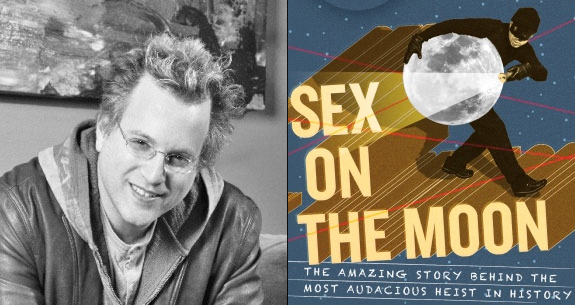 In earlier generations, truly bright kids might have become writers or political leaders or climbers of the corporate ladder. Today they become tech visionaries or entrepreneurs or evil geniuses ripping off Vegas or masterminding a heist of epic proportions.
Mostly they are they curiosities of Ben Mezrich, the author of the best selling BRINGING DOWN THE HOUSE and the ACCIDENTAL BILLIONAIRE, that became the basis of THE SOCIAL NETWORK. Now, in Sex on the Moon: The Amazing Story Behind the Most Audacious Heist in History
In earlier generations, truly bright kids might have become writers or political leaders or climbers of the corporate ladder. Today they become tech visionaries or entrepreneurs or evil geniuses ripping off Vegas or masterminding a heist of epic proportions.
Mostly they are they curiosities of Ben Mezrich, the author of the best selling BRINGING DOWN THE HOUSE and the ACCIDENTAL BILLIONAIRE, that became the basis of THE SOCIAL NETWORK. Now, in Sex on the Moon: The Amazing Story Behind the Most Audacious Heist in History
Sunday Jul 17, 2011
Sunday Jul 17, 2011
 Back in November of 2010 I spoke with Rebecca Traister about her book Big Girls Don't Cry: The Election That Changed Everything for American Women. The irony of the election of 2008 is that it did change everything, but not in the ways we expected. For all the drama, and cultural upheaval caused by the election of the first African American President, it was perhaps Clinton’s 18 million cracks in the glass ceiling, and Palin's attempt to co-opt it, that may have had the more far reaching impact on our politics and our culture.
Rebecca Traister's book is one of the most insightful and thought provoking about that 2008 campaign and it's just out in paperback at a time when Sara Palin and Michelle Bachman are redefining our politics.
My recent conversation with Rebecca Traister:
Back in November of 2010 I spoke with Rebecca Traister about her book Big Girls Don't Cry: The Election That Changed Everything for American Women. The irony of the election of 2008 is that it did change everything, but not in the ways we expected. For all the drama, and cultural upheaval caused by the election of the first African American President, it was perhaps Clinton’s 18 million cracks in the glass ceiling, and Palin's attempt to co-opt it, that may have had the more far reaching impact on our politics and our culture.
Rebecca Traister's book is one of the most insightful and thought provoking about that 2008 campaign and it's just out in paperback at a time when Sara Palin and Michelle Bachman are redefining our politics.
My recent conversation with Rebecca Traister:
Thursday Jul 14, 2011
Thursday Jul 14, 2011
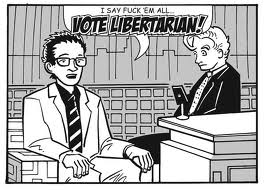 In almost every aspect of our culture, choice is a paramount virtue. From Starbucks to the long tail of the Internet, modern society and technology is always giving us more options, greater speed, and far greater engagement in whatever we choose to buy to participate in. That is, except for government. Our institutions of government from the Statehouse to the White House, are binary, paralyzed, artery clogged institutions, completely out of sync with every other aspect of our modern society. How did we get here, is there a way out and do libertarians have any of those answers? Nick Gillespie is one of the country's leading libertarian thinkers and he lays out his idea in The Declaration of Independents: How Libertarian Politics Can Fix What's Wrong with America
Wednesday Jul 13, 2011
Wednesday Jul 13, 2011

 , explains why we feel the way we do. My conversation with David Linden:
Monday Jul 11, 2011
Monday Jul 11, 2011
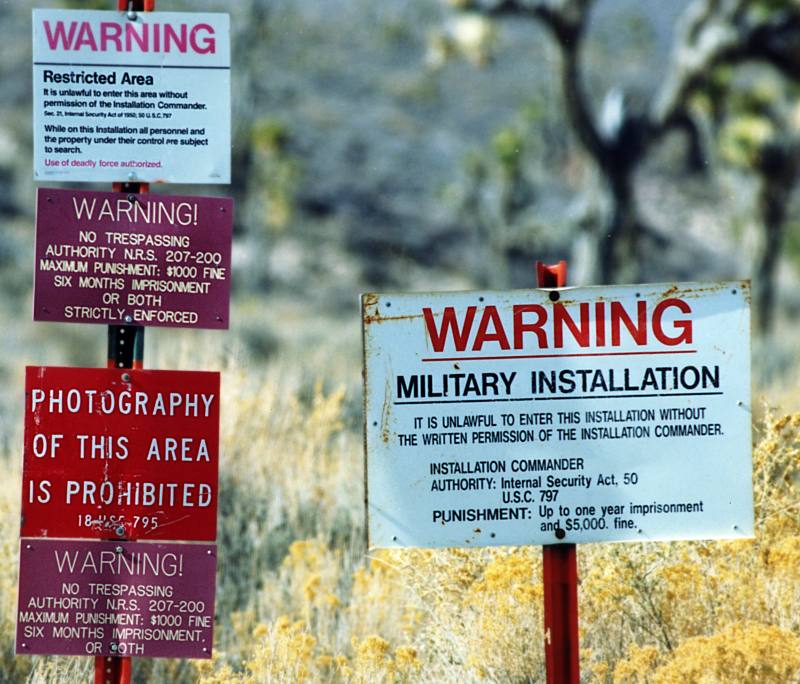 Winston Churchill once said of Russia that it was "a riddle, wrapped in a mystery, inside an enigma." Much the same might be said of the Federal Governments's most secret and largest land parcel in the United States. Almost the size of the State of Connecticut, Area 51 represents the apotheosis of the secret military industrial complex in the US.
Anne Jacobsen has written in Area 51: An Uncensored History of America's Top Secret Military Base
Winston Churchill once said of Russia that it was "a riddle, wrapped in a mystery, inside an enigma." Much the same might be said of the Federal Governments's most secret and largest land parcel in the United States. Almost the size of the State of Connecticut, Area 51 represents the apotheosis of the secret military industrial complex in the US.
Anne Jacobsen has written in Area 51: An Uncensored History of America's Top Secret Military Base
Thursday Jul 07, 2011
Thursday Jul 07, 2011
 The recent story about Jose Antiono Vargas should remind us that the story of illegal immigration is not just the story of those 12 to 13 million immigrants with the courage to come here, but also the story of their 4.5 million children whose lives are profoundly shaped, both good and bad, by events over which they have no control. Moreover these children will shape our culture and our polices for years to come. We are, in essence, denying a whole new generation of citizens the opportunity to be a part of the American dream. Often these fearful parents keep their children from programs and opportunities that would improve their development. Couple this with the recent failure of the Dream Act and you have 4.5 million young citizens arguably being denied their basic rights.
Hirokazu Yoshikawa, the incoming Academic Dean of the Harvard Graduate School of Education takes a look at this damaging oversight in his new work Immigrants Raising Citizens: Undocumented Parents and Their Young Children
The recent story about Jose Antiono Vargas should remind us that the story of illegal immigration is not just the story of those 12 to 13 million immigrants with the courage to come here, but also the story of their 4.5 million children whose lives are profoundly shaped, both good and bad, by events over which they have no control. Moreover these children will shape our culture and our polices for years to come. We are, in essence, denying a whole new generation of citizens the opportunity to be a part of the American dream. Often these fearful parents keep their children from programs and opportunities that would improve their development. Couple this with the recent failure of the Dream Act and you have 4.5 million young citizens arguably being denied their basic rights.
Hirokazu Yoshikawa, the incoming Academic Dean of the Harvard Graduate School of Education takes a look at this damaging oversight in his new work Immigrants Raising Citizens: Undocumented Parents and Their Young Children
Wednesday Jul 06, 2011
Wednesday Jul 06, 2011
 Arthur C. Clarke said that "any significantly advanced technology is indistinguishable from magic." This is arguably true not only for mechanized technology, but for intellectual technology as well.
The process of putting out a great daily Newspaper is such a process. Especially today, given the torrent of information, of news and of individual bits and bites that are coming at us every minute of every day. The ability to aggregate it, fact check it, put it in narrative form and make sure it arrives on your doorstep each morning, is truly a feat of magic.
There maybe more efficient ways to do this today, perhaps without the trucks and the dead trees. Still the process of creating great narrative journalism, in high quality Newspapers, is unquestionably unique. This process is at the heart of a new documentary and its’ companion volume taking us inside the New York Times. Amidst a landscape of technological revolution, information overload, shrinking ad revenues, political polarization and institutional distrust, the Times and by extension, all great journalism, struggles to survive.
David Folkinflik, the media correspondent for NPR, is the Editor of the companion volume, Page One: Inside The New York Times and the Future of Journalism. My conversation with David Folkenflik
Arthur C. Clarke said that "any significantly advanced technology is indistinguishable from magic." This is arguably true not only for mechanized technology, but for intellectual technology as well.
The process of putting out a great daily Newspaper is such a process. Especially today, given the torrent of information, of news and of individual bits and bites that are coming at us every minute of every day. The ability to aggregate it, fact check it, put it in narrative form and make sure it arrives on your doorstep each morning, is truly a feat of magic.
There maybe more efficient ways to do this today, perhaps without the trucks and the dead trees. Still the process of creating great narrative journalism, in high quality Newspapers, is unquestionably unique. This process is at the heart of a new documentary and its’ companion volume taking us inside the New York Times. Amidst a landscape of technological revolution, information overload, shrinking ad revenues, political polarization and institutional distrust, the Times and by extension, all great journalism, struggles to survive.
David Folkinflik, the media correspondent for NPR, is the Editor of the companion volume, Page One: Inside The New York Times and the Future of Journalism. My conversation with David Folkenflik
Tuesday Jul 05, 2011
Tuesday Jul 05, 2011
 It was Woody Allen who said that "marriage was the end of hope." To what extent was he right, particularly in the context of our ongoing sexual development? Do we know when we get married, usually early in life, where our fantasies and our desires will take us? And will our partner be the one to keep up, to fulfill those needs? And how can we square this with a genuine concern for kids and family?
All of these issues around monogamy are part of the much talked about Cover Story in this past Sunday's N.Y. Times Magazine entitled Married with Infidelities, by N.Y. Time religion columnist and contributing writer Mark Oppenheimer. My conversation with Mark Oppenheimer:
It was Woody Allen who said that "marriage was the end of hope." To what extent was he right, particularly in the context of our ongoing sexual development? Do we know when we get married, usually early in life, where our fantasies and our desires will take us? And will our partner be the one to keep up, to fulfill those needs? And how can we square this with a genuine concern for kids and family?
All of these issues around monogamy are part of the much talked about Cover Story in this past Sunday's N.Y. Times Magazine entitled Married with Infidelities, by N.Y. Time religion columnist and contributing writer Mark Oppenheimer. My conversation with Mark Oppenheimer:
Thursday Jun 30, 2011
Thursday Jun 30, 2011
 Different business sectors have faced the digital revolution in very different ways. The music business has been virtually destroyed by it; mostly because it allowed and still allows its greed to dictate its every decision. Hollywood has embraced it and has tried to adjust to new profit centers and new business models. The book publishing business, perhaps having learned from the mistakes of the music business, has tried to get out ahead of change and tried to make digital books its own and in so doing is creating new, sometimes innovative opportunities.
But no business has approached digital with less intelligence, less vision or less strategic thinking then journalism. Arguably a business that could have been on the cutting edge, it has operated out of fear, ignorance and petulance. The results have been that once great beacons of journalism, like the Chicago Tribune and the Los Angeles Times, have been decimated. Perhaps the penultimate story about this is told by James O'Shea in his new book The Deal from Hell: How Moguls and Wall Street Plundered Great American Newspapers
Different business sectors have faced the digital revolution in very different ways. The music business has been virtually destroyed by it; mostly because it allowed and still allows its greed to dictate its every decision. Hollywood has embraced it and has tried to adjust to new profit centers and new business models. The book publishing business, perhaps having learned from the mistakes of the music business, has tried to get out ahead of change and tried to make digital books its own and in so doing is creating new, sometimes innovative opportunities.
But no business has approached digital with less intelligence, less vision or less strategic thinking then journalism. Arguably a business that could have been on the cutting edge, it has operated out of fear, ignorance and petulance. The results have been that once great beacons of journalism, like the Chicago Tribune and the Los Angeles Times, have been decimated. Perhaps the penultimate story about this is told by James O'Shea in his new book The Deal from Hell: How Moguls and Wall Street Plundered Great American Newspapers
Wednesday Jun 29, 2011
Wednesday Jun 29, 2011
 The first decade of this new millennium has been marked by unprecedented change. Today we are arguably at the apogee of that change. How we understand, cope and manage this change will pretty much determine the fate of the world for at least the 21st century. The editors of the Gallup Management Journal have looked back at the past 10 years, through the ideas of some of our most prominent leaders and thinkers. This collection gives us a fascinating insight into how these leaders have navigated this most perilous period and in so doing, they act as scouts, leading us into an even more uncertain future. The editor of this collection entitled Decade of Change: Managing in Times of Uncertainty
Tuesday Jun 28, 2011
Tuesday Jun 28, 2011
 Every once in a while a conversation comes along that really does surprise as much as enlighten. Jessica Goodell graduated from high school in 2001. She enlisted in the Marine Corp to serve her country in a time of war. In 2004 she volunteered to serve in the Marine Corps' Mortuary Affairs unit in Iraq. The unit's mission was to recover and process the remains of dead soldiers and Iraqi civilians. Nothing could have prepared for what was to follow.
My conversation with Jess Goodell about her experience and her memoir SHADE IT BLACK: Death and After in Iraq
Every once in a while a conversation comes along that really does surprise as much as enlighten. Jessica Goodell graduated from high school in 2001. She enlisted in the Marine Corp to serve her country in a time of war. In 2004 she volunteered to serve in the Marine Corps' Mortuary Affairs unit in Iraq. The unit's mission was to recover and process the remains of dead soldiers and Iraqi civilians. Nothing could have prepared for what was to follow.
My conversation with Jess Goodell about her experience and her memoir SHADE IT BLACK: Death and After in Iraq
Monday Jun 27, 2011
Monday Jun 27, 2011
 . My conversation with Tim Harford:
Friday Jun 24, 2011
Friday Jun 24, 2011
 Journalism is often referred to as a first draft of history. But more than that, newspapers, especially tabloids, have traditionally been the narrative, the connective tissues that binds diverse and disparate communities. They have explained community to the newcomers and explained the newcomers to the community. Through that local tabloid narrative, we've witnessed and tried to understand the conflicts and follies of daily life. And from that, we form our own understanding of the world. Tabloids in short are the raw material that drives our own op ed view of the world; a kind of Rosetta Stone for understanding life. This is the context of tabloid journalism that no one understand better than Pete Hamill. Part of a generation that defined newspapermen, he has been the Editor of two great NY tabloids, he’s the author of over twenty books along with his heartfelt memoir A Drinking Life: A Memoir
Thursday Jun 23, 2011
Thursday Jun 23, 2011
 Media companies today have become giant, often nameless and faceless corporate enterprises. When we watch TV, we don’t seek out a show just because it’s on Fox or NBC. We don't go to a movie because it was financed or distributed by Universal or Paramount. One of the rare exceptions to all of this is ESPN. It has become not only the dominant player in sports journalism, but one of the most singularly powerful brands in the media landscape. Its on air personalities have become almost as well know at the people they cover. It has grown so large and powerful, like the business it covers, that the barriers to entry for any competitors are almost insurmountable.
How did this happen? What were the moments, who were the players that created this media, social, cultural and journalistic phenomenon? In his oral history Those Guys Have All the Fun: Inside the World of ESPN
Media companies today have become giant, often nameless and faceless corporate enterprises. When we watch TV, we don’t seek out a show just because it’s on Fox or NBC. We don't go to a movie because it was financed or distributed by Universal or Paramount. One of the rare exceptions to all of this is ESPN. It has become not only the dominant player in sports journalism, but one of the most singularly powerful brands in the media landscape. Its on air personalities have become almost as well know at the people they cover. It has grown so large and powerful, like the business it covers, that the barriers to entry for any competitors are almost insurmountable.
How did this happen? What were the moments, who were the players that created this media, social, cultural and journalistic phenomenon? In his oral history Those Guys Have All the Fun: Inside the World of ESPN
Thursday Jun 23, 2011
Thursday Jun 23, 2011
 Media companies today have become giant, often nameless and faceless corporate enterprises. We don’t seek out a TV shows just because they are on Fox or NBC. We don't go to a movies because they were financed or distributed by Universal or Paramount. One of the rare exceptions to all of this is ESPN. It has become not only the dominant player in sports journalism, but one of the most singularly powerful brands in the media today. Its on air personalities have become almost as well know at the people they cover. It has grown so large and powerful, like the business it covers, that the barriers to entry for any competitors are almost insurmountable.
How did this happen? What were the moments, who were the players that created this media, social, cultural and journalistic phenomenon? The answers lie in a new oral history of ESPN, getting huge attention coauthored by James Andrew Miller.
The book is Those Guys Have All the Fun: Inside the World of ESPN
Media companies today have become giant, often nameless and faceless corporate enterprises. We don’t seek out a TV shows just because they are on Fox or NBC. We don't go to a movies because they were financed or distributed by Universal or Paramount. One of the rare exceptions to all of this is ESPN. It has become not only the dominant player in sports journalism, but one of the most singularly powerful brands in the media today. Its on air personalities have become almost as well know at the people they cover. It has grown so large and powerful, like the business it covers, that the barriers to entry for any competitors are almost insurmountable.
How did this happen? What were the moments, who were the players that created this media, social, cultural and journalistic phenomenon? The answers lie in a new oral history of ESPN, getting huge attention coauthored by James Andrew Miller.
The book is Those Guys Have All the Fun: Inside the World of ESPN
Tuesday Jun 21, 2011
Tuesday Jun 21, 2011
25 years ago, Gordon Gekko told us that greed was good. That it was the essence, not only capitalism, but of every aspect of our society. When we look back at that movie moment, we see that it fell almost halfway between the beginning of what economist Jeff Madrick calls the Age of Greed and the crash and recession of 2008/2009. How did we get to the economic landscape we face today? Are there common threads and specific personalities that have forever changed our financial markets? If so, can we trace them to the crises we face today and will it better enable us to understand how to move forward? Economist and journalist Jeff Madrick thinks so and he's laid out the proposition in his new book Age of Greed: The Triumph of Finance and the Decline of America, 1970 to the Present
Monday Jun 20, 2011
Monday Jun 20, 2011
 At the moment we are a nation engaged in three wars, in Iraq, Afghanistan and Libya. We have now been in Iraq and Afghanistan almost twice as long as the American effort in WWII. As we seek an exit strategy, much of the discussion now centers on what might constitute success or victory. In this age of insurgency and counter insurgency, how do we know if we are in fact. winning a war? Since what is past is prologue, it's perhaps noteworthy to look back at America's experience in Vietnam. A war where the wiz kids at the Pentagon quantified everything, but knew the value of nothing, Col. Gregory Daddis gives us an up close and personal look at the lessons of history in No Sure Victory: Measuring U.S. Army Effectiveness and Progress in the Vietnam War
Friday Jun 17, 2011
Friday Jun 17, 2011
 I've always liked the notion that marriages are like fingerprints. No two are alike. We see the friends who have the prefect marriage, suddenly split asunder. The couple in a high conflict marriage who have been together for years. We seek soul mates, partners, friends and lovers. We go into marriage with the highest expectations and then often stay in them with a kind of low level ambivalence. All of this is accentuated by the needs, pressures, speed and reality of life in the 21st century. Pamela Haag in Marriage Confidential
Thursday Jun 16, 2011
Thursday Jun 16, 2011
 Since the dawn of the industrial age, the core of science fiction has been the delicate dance between man and machine. From the primitive fears generated by Frankenstein to the precociousness of HAL to the Cyberdyne Systems Model 101 in Terminator, these stories have touched our most primal fears. Today the machines are all around us; our phones, cars, ipods, all ubiquitous, connected, and laden with physics we don’t understand. We talk a great deal about how much information about each of us exists within these machines. What if at a precise moment, all of these machines suddenly turned against us. This is Daniel Wilson's scenario in Robopocalypse: A Novel
Wednesday Jun 15, 2011
Wednesday Jun 15, 2011
 Our population is growing exponentially. The need to feed that ever growing population has created new pressures on our food system. However the current system, designed to bring abundant food at low cost, is now broken. It’s consequences, in terms of our environment, our health and our economy, needs to be addressed. This is not just a question of eating locally, but requires a redesigning of our entire food system.
Dr. Oran Hesterman takes up the challenge of what this new system might look like in his new book Fair Food: Growing a Healthy, Sustainable Food System for All
Our population is growing exponentially. The need to feed that ever growing population has created new pressures on our food system. However the current system, designed to bring abundant food at low cost, is now broken. It’s consequences, in terms of our environment, our health and our economy, needs to be addressed. This is not just a question of eating locally, but requires a redesigning of our entire food system.
Dr. Oran Hesterman takes up the challenge of what this new system might look like in his new book Fair Food: Growing a Healthy, Sustainable Food System for All
Tuesday Jun 14, 2011
Tuesday Jun 14, 2011
 It’s fair to say that the world as we currently know it, is unsustainable: The increasing demand for water, oil and other natural resources will continue to grow. The economics of taking care of aging populations in the US and China, - the two largest economies in the world - the impact of climate change and the unpredictability of geopolitics, are just a few of the reasons to think that The Future is not possible. However, it’s equally fair to say that there may be a way out. Not by trying to predict or presage the future, but by making the business case for inventing it.
No one makes this case better than Hunter Lovins who, in her new book Climate Capitalism: Capitalism in the Age of Climate Change
It’s fair to say that the world as we currently know it, is unsustainable: The increasing demand for water, oil and other natural resources will continue to grow. The economics of taking care of aging populations in the US and China, - the two largest economies in the world - the impact of climate change and the unpredictability of geopolitics, are just a few of the reasons to think that The Future is not possible. However, it’s equally fair to say that there may be a way out. Not by trying to predict or presage the future, but by making the business case for inventing it.
No one makes this case better than Hunter Lovins who, in her new book Climate Capitalism: Capitalism in the Age of Climate Change
Monday Jun 13, 2011
Monday Jun 13, 2011
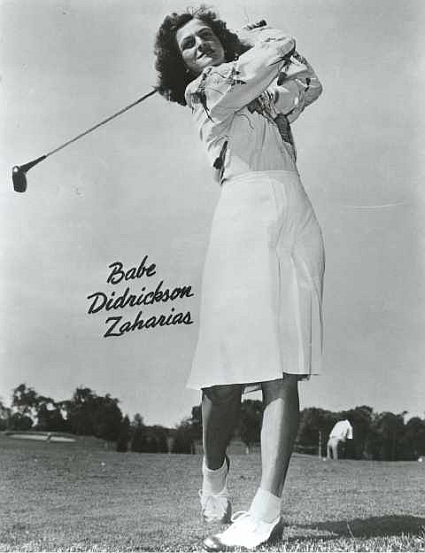 Long long before Title 9, before Billy Jean King, or Brandi Chastain, at a time during the first half of the 20th century, when women athletes were not expected to achieve much in sports, where woman athlete were even considered unfeminine, one woman, Babe Didrikson Zaharias, was breaking records in golf, basketball and track. Even though her life ended at the young age of 45, she is still considered on of the greatest athletes, male or female, of the 20th century. In our current era, where hype is often more important than talent, New York Times Pulitzer Prize winning journalist Don Van Natta Jr. looks back at Wonder Girl: The Magnificent Sporting Life of Babe Didrikson Zaharias
Thursday Jun 09, 2011
Thursday Jun 09, 2011
 Regardless of where we are on the issue of immigration, legal or illegal, our relationship with Mexico and our understanding of the Mexican people must be a central pillar of American foreign and domestic policy for decades to come. How we manage that relationship will depend in large measure on the degree to which we understand our southern neighbor. That understanding should include an awareness that is cultural, political and human. Without it, both nations, economically co-dependent, will face tougher times.
No one gets this idea better than one of Mexico's best know public intellectuals, Jorge Castaneda. A former Mexico Foreign Minister under Vincente Fox, now Global Distinguished Professor of Politics and Latin American Studies at NYU, his new book Manana Forever?: Mexico and the Mexicans
Regardless of where we are on the issue of immigration, legal or illegal, our relationship with Mexico and our understanding of the Mexican people must be a central pillar of American foreign and domestic policy for decades to come. How we manage that relationship will depend in large measure on the degree to which we understand our southern neighbor. That understanding should include an awareness that is cultural, political and human. Without it, both nations, economically co-dependent, will face tougher times.
No one gets this idea better than one of Mexico's best know public intellectuals, Jorge Castaneda. A former Mexico Foreign Minister under Vincente Fox, now Global Distinguished Professor of Politics and Latin American Studies at NYU, his new book Manana Forever?: Mexico and the Mexicans
Wednesday Jun 08, 2011
Wednesday Jun 08, 2011

Tuesday Jun 07, 2011
Tuesday Jun 07, 2011
 From Anthony Weiner to Martha Stewart to Scooter Libby to Barry Bonds...they all lie. Do we have an epidemic of perjury today? Pulitzer Prize winning journalist James B. Stewart thinks we do. Further he thinks that without the truth, and without a mechanism to compel the truth, the links in our judicial chain are fragile indeed. Have we simply lost respect for the public, our courts and our judicial system? Stewart looks at all of this in Tangled Webs: How False Statements are Undermining America: From Martha Stewart to Bernie Madoff
Monday Jun 06, 2011
Monday Jun 06, 2011
 Along with all the other social divisions we face today, we live in a bifurcated society with respect to technology. On the one hand, we rightly continue to run headlong into a future where a younger generation finds new ways to use technology, to multitask, and to reshape their brains around that technology. On the other hand we have an aging population, whose memories are often fading, who don't understand, or at least resist all of this technology. What happens when these forces collide is the basis of a new novel, Devil's Plaything,
Friday Jun 03, 2011
Friday Jun 03, 2011
 For a lot of you it may feel very special to know that Amazon, and Netflix and Apple and Gilt and Google tailor their results just for you. The idea and power of customization is currently the holy grail of the web. The reasons these sites tell us they need to aggregate so much information about us, is so that they can better server us. Lucky us! But what happens when the same principals, the same algorithms apply to our searches for information, our news sources? In this way essentially our algorithms shape how we view the world.
This is not science future. This is happening right now. And its net effect is both frightening and corrosive. Rather than expanding our world, which was the original promise of the Internet, it is arguably shrinking our world. MoveOn.org found Eli Pariser takes us inside this world of The Filter Bubble. My conversation with Eli Pariser:
For a lot of you it may feel very special to know that Amazon, and Netflix and Apple and Gilt and Google tailor their results just for you. The idea and power of customization is currently the holy grail of the web. The reasons these sites tell us they need to aggregate so much information about us, is so that they can better server us. Lucky us! But what happens when the same principals, the same algorithms apply to our searches for information, our news sources? In this way essentially our algorithms shape how we view the world.
This is not science future. This is happening right now. And its net effect is both frightening and corrosive. Rather than expanding our world, which was the original promise of the Internet, it is arguably shrinking our world. MoveOn.org found Eli Pariser takes us inside this world of The Filter Bubble. My conversation with Eli Pariser:
Wednesday Jun 01, 2011
Wednesday Jun 01, 2011

 . They are from across the political spectrum and together create a larger portrait of global power in the early 21st Century. The introduction for the book is written by New Yorker editor David Remnick. My conversation with Platon:
Tuesday May 31, 2011
Tuesday May 31, 2011
 Former Defense Secretary Donald Rumsfeld used to say that the best solution to an intractable problem, was to create a bigger problem. That didn't work out very well for him, or the Country. In fact, fully 5 percent of all conflicts end in a stalemate - not just the big ones that we read about every day, but also disputes and arguments in our everyday lives. How do we get beyond this, or do we? Dr. Peter Coleman of Columbia University, in his new work The Five Percent: Finding Solutions to Seemingly Impossible Conflicts

Tuesday May 17, 2011
Tuesday May 17, 2011

Monday May 16, 2011
Monday May 16, 2011
Benjamin Franklin said that "those who would give up essential liberty to purchase a little temporary safety deserve neither liberty nor safety." In the war on drugs and war on terror we seem to have forgotten this. Like the frog in boiling water, we seem to have become desensitized as free speech, privacy and protection from unreasonable searches and seizures have been eroded. The Patriot Act not withstanding, we can do something about. Pulitzer Prize winning journalist David Shipler in his new work, The Rights of the People: How Our Search for Safety Invades Our Liberties
Friday May 13, 2011
Friday May 13, 2011
 The legendary Howard Cosell once said of sports, that it was "the toy department of human life." In fact, it is perhaps our most powerful metaphor for life. A world of courage, pain, competition, sometimes meritocracy, celebrity and yes...often corruption and disrepute. What better way to understand the world, than to have spent the past six decades covering the ever changing and evolving wide world of sports? That is exactly what Robert Lipsye has done. By virtue of his perch at the New York Times, Robert Lipsyte has had a front row seat at the smorgasbord of heroes and contenders that have entertained, amazed and disappointed us for the past 50 years. His expansive and time transforming memoir Accidental Sportswriter is just out. My conversation with Robert Lipsyte:
Thursday May 12, 2011
Thursday May 12, 2011
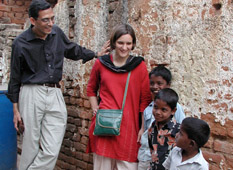 Scott Fitzgerald said that the rich are different. But what about the poor? Beyond the common denominator of poverty, are there aspects of a life of poverty that we just don’t understand? Does poverty itself create a different world view that accounts for the fundamental failure of so many well meaning anti- poverty programs? Moreover, even after our experience tells us otherwise, why do we continue to look for a magic bullet that will suddenly eradicate poverty and transform the developing world? The bottom line, is that we need to carefully and honestly measure results and realize that success it is a process that is often a slow and painful. No one working in the international development field today is as wise on these issues as Esther Duflo and Abhijit Banerjee.
Esther Duflo is a leading development economist known for her work in applying impact evaluation, and controlled trials and other field experiments to identify which development interventions actually work. She is the Jameel Professor of Poverty Alleviation and Development Economics at the MIT and co-founder of the Poverty Action Lab. She is a MacArther fellow and recognized by The Economist, Fortune and Foreign Policy magazine as one of most influential young leaders of our time.
Abhijit Banerjee is the Ford Foundation international professor of economics at MIT, also a co-founder of the Poverty Action Lab. Duflo and Banerjee's research has led them to identify wholly new aspects of the behavior of poor people, their needs, and the way that aid or financial investment can affect their lives. They are co-authors of Poor Economics: A Radical Rethinking of the Way to Fight Global Poverty
Scott Fitzgerald said that the rich are different. But what about the poor? Beyond the common denominator of poverty, are there aspects of a life of poverty that we just don’t understand? Does poverty itself create a different world view that accounts for the fundamental failure of so many well meaning anti- poverty programs? Moreover, even after our experience tells us otherwise, why do we continue to look for a magic bullet that will suddenly eradicate poverty and transform the developing world? The bottom line, is that we need to carefully and honestly measure results and realize that success it is a process that is often a slow and painful. No one working in the international development field today is as wise on these issues as Esther Duflo and Abhijit Banerjee.
Esther Duflo is a leading development economist known for her work in applying impact evaluation, and controlled trials and other field experiments to identify which development interventions actually work. She is the Jameel Professor of Poverty Alleviation and Development Economics at the MIT and co-founder of the Poverty Action Lab. She is a MacArther fellow and recognized by The Economist, Fortune and Foreign Policy magazine as one of most influential young leaders of our time.
Abhijit Banerjee is the Ford Foundation international professor of economics at MIT, also a co-founder of the Poverty Action Lab. Duflo and Banerjee's research has led them to identify wholly new aspects of the behavior of poor people, their needs, and the way that aid or financial investment can affect their lives. They are co-authors of Poor Economics: A Radical Rethinking of the Way to Fight Global Poverty
Wednesday May 11, 2011
Wednesday May 11, 2011
 Imagine if the world's largest retailer, a company long reviled by many, became the poster child for sustainability and a trailblazer in the field of green business? That is exactly what Wal-Mart has done. It's a little bit shocking, but for the last five years, Wal-Mart has evolved into a model in the green revolution and in fact, could set the stage for the transformation of business in the 21st century. How did this happen? It is real or just a PR stunt and can it continue? These and many other questions are answered by Pulitzer Prize winner Edward Humes in his new work Force of Nature: The Unlikely Story of Wal-Mart's Green Revolution
Tuesday May 10, 2011
Tuesday May 10, 2011
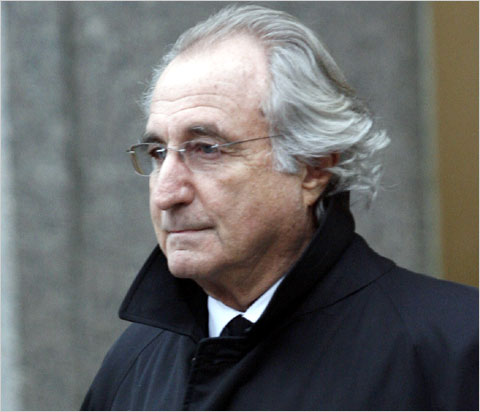 Much has been made of all the greed that led to the crash of 2008/2009. Much anger has been directed at bankers and investment bankers. Clearly many did engage in highly speculative behavior and skirted grey areas of the investment business. But one man redefined greed.and manipulation on Wall Street. If it was a time of cutting corners, then Bernie Madoff went off the road.
Madoff may have been a crook, but he didn't exist in a vacuum. His behavior reflected the extreme temper of the times on a Wall Street - a place he helped shape and that he intimately understood. He was not, as financial journalist Diana Henriques has said, not inhumanly monstrous, but rather monstrously human.
My conversation with New York Times senior financial writer Diana Henriques about her book The Wizard of Lies: Bernie Madoff and the death of Trust.
Much has been made of all the greed that led to the crash of 2008/2009. Much anger has been directed at bankers and investment bankers. Clearly many did engage in highly speculative behavior and skirted grey areas of the investment business. But one man redefined greed.and manipulation on Wall Street. If it was a time of cutting corners, then Bernie Madoff went off the road.
Madoff may have been a crook, but he didn't exist in a vacuum. His behavior reflected the extreme temper of the times on a Wall Street - a place he helped shape and that he intimately understood. He was not, as financial journalist Diana Henriques has said, not inhumanly monstrous, but rather monstrously human.
My conversation with New York Times senior financial writer Diana Henriques about her book The Wizard of Lies: Bernie Madoff and the death of Trust.