
Jeff Schechtman talks with authors, journalists, and thought leaders.
Episodes
Thursday Dec 23, 2010
Thursday Dec 23, 2010
 As we spend more and more of our Holiday time watching sporting events, as the business of sports continues to grow exponentially, the line between sports and entertainment continues to blur. In a nation besieged by seemingly insurmountable economic problems and the further fracturing of interpersonal bonds, sports with its simplicity, clarity and team identity, becomes stronger than ever. Along with all of this has come billions and billion of dollars to the sports/entertainment complex. Yet, how to maintain both the integrity of the business model and the purity and honesty of sport, in light of this kind of money, is an ongoing question.
Few have spent more time looking at this issue than David M. Carter, the Executive Director of the University of Southern California's Sports Business Institute and Professor or Sports Business at the USC'S Marshall School of Business. My conversation with David M. Carter, about his book Money Games: Profiting from the Convergence of Sports and Entertainment
As we spend more and more of our Holiday time watching sporting events, as the business of sports continues to grow exponentially, the line between sports and entertainment continues to blur. In a nation besieged by seemingly insurmountable economic problems and the further fracturing of interpersonal bonds, sports with its simplicity, clarity and team identity, becomes stronger than ever. Along with all of this has come billions and billion of dollars to the sports/entertainment complex. Yet, how to maintain both the integrity of the business model and the purity and honesty of sport, in light of this kind of money, is an ongoing question.
Few have spent more time looking at this issue than David M. Carter, the Executive Director of the University of Southern California's Sports Business Institute and Professor or Sports Business at the USC'S Marshall School of Business. My conversation with David M. Carter, about his book Money Games: Profiting from the Convergence of Sports and Entertainment
Tuesday Dec 21, 2010
Tuesday Dec 21, 2010
 Sometimes we live in places for years, without actually knowing them. To a real extent we live in a kind of "state of mind." Our connection to our City often has many layers of meaning, both personal and geographical. This is as true in a small towns as it is in the beautiful City of San Francisco.
National Book Critic Circle Award winner Rebecca Solnit, has created Infinite City: A San Francisco Atlas, a new kind of atlas of San Francisco, that allows us to see what really makes a place and examines the many layers of meaning inside a City like San Francisco. My conversation with Rebecca Solnit:
Sometimes we live in places for years, without actually knowing them. To a real extent we live in a kind of "state of mind." Our connection to our City often has many layers of meaning, both personal and geographical. This is as true in a small towns as it is in the beautiful City of San Francisco.
National Book Critic Circle Award winner Rebecca Solnit, has created Infinite City: A San Francisco Atlas, a new kind of atlas of San Francisco, that allows us to see what really makes a place and examines the many layers of meaning inside a City like San Francisco. My conversation with Rebecca Solnit:
Friday Dec 17, 2010
Friday Dec 17, 2010
 Americans are some of the least healthy people on the planet. Despite great medical care and research and one of the highest standards of living in the world, one in three Americans will be diagnosed with cancer and 50 percent of US children are overweight. This crisis in personal health is largely the result of the choices we make AND the foods we eat, especially Milk!
Dr. Joseph Keon in his new book Whitewash: The Disturbing Truth About Cow's Milk and Your Health
Americans are some of the least healthy people on the planet. Despite great medical care and research and one of the highest standards of living in the world, one in three Americans will be diagnosed with cancer and 50 percent of US children are overweight. This crisis in personal health is largely the result of the choices we make AND the foods we eat, especially Milk!
Dr. Joseph Keon in his new book Whitewash: The Disturbing Truth About Cow's Milk and Your Health
Wednesday Dec 15, 2010
Wednesday Dec 15, 2010
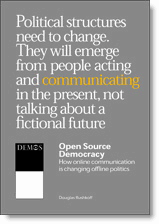
 , lies at the cutting edge of politics, democracy and technology. My conversation with Jared Duval:
Monday Dec 13, 2010
Monday Dec 13, 2010
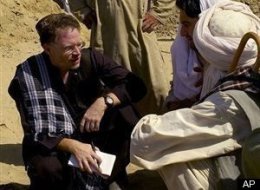 The war in Afghanistan is, by most accounts, not going well. This month the administration will be conducting a full review of our Afghan policy. However any such review, to be effective, must assume a real understanding of what’s happening on the ground...in Afghanistan and in the tribal regions of Pakistan. There is no reason to assume we have that understanding.
However, two time Pulitzer Prize winning N.Y. Times correspondent David Rohde, had a unique view inside the Taliban "mini-state" within Pakistan, and of Pakistan's military and their continually turning a blind eye to Taliban activities. Unfortunately, Rohde had to be kidnapped and fear for his life in order to garner this view. He and his wife, Kristen Mulvihill, tell their story in A Rope and a Prayer: A Kidnapping from Two Sides
The war in Afghanistan is, by most accounts, not going well. This month the administration will be conducting a full review of our Afghan policy. However any such review, to be effective, must assume a real understanding of what’s happening on the ground...in Afghanistan and in the tribal regions of Pakistan. There is no reason to assume we have that understanding.
However, two time Pulitzer Prize winning N.Y. Times correspondent David Rohde, had a unique view inside the Taliban "mini-state" within Pakistan, and of Pakistan's military and their continually turning a blind eye to Taliban activities. Unfortunately, Rohde had to be kidnapped and fear for his life in order to garner this view. He and his wife, Kristen Mulvihill, tell their story in A Rope and a Prayer: A Kidnapping from Two Sides
Friday Dec 10, 2010
Friday Dec 10, 2010
 If you believe that our future will indeed be better then our past, then you must believe in the imaginations of unreasonable men. For it is only ideas and imagination that can reshape the world. That the human mind and human spirit are capable of thinking something up, and in spite of any obstacles, making it happen, is as true for putting a man on the moon as it is for curing disease or starting a business. All are part of the rubric that defines hope and progress for civilization. Bill Shore has been guided by this idea and is the founder and Executive Director of Share of Strength, and is the author of The Imaginations of Unreasonable Men. My conversation with Bill Shore:
Wednesday Dec 08, 2010
Wednesday Dec 08, 2010

 he looks at the winners and losers in the current financial shell game what what impact their actions have had on us, our neighbors and our future. My conversation with Matt Taibbi:
Tuesday Dec 07, 2010
Tuesday Dec 07, 2010
 Back in the early 80 it’s estimated that there were over 50 companies that controlled or influenced media in the US. Today that number is less than 6. In spite of the dramatic increase in blogs, the web, 24/7 cable, there is clearly a homogenization of our media.
More then the story of how this has happened, the real question is what impact has it had on our democracy and on the proliferation of new ideas, on debate and on the intellectual, creative destruction that is the very essence of a free society. Legendary publsiher Andre Schffrin has been on the barricades of these questions for over fifty years. Now he reexamines all of it in his new book Words & Money.
Back in the early 80 it’s estimated that there were over 50 companies that controlled or influenced media in the US. Today that number is less than 6. In spite of the dramatic increase in blogs, the web, 24/7 cable, there is clearly a homogenization of our media.
More then the story of how this has happened, the real question is what impact has it had on our democracy and on the proliferation of new ideas, on debate and on the intellectual, creative destruction that is the very essence of a free society. Legendary publsiher Andre Schffrin has been on the barricades of these questions for over fifty years. Now he reexamines all of it in his new book Words & Money.
Monday Dec 06, 2010
Monday Dec 06, 2010
 Few Presidents, let alone few American, might justify a biography of three volumes and over one million words. Yet Theodore Roosevelt's Presidency and life, demand exactly that. Edmund Morris has captured the person and essence of Theodore Roosevelt in his three volume biography, of which he has just completed the final volume, Colonel Roosevelt
Thursday Dec 02, 2010
Thursday Dec 02, 2010
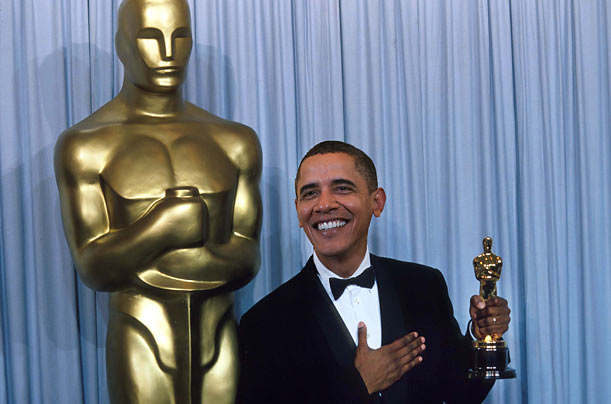 Presidential power passes in our nation, as in no other democracy. Our process of electing leaders, what it demands from them to meet our expectations, is grueling. In fact, arguably the skill it takes today to get elected President, may not be the best skills for governing.
In 2008 a maelstrom of forces came together to redefine still further how we elect our Presidents. The campaign performances of John McCain and Barack Obama, both defined and reflected back our national psyche. This is is both the narrow and the broader areas examined by Jeffrey Alexander in his new book The Performance of Politics: Obama's Victory and the Democratic Struggle for Power
Presidential power passes in our nation, as in no other democracy. Our process of electing leaders, what it demands from them to meet our expectations, is grueling. In fact, arguably the skill it takes today to get elected President, may not be the best skills for governing.
In 2008 a maelstrom of forces came together to redefine still further how we elect our Presidents. The campaign performances of John McCain and Barack Obama, both defined and reflected back our national psyche. This is is both the narrow and the broader areas examined by Jeffrey Alexander in his new book The Performance of Politics: Obama's Victory and the Democratic Struggle for Power
Tuesday Nov 30, 2010
Tuesday Nov 30, 2010
Monday Nov 29, 2010
Monday Nov 29, 2010
 As Republicans now face the reality of trying to govern and run congress with a rather diverse group of freshman legislators, so two years ago, the Obama administration came to office with real divisions within their coalition. Divisions between true believers, what MSNBC analyst Richard Wolffe calls "revivalist" and those with a more practical, Washington based agenda, the so call "survivalists."
Amidst these divisions, the country faced problem unequaled since the 1930's, an opposition party set to "no" as its default position on everything, and in spite of it all, the new President accomplished an extraordinary amount. How did this play out and what price did the administration and the nation have to pay? This is the backdrop for Richard Wolffe's new book Revival: The Struggle for Survival Inside the Obama White House
As Republicans now face the reality of trying to govern and run congress with a rather diverse group of freshman legislators, so two years ago, the Obama administration came to office with real divisions within their coalition. Divisions between true believers, what MSNBC analyst Richard Wolffe calls "revivalist" and those with a more practical, Washington based agenda, the so call "survivalists."
Amidst these divisions, the country faced problem unequaled since the 1930's, an opposition party set to "no" as its default position on everything, and in spite of it all, the new President accomplished an extraordinary amount. How did this play out and what price did the administration and the nation have to pay? This is the backdrop for Richard Wolffe's new book Revival: The Struggle for Survival Inside the Obama White House
Wednesday Nov 24, 2010
Wednesday Nov 24, 2010
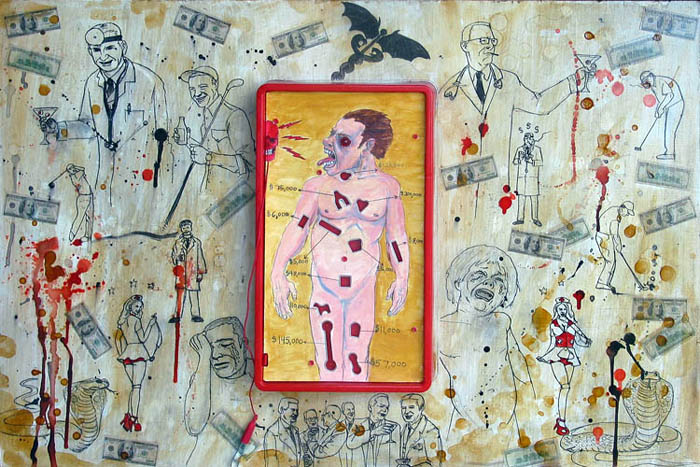 What are the limits of the medical establishment? How can prejudice and sometimes just lack of answers from Doctors result in a patient suffering for over twenty years? And how resilient must someone be, to recover and not be angry for loosing two decades? This is the story and the journey of Chloe Atkins. Now a professor in the Law and Society Program at the University of Calgary she is the author of the memoir My Imaginary Illness: A Journey into Uncertainty and Prejudice in Medical Diagnosis. My conversation with Chloe Atkins:
Wednesday Nov 24, 2010
Wednesday Nov 24, 2010
Tuesday Nov 23, 2010
Tuesday Nov 23, 2010

Monday Nov 22, 2010
Monday Nov 22, 2010
 We study history not just to collect facts and dates, but rather to understand where we came from, to ascertain the patterns of human affairs. This is not just to tell us what to do, but also what to avoid. For it is the task of succeeding generations to try and escape history, that is, to remove from possibility the mistakes of other times. In so doing one improves and that improvement is necessary to growth and civilization. When we look at history, particularly since around the 14th century, we see the steady domination of the West even though both East and West began on a kind of level playing field. What happened and what do those patterns of success and failure tell us about the future? This is the work of Stanford historian Ian Morris, as told in his new work, Why the West Rules--for Now: The Patterns of History, and What They Reveal About the Future
Friday Nov 19, 2010
Friday Nov 19, 2010
 As the past year will attest, if we wait for Washington to solve the health care crises, we could be waiting a very long time. Yet in spite of Washington, or maybe because so little gets done there, their are some real world efforts going on at the business and grass roots level that are transforming health care into a cost-efficient, accountable system that actually empowers consumers.
John Torinus, the CEO of Serigraph, in Milwaukee, Wisconsin, is truly at the leading edge of this effort. His commitment, his passion and encyclopedic knowledge of the subject has created a model that companies all over can follow. He's even written a book to share his efforts. My conversation with John Torinus Jr.
As the past year will attest, if we wait for Washington to solve the health care crises, we could be waiting a very long time. Yet in spite of Washington, or maybe because so little gets done there, their are some real world efforts going on at the business and grass roots level that are transforming health care into a cost-efficient, accountable system that actually empowers consumers.
John Torinus, the CEO of Serigraph, in Milwaukee, Wisconsin, is truly at the leading edge of this effort. His commitment, his passion and encyclopedic knowledge of the subject has created a model that companies all over can follow. He's even written a book to share his efforts. My conversation with John Torinus Jr.
Thursday Nov 18, 2010
Thursday Nov 18, 2010
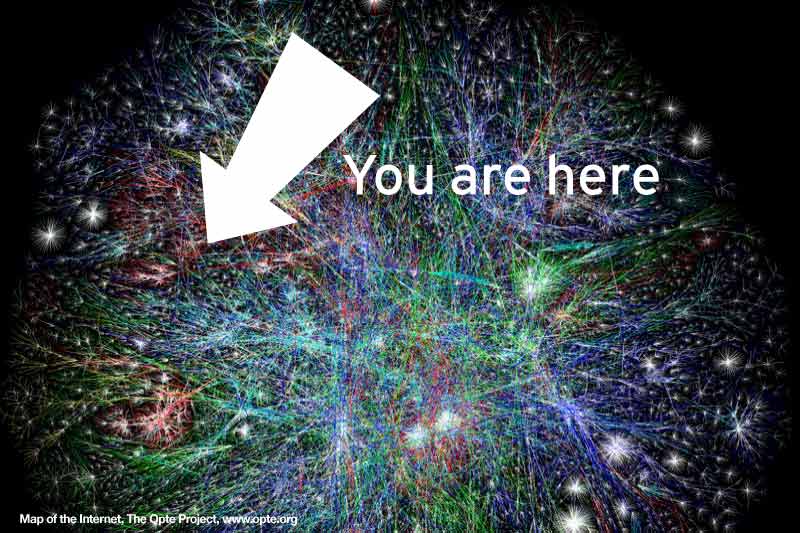 The subject of net neutrality, the idea that everyone should have the same access to the web, is certainly the subject of much debate. But that debate, begs the larger issue. That is, that the history of innovation is the history of the concentration of power and control in the hands of a few. Sometimes even government has been complicit in that effort. From the printing press to the telephone to radio & television, individuals and monolithic enterprises have exercised central control. With the Internet and its lower barriers to entry, how will this historical economic and capitalistic trend play out? This is the central focus of the work of Tim Wu, the man who coined the term "net neutrality," and whose new book The Master Switch: The Rise and Fall of Information Empires, could well be the tabula rasa of our digital future. My conversation with Tim Wu:
Tuesday Nov 16, 2010
Tuesday Nov 16, 2010
 What if a great idea, hard work and a good plan simply aren't enough to assure entrepreneurial success? In his book Invisible Capital: How Unseen Forces Shape Entrepreneurial Opportunity
Monday Nov 15, 2010
Monday Nov 15, 2010
 It often appears that the bonds of sisterhood are among the powerful. In fact, new research suggests that, for many woman, they are often the most corrosive. When Kelly Valen's essay "My Sorority Pledge? I Swore Off Sisterhood," was published in the New York Times Modern Love column, she was overwhelmed by the response. This wasn't just about the so called "mean girls," this was about woman who had been scared or shaped by the pain inflicted by high school, college or work related sisterhood. Inspired by the response to her article Kelly Valen conduced a unique survey of more than 3,00 woman. She reveals the results in her new book The Twisted Sisterhood: Unraveling the Dark Legacy of Female Friendships
Friday Nov 12, 2010
Friday Nov 12, 2010
 For any music to be successful, there must be that special bond between performer and listener. Perhaps nowhere has that bond been stronger then in the unique relationship between Bob Dylan and music critic extraordinaire Greil Marcus. For over forty years Dylan has drawn upon and reinvented the landscape of traditional American music, its myths, heroes and villains. Throughout all of it, Greil Marcus has been there to be our ears, to be a unique listener of an unparalleled singer. Marcus' forty years of writing on Dylan has been compiled into a new volume. Bob Dylan by Greil Marcus: Writings 1968-2010
Wednesday Nov 10, 2010
Wednesday Nov 10, 2010
 , gives us a Sinatra, warts and all, from the streets of Hoboken to the apex of celebrity. My conversation with James Kaplan:
Monday Nov 08, 2010
Monday Nov 08, 2010
.gif)
 , looks at a 21st century world centered around the Indian Ocean and very different than everything we learned years ago. My conversation with Robert Kaplan:
Friday Nov 05, 2010
Friday Nov 05, 2010
 It's hard to believe, but just four short years ago, during the 2006 midterm elections, the Democrats made some big gains. In 2008, the Obama campaign, layering on to the grass roots work done by the DNC under Howard Dean, would create a powerful grass roots movement that swept Democrats into power in 2008. Today, the movement seems shattered. The wave that rolled over the country on Tuesday was certainly Republican and impacted not only Congress, but State Houses and State Legislatures in every corner of the country.
How did a movement that once seemed unstoppable collapse in a few years? What does it say about our politics, our President and about the Democratic party? The Nation's Ari Berman looks at all of this in his timely new book Herding Donkeys: The Fight to Rebuild the Democratic Party and Reshape American Politics
It's hard to believe, but just four short years ago, during the 2006 midterm elections, the Democrats made some big gains. In 2008, the Obama campaign, layering on to the grass roots work done by the DNC under Howard Dean, would create a powerful grass roots movement that swept Democrats into power in 2008. Today, the movement seems shattered. The wave that rolled over the country on Tuesday was certainly Republican and impacted not only Congress, but State Houses and State Legislatures in every corner of the country.
How did a movement that once seemed unstoppable collapse in a few years? What does it say about our politics, our President and about the Democratic party? The Nation's Ari Berman looks at all of this in his timely new book Herding Donkeys: The Fight to Rebuild the Democratic Party and Reshape American Politics
Thursday Nov 04, 2010
Thursday Nov 04, 2010
 The 2008 Presidential election may have changed the political landscape for generations. Hillary Clinton's 18 millions cracks in the glass ceiling, Barack Obama’s transcendence of race and Sara Palin’s emergence as a political force, all shape our politics today. The irony is, that for all the drama and cultural upheaval caused by the election an African-American President, and the splendor of that election night speech in Grant Park, it was perhaps Clinton's loss and Palin's attempt to co-opt it, that may now have the most far reaching impact on our politics and our culture.
How did this happen? How did all of the primary campaign's angst and tension between Obama and Clinton supporters lead to John McCain’s spawning of Sara Palin, which has in turn lead directly to this weeks elections and will politics or feminism ever be the same?
This is the backdrop for Salon's senior writer, Rebecca Traister's eye opening new book Big Girls Don't Cry: The Election that Changed Everything for American Women
The 2008 Presidential election may have changed the political landscape for generations. Hillary Clinton's 18 millions cracks in the glass ceiling, Barack Obama’s transcendence of race and Sara Palin’s emergence as a political force, all shape our politics today. The irony is, that for all the drama and cultural upheaval caused by the election an African-American President, and the splendor of that election night speech in Grant Park, it was perhaps Clinton's loss and Palin's attempt to co-opt it, that may now have the most far reaching impact on our politics and our culture.
How did this happen? How did all of the primary campaign's angst and tension between Obama and Clinton supporters lead to John McCain’s spawning of Sara Palin, which has in turn lead directly to this weeks elections and will politics or feminism ever be the same?
This is the backdrop for Salon's senior writer, Rebecca Traister's eye opening new book Big Girls Don't Cry: The Election that Changed Everything for American Women
Wednesday Nov 03, 2010
Wednesday Nov 03, 2010
 As the election dust settles and a new Congress comes to town, some members will have power and others will not. We know from our own experience that power requires more than just hard work and intelligence. In politics like anything else, what are the skills we need to succeed, to acquire personal power and to effectively wield that power? Thirty five years ago Michael Korda laid out a predicate for power. Today, Stanford's Jeffrey Pfeffer is the leading thinker on the subject and his new book, Power: Why Some People Have It and Others Don't,
Tuesday Nov 02, 2010
Tuesday Nov 02, 2010
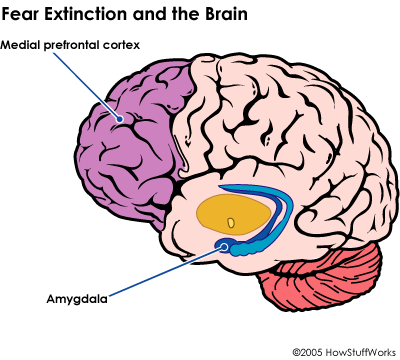 As Juan Williams' recent comments pointed out and today's election further attests, fear is the dominate impulse in our culture and in our politics. Fear of the other, be it on an elevator, or across the aisle of a plane, dominates our collective national consciousness. Even Jon Stewart realized this in his comments at his rally on Saturday. Journalist Shankar Vedantam, a reporter for the Washington Post and columnist for Slate.com, takes a look at this recent phenomenon and how he believes our Hidden Brain is evolutionarily hard wired to be afraid. How do we get behind this? My conversation with Shankar Vedantam:
Monday Nov 01, 2010
Monday Nov 01, 2010
Friday Oct 29, 2010
Friday Oct 29, 2010
 When it comes to war, sometimes the weapons define the conflict itself. From the musket, the Monitor and the Merrimack to Fat Man and Little Boy, our weapons have defined our views of conflict and often how we view our military preparedness. One such seminal weapon has been the AK47. Designed in Russia, after WWII, originally as the Kalashnikov, it would go on to become one of the most common weapons in the world. A weapon mass produced and designed to inflict maximum harm at close range, it has alternatively been seen as the gun of liberation or oppression. Pulitzer Prize winning war correspondent C.J. Chivers, in his new book The Gun
Thursday Oct 28, 2010
Thursday Oct 28, 2010
 Claude Levi-Strauss, who died a year ago at age 100, was one of the towering intellectuals of the 20th Century. Just as Freud shook up the discipline of psychiatry, so Levi-Strauss revolutionized anthropology. He transformed it from the colonial era study of "exotic" tribes to a discipline consumed with fundamental questions about he nature of humanity and civilization. While he was aggressive in pushing the theories of his time, his ideas and the quality of his work, still resonate today. Patrick Wilcken's, new biography of Levi-Strauss Claude Levi-Strauss: The Poet in the Laboratory
Thursday Oct 28, 2010
Thursday Oct 28, 2010
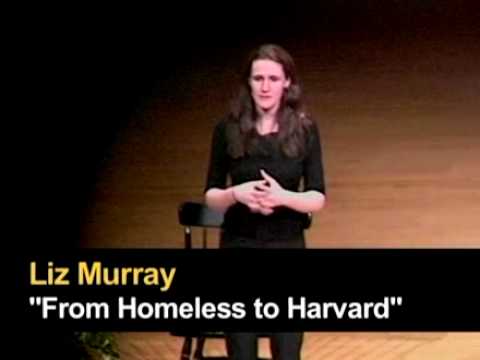 Next time you or your kids are feeling underprivileged, take a listen to this remarkable and riveting story of a young woman who triumphed over the circumstances of a truly harrowing childhood. Homeless at 15, Liz Murray took control of her life and ultimately graduated from Harvard. Her memoir Breaking Night: A Memoir of Forgiveness, Survival, and My Journey from Homeless to Harvard
Wednesday Oct 27, 2010
Wednesday Oct 27, 2010
 Imagine a technology that could help in securing the world's food supply, solve environmental crises, lower the need for fossil fuels and help reshape blighted urban landscapes; all in the context one big idea. This is the idea of The Vertical Farm and long time Columbia University microbiology Professor Dr. Dickson Despommier examines it in his new book. As climate change and the growing population of the developing world put new pressures on our food supply and in turn agriculture, the idea of vertical hydroponic and airoponic framing could be the wave of the future. My conversation with Dr. Dickson Despommier:
Tuesday Oct 26, 2010
Tuesday Oct 26, 2010
In 1989 as the Cold War came to end, we thought we were at "the end of history." We thought the end of the great superpower rivalry would mark a new turning point for peace. Yet today, twenty years later the world is perhaps more dangerous then during the height of the Cold War. How did this happen and what choices did our leaders make to create such a world?
In trying to figure this out, it's instructive to embrace the lessons of history. What happened at the end of WWII? After decades of violence and failed international policies, the end of that war should have provided a powerful framework for enduring peace. Instead we entered into the Cold War, nuclear proliferation, Korea, Vietnam, Israel and the Middle East and a host of new problems that we still live with today. What happened. This is the backdrop for The Lost Peace: Leadership in a Time of Horror and Hope, 1945-1953
Thursday Oct 21, 2010
Thursday Oct 21, 2010
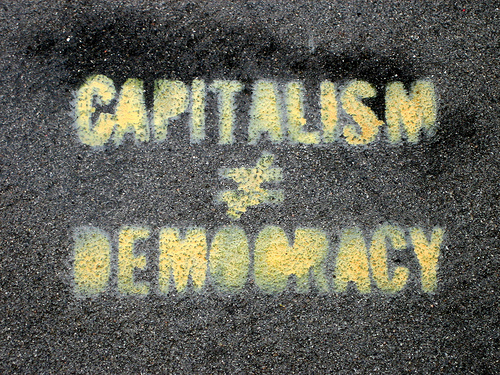 The current financial crises may have put capitalism under siege and highlighted the tensions between capitalism and American democracy. Yet this is not the first times these forces have been at odds. The decades after the civil war and the birth of the industrial revolution created massive industries, as we moved from an agrarian economy to a new, never before tired, capitalistic model. Even then, some thought that this new form of capitalism would overpower democracy itself. This period, often refereed to as the Gilded Age, is not only a fascinating story in its own right, but bears profound implications for the issues we face today. Never has the idea of repeating history that we don't learn from been more profound then in prize winning historian H.W. Brands' new book American Colossus: The Triumph of Capitalism, 1865-1900
Wednesday Oct 20, 2010
Wednesday Oct 20, 2010
 We often hear what sounds like a cliche, that one man can truly make a difference. In this complex, often overwhelming world, it seems more daunting than ever. Yet James Wolfensohn has indeed made a difference in the world. He is not only a hero to the world's poor, but a preeminent global leader in politics, philanthropy, business, the arts, international security and even sports.
James Wolfensohn was a prominent international banker, Chairman of Carnegie Hall and of the Kennedy Center; a world class cellist and one time Olympic fencer. He served as President of the World Bank for ten years and became the special envoy for the major powers, in overseeing Israel's disengagement from Gaza. He has written a moving and powerful memoir about his own personal journey.
He and I recently had a chance to discuss A Global Life: My Journey Among Rich and Poor, from Sydney to Wall Street to the World Bank
We often hear what sounds like a cliche, that one man can truly make a difference. In this complex, often overwhelming world, it seems more daunting than ever. Yet James Wolfensohn has indeed made a difference in the world. He is not only a hero to the world's poor, but a preeminent global leader in politics, philanthropy, business, the arts, international security and even sports.
James Wolfensohn was a prominent international banker, Chairman of Carnegie Hall and of the Kennedy Center; a world class cellist and one time Olympic fencer. He served as President of the World Bank for ten years and became the special envoy for the major powers, in overseeing Israel's disengagement from Gaza. He has written a moving and powerful memoir about his own personal journey.
He and I recently had a chance to discuss A Global Life: My Journey Among Rich and Poor, from Sydney to Wall Street to the World Bank
Tuesday Oct 19, 2010
Tuesday Oct 19, 2010
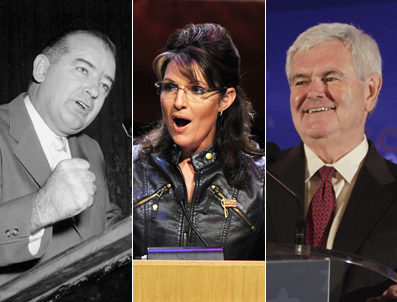
 The American experience is filled with demagogues who are often brought on by tough economic times and periods of dramatic change. Fear mongering has long been a stable of our politics and our culture. Father Coughlin, Joseph McCarthy, Huey Long, the populist James Curely, Robert Depugh and the Minute Men of the 1960’s and the John Birth Society; all tried to ride waves of fear and populist anger and in the end all failed. Today a new name has been added to this motley pantheon. One that not surprising comes out of Fox News, talk radio and the worst of therapeutic culture. He is Glenn Beck and while unfortunately, like "Lord Valdemort," it gives him power just to speak his name, it’s important that we understand this modern day phenomenon. I had the experience of meeting and listening to Glenn Beck this past Saturday, and since then having been trying to figure out if I had witnessed, a kind of right wing Oprah, Hitler or Howard Beal,or Joe McCarthy.
Dana Milbank, syndicated columnist with the Washington Post, tries to sort all of this out in his new book about Beck, Tears of a Clown: Glenn Beck and the Tea Bagging of America
The American experience is filled with demagogues who are often brought on by tough economic times and periods of dramatic change. Fear mongering has long been a stable of our politics and our culture. Father Coughlin, Joseph McCarthy, Huey Long, the populist James Curely, Robert Depugh and the Minute Men of the 1960’s and the John Birth Society; all tried to ride waves of fear and populist anger and in the end all failed. Today a new name has been added to this motley pantheon. One that not surprising comes out of Fox News, talk radio and the worst of therapeutic culture. He is Glenn Beck and while unfortunately, like "Lord Valdemort," it gives him power just to speak his name, it’s important that we understand this modern day phenomenon. I had the experience of meeting and listening to Glenn Beck this past Saturday, and since then having been trying to figure out if I had witnessed, a kind of right wing Oprah, Hitler or Howard Beal,or Joe McCarthy.
Dana Milbank, syndicated columnist with the Washington Post, tries to sort all of this out in his new book about Beck, Tears of a Clown: Glenn Beck and the Tea Bagging of America
Wednesday Oct 13, 2010
Wednesday Oct 13, 2010
 It is the largest machine ever built by man. It is 16.5 miles long, housed in a circular tunnel 300 feet below the ground. It is the the coldest place in the universe, one degree lower than the temperature of outer space. It is engaged in what is perhaps the most anticipated experiments in the history of science. It is the Large Hadron Collider and physical science will never the name after it peers far deeper into the universe than ever before. Some think, as Dan Brown's story told us, it will swallow us up in a Black Hole. More likely it will change forever the way we see the world. Award winning science writer Amir Aczel, in his new book, Present at the Creation: The Story of CERN and the Large Hadron Collider
Tuesday Oct 12, 2010
Tuesday Oct 12, 2010
Thursday Oct 07, 2010
Thursday Oct 07, 2010
 For most us when we think about China, it's in the context of 1.3 billion Chinese people as a kind of monolithic nation and culture. We see a growing international power, a competitor and a confusing, almost alien landscape. Perhaps because its culture and language is so different, the only way for a Westerner to try understand it, is from the inside, to be a part of it and not outside looking in.
That is precisely what Deborah Fallows did during her three years living in China with her husband, the distinguished journalist James Fallows. Deborah has written a story that is part memoir, part travelogue, part psychological profile. Dreaming in Chinese: Mandarin Lessons In Life, Love, And Language
For most us when we think about China, it's in the context of 1.3 billion Chinese people as a kind of monolithic nation and culture. We see a growing international power, a competitor and a confusing, almost alien landscape. Perhaps because its culture and language is so different, the only way for a Westerner to try understand it, is from the inside, to be a part of it and not outside looking in.
That is precisely what Deborah Fallows did during her three years living in China with her husband, the distinguished journalist James Fallows. Deborah has written a story that is part memoir, part travelogue, part psychological profile. Dreaming in Chinese: Mandarin Lessons In Life, Love, And Language