
Jeff Schechtman talks with authors, journalists, and thought leaders.
Episodes
Aug 7, 2012
Aug 7, 2012
32 min
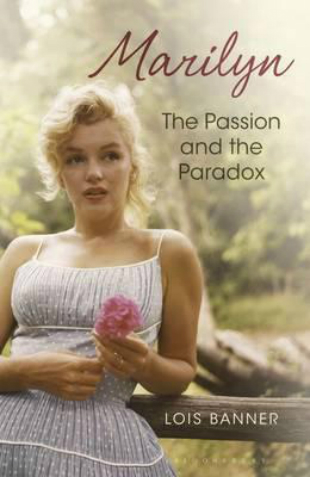 50 years ago this week, the world awoke to the death of Marilyn Monroe. At her death she was already one of the most well known Americans of the twentieth century. In death she would become even more famous. Steeped in mythology and contradiction, she would become a symbol of her times; the lens of her own dysfunction giving her a unique ken on post-war America.
Now historian Lois Banner, in her new biography Marilyn: The Passion and the Paradox
50 years ago this week, the world awoke to the death of Marilyn Monroe. At her death she was already one of the most well known Americans of the twentieth century. In death she would become even more famous. Steeped in mythology and contradiction, she would become a symbol of her times; the lens of her own dysfunction giving her a unique ken on post-war America.
Now historian Lois Banner, in her new biography Marilyn: The Passion and the Paradox
Aug 6, 2012
Aug 6, 2012
27 min
 When disaster strikes and loss happens, both human loss and economic loss, people look to be both assured first and then compensated. The assurance is often the job of government, of social institutions and of friends, neighbors and family. When people look to be compensated for a disaster, the process is often a lot more complicated. Who pays, what’s the loss worth and and how emotion enters into the economic algorithm are all relevant issues. Few understand this equation better than Kenneth Feinberg.
Feinberg ran the 9/11 Victims Compensation Fund, was the “Pay Czar,” for the TARP bailout and was in charge of disbursing all claims in the BP oil spill. He talks about all of this in his book Who Gets What: Fair Compensation after Tragedy and Financial Upheaval
When disaster strikes and loss happens, both human loss and economic loss, people look to be both assured first and then compensated. The assurance is often the job of government, of social institutions and of friends, neighbors and family. When people look to be compensated for a disaster, the process is often a lot more complicated. Who pays, what’s the loss worth and and how emotion enters into the economic algorithm are all relevant issues. Few understand this equation better than Kenneth Feinberg.
Feinberg ran the 9/11 Victims Compensation Fund, was the “Pay Czar,” for the TARP bailout and was in charge of disbursing all claims in the BP oil spill. He talks about all of this in his book Who Gets What: Fair Compensation after Tragedy and Financial Upheaval
Aug 2, 2012
Aug 2, 2012
25 min

 .
My conversation with Terrie Williams:
.
My conversation with Terrie Williams:
Jul 31, 2012
Jul 31, 2012
31 min
 The story goes that Marissa Mayer, the newly minted CEO of Yahoo, and a former VP at Google, once declined an otherwise brilliant job applicant at Google because they had once gotten a C in a math class.
Clearly in today's competitive world, academic success matters. The bar must be set high for academic success. But it must be set just as high for creativity, innovation and collaboration. But what about the kids that are not cut out to be the renaissance children of the next generation? What about those kids, even those from privilege, whose interests lie elsewhere? Whose job is it to see to it that they too are educated well and steered toward important places in our society?
Dr. Madeline Levine, a Bay Area clinician and the best selling author of The Price of Privilege, looks at these issues anew in her new work Teach Your Children Well: Parenting for Authentic Success
The story goes that Marissa Mayer, the newly minted CEO of Yahoo, and a former VP at Google, once declined an otherwise brilliant job applicant at Google because they had once gotten a C in a math class.
Clearly in today's competitive world, academic success matters. The bar must be set high for academic success. But it must be set just as high for creativity, innovation and collaboration. But what about the kids that are not cut out to be the renaissance children of the next generation? What about those kids, even those from privilege, whose interests lie elsewhere? Whose job is it to see to it that they too are educated well and steered toward important places in our society?
Dr. Madeline Levine, a Bay Area clinician and the best selling author of The Price of Privilege, looks at these issues anew in her new work Teach Your Children Well: Parenting for Authentic Success
Jul 30, 2012
Jul 30, 2012
21 min
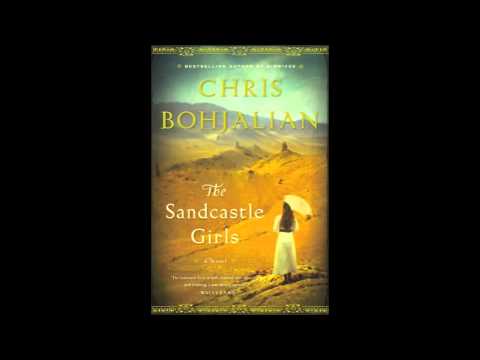 Over the course of his career, bestselling novelist Chris Bohjalian has taken readers on a spectacular array of journeys. An isolated Vermont farmhouse, the Roaring Twenties on Long Island, and the last six months of World War Two in Poland and Germany just a few. Now, In his fifteenth book, The Sandcastle Girls, he brings us on a very different and personal journey. A sweeping historical love story steeped in the author's Armenian heritage.
My conversation with Chris Bohjalian:
Jul 29, 2012
Jul 29, 2012
30 min
 Our relationship to the things we buy and the companies we buy from, is constantly changing. David "Doc" Searls, co-author of The Cluetrain Manifesto, argues that to date, it’s been a kind of master/slave relationship. Think of the rhetoric. Merchants "capture" customers, they want "to own" customers, they want to gather data on customer, have cookies follow them around. All so as to ostensible make our experience better. But is it?
From the perspective of the seller, John Wanamaker used to say that he knew that half of his advertising expenditures worked, he just didn't know which half.
Given the internet and the free flow of information, shouldn't the experience be more empowering for the consumer and less so for the seller? Yet it’s evolved in a way that is just the opposite. Doc Searls wants to change that, as he explains in his new work The Intention Economy: When Customers Take Charge
Our relationship to the things we buy and the companies we buy from, is constantly changing. David "Doc" Searls, co-author of The Cluetrain Manifesto, argues that to date, it’s been a kind of master/slave relationship. Think of the rhetoric. Merchants "capture" customers, they want "to own" customers, they want to gather data on customer, have cookies follow them around. All so as to ostensible make our experience better. But is it?
From the perspective of the seller, John Wanamaker used to say that he knew that half of his advertising expenditures worked, he just didn't know which half.
Given the internet and the free flow of information, shouldn't the experience be more empowering for the consumer and less so for the seller? Yet it’s evolved in a way that is just the opposite. Doc Searls wants to change that, as he explains in his new work The Intention Economy: When Customers Take Charge
Jul 28, 2012
Jul 28, 2012
19 min
 It’s hard to believe sometimes that forty-plus years after “the sixties,” after Vietnam, civil rights, feminism, and sex drugs and rock and roll, we are still litigating the issues raised in that period. Clearly it is one of the seminal inflection points in American history. Buy why? What really happened; what really changed in that period, that tilted the earth's axis?
There’s an old saying that says "if you remember the sixties, you weren't really there." Maybe that's why we still haven't figured it out. Long time journalist and novelist Kurt Andersen takes his shot, as he uses it as the backdrop for his new novel True Believers
It’s hard to believe sometimes that forty-plus years after “the sixties,” after Vietnam, civil rights, feminism, and sex drugs and rock and roll, we are still litigating the issues raised in that period. Clearly it is one of the seminal inflection points in American history. Buy why? What really happened; what really changed in that period, that tilted the earth's axis?
There’s an old saying that says "if you remember the sixties, you weren't really there." Maybe that's why we still haven't figured it out. Long time journalist and novelist Kurt Andersen takes his shot, as he uses it as the backdrop for his new novel True Believers
Jul 26, 2012
Jul 26, 2012
22 min
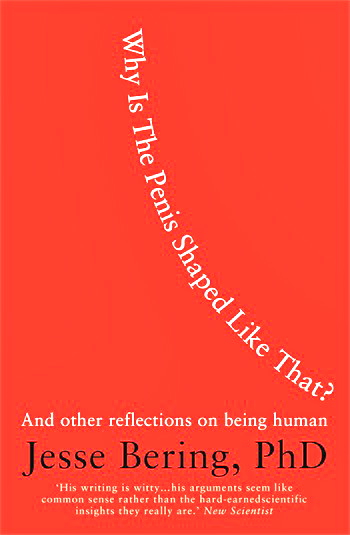 To paraphrase a marketing expression, science, it not just for nerds anymore. If we want to fully understand the human condition, including our sexuality, our relationships and our desires, we need to understand science.
Every month in Scientific America and Slate, Jesse Bering brings these issues to the forefront of consciousnes. Now he takes us on a kind of grand tour evolutionary biology in his book Why Is the Penis Shaped Like That?: And Other Reflections on Being Human
To paraphrase a marketing expression, science, it not just for nerds anymore. If we want to fully understand the human condition, including our sexuality, our relationships and our desires, we need to understand science.
Every month in Scientific America and Slate, Jesse Bering brings these issues to the forefront of consciousnes. Now he takes us on a kind of grand tour evolutionary biology in his book Why Is the Penis Shaped Like That?: And Other Reflections on Being Human
Jul 23, 2012
Jul 23, 2012
29 min
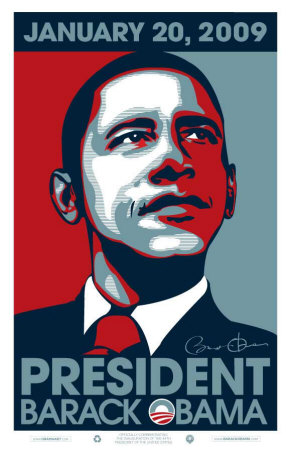 George Bernard Shaw once observed “that life isn't about finding yourself. Life is about creating yourself." For many people that is undoubtedly true. Bill Clinton might be the penultimate example of that. But for Barack Obama, it has always been about both. About understanding the world that created him, and then using that raw material to reassemble the pieces, to create himself anew.
This journey is at the core of David Maraniss's sweeping historical biography, Barack Obama: The Story
George Bernard Shaw once observed “that life isn't about finding yourself. Life is about creating yourself." For many people that is undoubtedly true. Bill Clinton might be the penultimate example of that. But for Barack Obama, it has always been about both. About understanding the world that created him, and then using that raw material to reassemble the pieces, to create himself anew.
This journey is at the core of David Maraniss's sweeping historical biography, Barack Obama: The Story
Jul 18, 2012
Jul 18, 2012
23 min
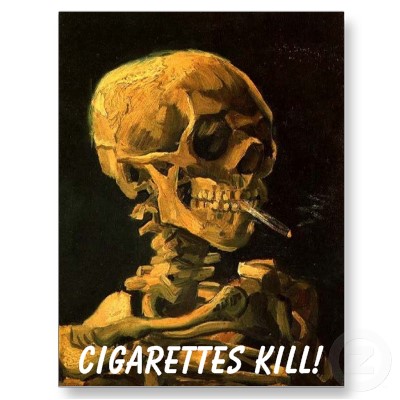 We all know cigarettes are bad for us. We know they are the only legal product that, if used as directed, will kill us. What we don't know is the degree to which tobacco companies manipulate their product. The way they add hundreds of harmful chemicals and compounds, of which we are mostly unaware, and which make them the world's largest cause of death.
Given these facts, shouldn't they be outlawed? Not banned, but outlawed!
Stanford Professor Robert Proctor thinks so and he make a powerful case in the 700+ pages of Golden Holocaust: Origins of the Cigarette Catastrophe and the Case for Abolition
My conversation with Robert Proctor:

Jul 16, 2012
Jul 16, 2012
26 min

Jul 11, 2012
Jul 11, 2012
29 min
It has not been a good decade. Since the dawn of the 21st century, almost all of our ideas of community, culture, even our notions of what constitutes a country; not to mention how we communicate, do business, read, think and see are being transformed and are cascading in upon us.
Since the turn of the century we've experienced Bush v. Gore, 9/11, Iraq, Katrina, the housing bubble, bank collapses, the implosion of traditional media and Wall Street, the foibles of baseball and the Catholic Church, the collapse of the auto industry and the impotence of Washington. Now Chris Hayes, of The Nation and MSNBC, connects the dots among these seemingly disparate events and finds some very common threads. He lays our the arguments in his book Twilight of the Elites: America after Meritocracy
My conversation with Christopher Hayes:
Jul 9, 2012
Jul 9, 2012
29 min
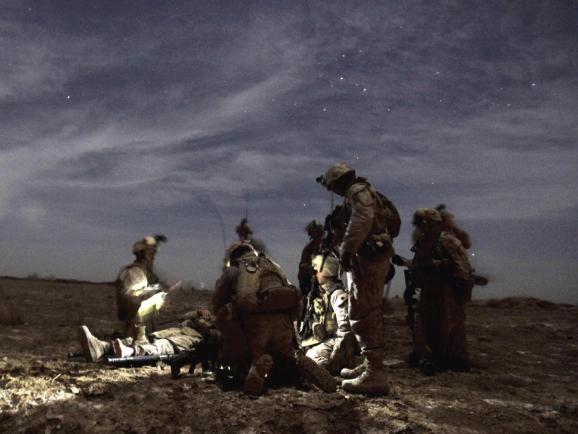
 , he takes us deep inside the military and civilian decisions and actions that negatively impacted our Afghan policy. My conversation with Rajiv Chandrasekaran:
Jul 2, 2012
Jul 2, 2012
23 min

 , that we need to master the farewells in order to accommodate the new.
My conversation with Sara Lawrence-Lightfoot:
Jun 29, 2012
Jun 29, 2012
17 min

Here is that conversation:
Jun 25, 2012
Jun 25, 2012
25 min
 Modern life has seen to it that almost everything in our society has been subject to a kind of creative destruction. We've talked many times about the impact of technology and science in traditional medicine. But what about psychoanalysis. Up until now, the traditional methods have taken a long time. Regardless if it was Woody Alan or Tony Soprano on the couch, there seemed to be no quick fix.
Now all of that may be changing. Phil Stutz and Barry Michels have a very different approach, one designed around the idea of instant results! It’s no wonder that they have become the "go to therapists" for Hollywood. Their office is a kind of denizen of top actors, directors, agents, writers and other creative professionals. Now they have codified their particularly unique approach in a new book entitled The Tools: Transform Your Problems into Courage, Confidence, and Creativity
My conversation with Phil Stutz and Barry Michels:
Jun 22, 2012
Jun 22, 2012
26 min

 takes us inside the Superman legacy.
My conversation with Larry Tye:
takes us inside the Superman legacy.
My conversation with Larry Tye:
Jun 21, 2012
Jun 21, 2012
20 min
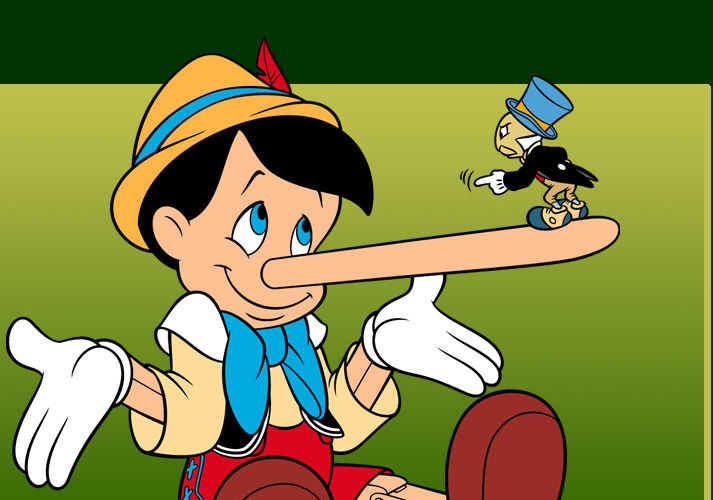
 . He's run experiments with some 30,000 people and found that very few people lie a lot, but almost everyone lies a little.
My conversation with Dan Ariely:
. He's run experiments with some 30,000 people and found that very few people lie a lot, but almost everyone lies a little.
My conversation with Dan Ariely:
Jun 19, 2012
Jun 19, 2012
27 min
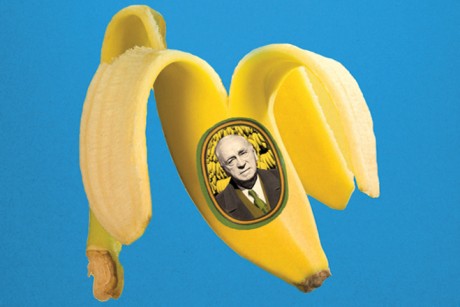
 My conversation with Rich Cohen:
Jun 18, 2012
Jun 18, 2012
22 min

Craig Claiborne invented professional restaurant criticism, and was also the man who introduced the American palate to arugula, balsamic vinegar and chef's knives; leading us out of a vast culinary wasteland. Thomas McNamee, who previously wrote about Alice Waters, takes us inside The Man Who Changed the Way We Eat: Craig Claiborne and the American Food Renaissance

My conversation with Thomas McNamee:
Jun 14, 2012
Jun 14, 2012
25 min

 argues just the opposite; that we are perhaps the most philosophical nation in history.
My conversation with Carlin Romano:
Jun 13, 2012
Jun 13, 2012
29 min
 There is a wonderful quote about travel from TS Eliot who said that "we shall not cease from exploration and the end of all our exploring will be to arrive where we started and know the place for the first time."
The same might also be said of understanding the people we travel with, even if they are our own family. After all, how much have each of us learned about our own family members on those family vacations?
Esteemed journalist and writer Buzz Bissinger took a journey with his son that would indeed land him back where he started, but it was truly as if he knew his son for the very first time. His new book Father's Day: A Journey into the Mind and Heart of My Extraordinary Son
There is a wonderful quote about travel from TS Eliot who said that "we shall not cease from exploration and the end of all our exploring will be to arrive where we started and know the place for the first time."
The same might also be said of understanding the people we travel with, even if they are our own family. After all, how much have each of us learned about our own family members on those family vacations?
Esteemed journalist and writer Buzz Bissinger took a journey with his son that would indeed land him back where he started, but it was truly as if he knew his son for the very first time. His new book Father's Day: A Journey into the Mind and Heart of My Extraordinary Son
Jun 11, 2012
Jun 11, 2012
21 min

 , that the social network may be weakening, not building up our relationships.
My conversation with Andrew Keen:
May 29, 2012
May 29, 2012
26 min
 , he sets the stage for a new kind of espionage and in fact a new geopolitical view of intelligence.
My conversation with Ambassador Henry Crumpton:
, he sets the stage for a new kind of espionage and in fact a new geopolitical view of intelligence.
My conversation with Ambassador Henry Crumpton:
May 24, 2012
May 24, 2012
26 min
 ,
takes us through example after example of how extraordinary companies are making change work for them.
,
takes us through example after example of how extraordinary companies are making change work for them.My conversation with Jason Jennings:
May 23, 2012
May 23, 2012
27 min


My conversation with Samuel Popkin:
May 21, 2012
May 21, 2012
21 min
.jpg) When we think of a globalization, we tend to think of a world more connected, more unified and more equal in terms its power politics. It’s one of the ironies of globalization that it has really made the world more fragmented, more regional and more dangerous. In many ways it’s a kind of creative destruction in global politics. Just as creative destruction and entrepreneurialism has changed almost every aspect of the business and personal landscape, we would be foolish to think it wouldn't happen in global politics as well. The institutions, infrastructure, and architecture of the world America made in the post War years, is now under review and up for grabs.
When we think of a globalization, we tend to think of a world more connected, more unified and more equal in terms its power politics. It’s one of the ironies of globalization that it has really made the world more fragmented, more regional and more dangerous. In many ways it’s a kind of creative destruction in global politics. Just as creative destruction and entrepreneurialism has changed almost every aspect of the business and personal landscape, we would be foolish to think it wouldn't happen in global politics as well. The institutions, infrastructure, and architecture of the world America made in the post War years, is now under review and up for grabs.
Few understand this dynamic better than Ian Bremmer. He is the president of Eurasia Group, one of the world's leading global political risk research and consulting firms, and the author of his eighth book about the state of the world's geopolitics Every Nation for Itself: Winners and Losers in a G-Zero World
May 18, 2012
May 18, 2012
27 min
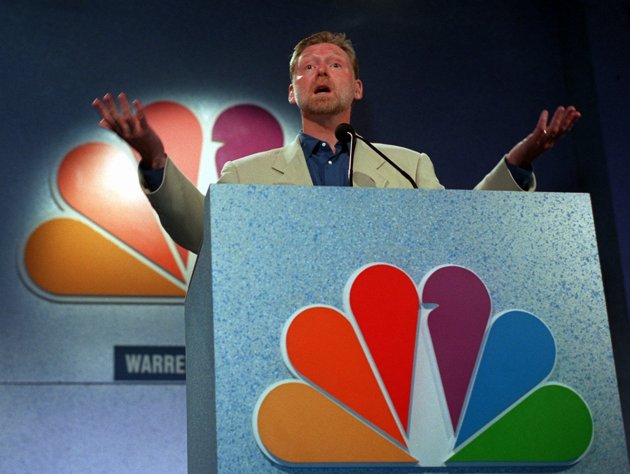 It may be hard for young people to remember, but there was a time before 500 channels, before Hulu and itunes and Apple TV. A time when three networks accounted for almost the sum total of what we watched, and more importantly what shaped our popular culture. It was a time when Thursday night was “must see TV,” and totally dominated the conversation around water coolers and lunch rooms the next day. In large measure the man responsible for shepherding “must see TV,” was Warren Littlefield, the President of NBC Entertainment from 1993 to 1998. He writes about this Golden Age in Top of the Rock: Inside the Rise and Fall of Must See TV
May 17, 2012
May 17, 2012
21 min
 The business of daily journalism is under siege. The practice of putting out a morning paper each and every day, of searching for scoops, of pushing, editing and curating great reporters and making sure that paper reaches your driveway each morning, is a craft that may soon be preserved in amber.
But forty years ago, the business reached what many thought was its apogee as The Washington Post lead the coverage a second rate, Washington D.C. burglary, that would become known as Watergate. While Woodward and Bernstein covered the story and got the scoops, they were led by Ben Bradlee, whose tenure, at Executive Editor of the Post, displayed the very best that journalism has to offer.
Jeff Himmelman, a one time Bob Woodward protege, has written an authorized biography of Bradlee, Yours in Truth: A Personal Portrait of Ben Bradlee
My conversation with Jeff Himmelman:
May 16, 2012
May 16, 2012
26 min


My conversation with Caitrin Lynch:
May 15, 2012
May 15, 2012
22 min

 .
.
May 14, 2012
May 14, 2012
27 min
 On Sunday, Tom Friedman's column talked about a new book by Harvard Professor Michael Sandel. In it, he looks at our cynicism and growing lack of civic engagement. Our stubborn refusal to engage in real discussion about real ideas. Secondly, he examines the ways in which markets have become the sine qua non of every aspect of the way we organize society. These two ideas, seemingly independent, but according to Sandel, are very much related to creating the mess we are in today.
My conversation with Michael Sandel about his book What Money Can't Buy: The Moral Limits of Markets
On Sunday, Tom Friedman's column talked about a new book by Harvard Professor Michael Sandel. In it, he looks at our cynicism and growing lack of civic engagement. Our stubborn refusal to engage in real discussion about real ideas. Secondly, he examines the ways in which markets have become the sine qua non of every aspect of the way we organize society. These two ideas, seemingly independent, but according to Sandel, are very much related to creating the mess we are in today.
My conversation with Michael Sandel about his book What Money Can't Buy: The Moral Limits of Markets
May 11, 2012
May 11, 2012
26 min
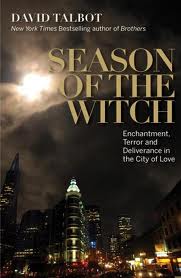 Every major cultural, social and political movement of the modern era seems to be anchored in its own place and its own decade. Post war sensibilities were shaped by and centered in New York in the1950’s. It was the time of Mad Men and The Man in the Grey Flannel Suit. In the mid to late 70’s the youthful freedom of the time was enshrined by the golden age of a new independent Hollywood film industry. In the 80’s Washington was front and center as the Reagan revolution changed America. There’s no question that in the 90s Wall Street, set the stage. In the 60s however San Francisco was the center of gravity.
The culture wars that still shape every aspect of our lives today, had their roots in the San Francisco of the late 60’s; what we hear proclaimed today as San Francisco values. It was a unique flowering that would ultimately destroy The City. But San Francisco would fight back. Its’ people, its geography its intellectual heft would ultimately make its day.
David Talbot, founder of Salon.com, recounts the turbulent years of San Francisco between 1967 and 1982 in Season of the Witch: Enchantment, Terror and Deliverance in the City of Love.
Every major cultural, social and political movement of the modern era seems to be anchored in its own place and its own decade. Post war sensibilities were shaped by and centered in New York in the1950’s. It was the time of Mad Men and The Man in the Grey Flannel Suit. In the mid to late 70’s the youthful freedom of the time was enshrined by the golden age of a new independent Hollywood film industry. In the 80’s Washington was front and center as the Reagan revolution changed America. There’s no question that in the 90s Wall Street, set the stage. In the 60s however San Francisco was the center of gravity.
The culture wars that still shape every aspect of our lives today, had their roots in the San Francisco of the late 60’s; what we hear proclaimed today as San Francisco values. It was a unique flowering that would ultimately destroy The City. But San Francisco would fight back. Its’ people, its geography its intellectual heft would ultimately make its day.
David Talbot, founder of Salon.com, recounts the turbulent years of San Francisco between 1967 and 1982 in Season of the Witch: Enchantment, Terror and Deliverance in the City of Love.
May 10, 2012
May 10, 2012
25 min
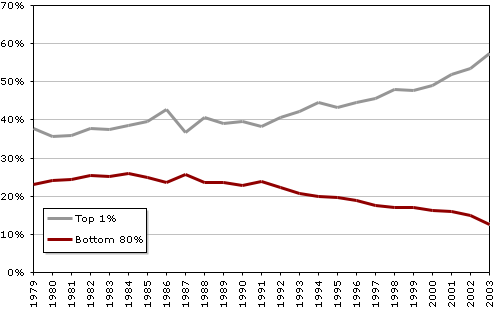
All this talk about the one percent did not happen overnight. For 30 years the income gap in this country has grown geometrically. The middle class, that once provided the engine of American growth in the second half of the 20th century has shrunk and even with globalization the US is seeing economic mobility declining as compared to other western nations. How did we get here? Was it serendipity, tax policy, partisan political action or is it the inevitable result of the invisible hand of capitalism? New Republic “TRB” columnist Timothy Noah in The Great Divergence: America's Growing Inequality Crisis and What We Can Do about It
 gives us the essential background we need to begin to understand the answers to these questions.
My conversation with Timothy Noah:
May 8, 2012
May 8, 2012
31 min
 To be President is to be both anointed, yet at the same time scarred for life. To date, only fourty-four men have had that experience and can fully understand what that means. Never have more than six of them met, at any one time. It is arguably the most exclusive club in the world.
Two of the finest reporters and writers for Time Magazine, Time's Deputy Managing Editor Nancy Gibbs and Executive Editor & Washington Bureau Chief Michael Duffy, take us inside The Presidents Club: Inside the World's Most Exclusive Fraternity
To be President is to be both anointed, yet at the same time scarred for life. To date, only fourty-four men have had that experience and can fully understand what that means. Never have more than six of them met, at any one time. It is arguably the most exclusive club in the world.
Two of the finest reporters and writers for Time Magazine, Time's Deputy Managing Editor Nancy Gibbs and Executive Editor & Washington Bureau Chief Michael Duffy, take us inside The Presidents Club: Inside the World's Most Exclusive Fraternity
My conversation with Nancy Gibbs and Michael Duffy:
May 3, 2012
May 3, 2012
20 min
 .
My conversation with Seth Jones:
.
My conversation with Seth Jones:
May 1, 2012
May 1, 2012
25 min
 We used to worry that schools were inadequate for the late 20th Century: that a system built around an agrarian calendar and 19th century ideas, was insufficient. Today, the disruptive impact of technology, information and globalization have once again transformed our society. And, as we move into the second decade of the 21st Century, we are still bogged down with some of the same 19th century ideas. Quite simply, do we have the momentum and energy to reach escape velocity from these old paradigms.
Now, Tony Wagner, founder of Harvard's Change Leadership Group and the author of The Global Achievement Gap, gives us education 3.0 in Creating Innovators: The Making of Young People Who Will Change the World
We used to worry that schools were inadequate for the late 20th Century: that a system built around an agrarian calendar and 19th century ideas, was insufficient. Today, the disruptive impact of technology, information and globalization have once again transformed our society. And, as we move into the second decade of the 21st Century, we are still bogged down with some of the same 19th century ideas. Quite simply, do we have the momentum and energy to reach escape velocity from these old paradigms.
Now, Tony Wagner, founder of Harvard's Change Leadership Group and the author of The Global Achievement Gap, gives us education 3.0 in Creating Innovators: The Making of Young People Who Will Change the World
Apr 30, 2012
Apr 30, 2012
21 min
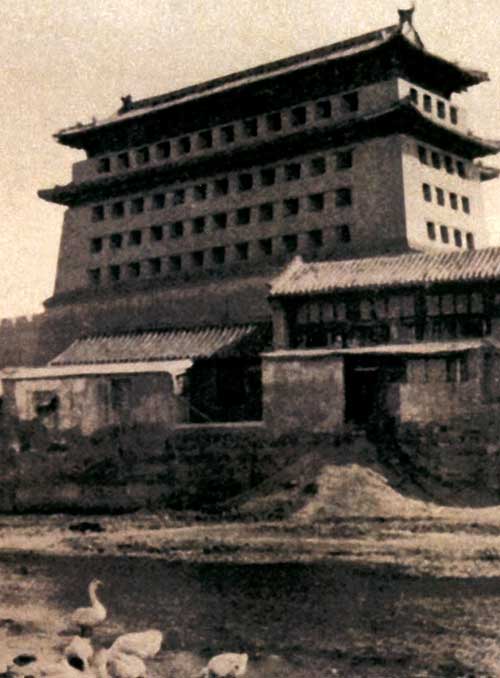 The China we are all to familiar with today is a modern nation, moving rapidly from a rural to an industrial economy. A center of commerce and modernity. But just before WWII China, particularly Peking, as it was known then, was a colonial outpost, a mix of privilege, scandal, superstition and opulence. The British were omnipresent, the Japanese were encircling the city. It was truly the last days of Peking.
Amidst this the murder of a British schoolgirl would capture the city's imagination and fear. A murder that would reveal a side of Peking that few wanted to acknowledge.
China expert and British expat Paul French has picked up the threads of this story and woven them into a remarkable picture of time that is truly a prelude to modern China. He takes us on a remarkable journey in Midnight in Peking: How the Murder of a Young Englishwoman Haunted the Last Days of Old China
The China we are all to familiar with today is a modern nation, moving rapidly from a rural to an industrial economy. A center of commerce and modernity. But just before WWII China, particularly Peking, as it was known then, was a colonial outpost, a mix of privilege, scandal, superstition and opulence. The British were omnipresent, the Japanese were encircling the city. It was truly the last days of Peking.
Amidst this the murder of a British schoolgirl would capture the city's imagination and fear. A murder that would reveal a side of Peking that few wanted to acknowledge.
China expert and British expat Paul French has picked up the threads of this story and woven them into a remarkable picture of time that is truly a prelude to modern China. He takes us on a remarkable journey in Midnight in Peking: How the Murder of a Young Englishwoman Haunted the Last Days of Old China
Apr 25, 2012
Apr 25, 2012
24 min
 Research tells us that we probably will have many careers in our elongated lifetime; that we may even have many spouses. This is a far cry from the the post war boomer ideal of one career and in some cases one job and one spouse. Given all of this life change, does what happens in our 20s really matter.
In an era in which graduate school is almost de rigueur for a good job, when young men are more and more in a state of prolonged adolescence, in some cases moving home to mom, is 20 simply the new 20? Dr. Meg Jay has stirred up some controversy with her new look at twenty somethings, The Defining Decade: Why Your Twenties Matter--And How to Make the Most of Them Now
Research tells us that we probably will have many careers in our elongated lifetime; that we may even have many spouses. This is a far cry from the the post war boomer ideal of one career and in some cases one job and one spouse. Given all of this life change, does what happens in our 20s really matter.
In an era in which graduate school is almost de rigueur for a good job, when young men are more and more in a state of prolonged adolescence, in some cases moving home to mom, is 20 simply the new 20? Dr. Meg Jay has stirred up some controversy with her new look at twenty somethings, The Defining Decade: Why Your Twenties Matter--And How to Make the Most of Them Now
My conversation with Meg Jay:

Apr 25, 2012
Apr 25, 2012
17 min
.jpg) The culture of business today, particularly in the world of tech, is not modeled after Sterling Cooper. While in the days of Mad Men twenty-percent of the time might have been spent boozing and flirting, later to be supplanted by golf, today that same time is often spent by individuals working on their own pet projects. These are not your fathers companies and the results are impressive. Long time technology journalist and blogger Ryan Tate takes us inside companies that practice The 20% Doctrine:
My conversation with Ryan Tate:
The culture of business today, particularly in the world of tech, is not modeled after Sterling Cooper. While in the days of Mad Men twenty-percent of the time might have been spent boozing and flirting, later to be supplanted by golf, today that same time is often spent by individuals working on their own pet projects. These are not your fathers companies and the results are impressive. Long time technology journalist and blogger Ryan Tate takes us inside companies that practice The 20% Doctrine:
My conversation with Ryan Tate: