
Jeff Schechtman talks with authors, journalists, and thought leaders.
Episodes
Friday May 06, 2011
Friday May 06, 2011
 I think we can all agree that the the American experiment is in decline. Our politics and our public institutions are broken and we have no idea how to fix them. Corporations have eviscerated most of the traditional liberal institutions that have served us.
In there place we've established a kind of oligarchic system which has intensified class divide in America. As a result, a proliferation of fear, ignorance and anger have become the primary symptoms. It has given rise to a new breed of pseudo patriotic rhetoric that, not unlike celebrity culture, leads to the very destruction of that which it reveres. In Yeats’s words, "the best lack all conviction, while the worst are full of passionate intensity."
In spite of it all, Pulitzer Prize winning journalist Chris Hedges, thinks there is some cause for hope, if that hope is coupled with new forms of resistance and civil disobedience. Hedgers one of our great "moral voices" and the author of Death of the Liberal Class
I think we can all agree that the the American experiment is in decline. Our politics and our public institutions are broken and we have no idea how to fix them. Corporations have eviscerated most of the traditional liberal institutions that have served us.
In there place we've established a kind of oligarchic system which has intensified class divide in America. As a result, a proliferation of fear, ignorance and anger have become the primary symptoms. It has given rise to a new breed of pseudo patriotic rhetoric that, not unlike celebrity culture, leads to the very destruction of that which it reveres. In Yeats’s words, "the best lack all conviction, while the worst are full of passionate intensity."
In spite of it all, Pulitzer Prize winning journalist Chris Hedges, thinks there is some cause for hope, if that hope is coupled with new forms of resistance and civil disobedience. Hedgers one of our great "moral voices" and the author of Death of the Liberal Class

Wednesday May 04, 2011
Wednesday May 04, 2011
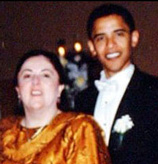 In yesterdays NY Times, David Brooks had an insightful column about how individuals matter. He reminded us that while we have a tendency to see history as driven by deep historical forces, sometimes it is just driven by completely inexplicable individuals, who combine qualities you would think could never go together. In some ways we could make this case about Barack Obama, but perhaps more importantly we can make it about his mother, Ann Dunham. A woman truly ahead of her time. She defined and defied the boundaries of single motherhood and she made her own decisions. She had great success, yet no plan. She made lists of what she wanted to accomplish, yet seemed to improvise every step of her life.. She had her own ideas of what it meant to be a good mother and it certainly gave her a good son. She was in the title of Janny Scott's brilliant new biography of her, A Singular Woman. My conversation with for New York Times reporter and Pulitzer Prize winner Janny Scott:
Tuesday May 03, 2011
Tuesday May 03, 2011
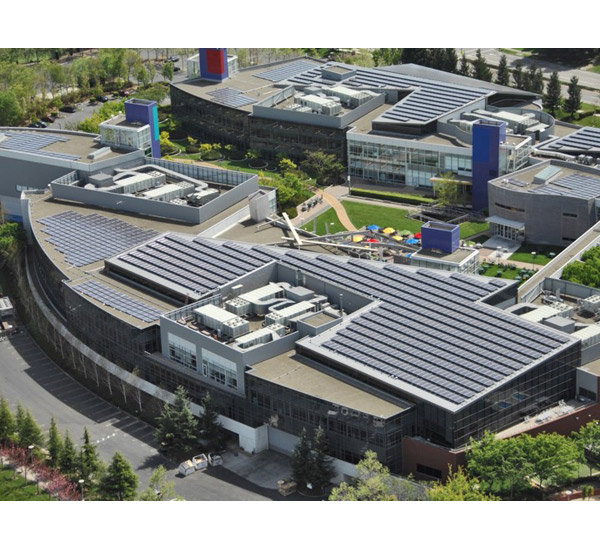 Google is something we use everyday. Yet it's inner workings, both as a corporation and its products are often shrouded in more mystery then Osama Bin Laden's previous whereabouts. Yet the company and its products have become not only ubiquitous, but the catalyst that really allowed the Internet to explode and in so doing, changed the world. At the apogee of the industrial age it was said that "what's good for General Motors was good for the country." Now, well into the information age, is it safe to say that what’s good for Google is good for the country? Well, that depends....What it depends on, is the subject of Steven Levy's up close and personal look In The Plex: How Google Thinks, Works, and Shapes Our Lives
Tuesday May 03, 2011
Tuesday May 03, 2011
 Back in February, I had the opportunity to speak with Michael Scheuer, the former head of the CIA’s Bin Laden unit. At that time Scheuer made the case that Bin Laden was still relevant and that the US and its allies needed to continue to stay focused on pursing Bin Laden. Now that effort has been successful. Bin Laden is gone. Yet a story in today's New York Times states that Al Qaeda is unlikely to be handicapped by the killing of Bin Laden who, the Times says, has been long removed from managing terrorist operations and whose popularity in the Muslim world has plummeted. So is this effort, no matter how successful, only symbolic and how will it impact a Middle East in revolutionary transition?
To try and address all of this I once again spoke to Michael Scheuer. He was the chief of the CIA's Bin Laden unit from 1996 to 1999 and remained a counter-terrorism analyst until 2004. Most recently he wrote Osama Bin Laden
Back in February, I had the opportunity to speak with Michael Scheuer, the former head of the CIA’s Bin Laden unit. At that time Scheuer made the case that Bin Laden was still relevant and that the US and its allies needed to continue to stay focused on pursing Bin Laden. Now that effort has been successful. Bin Laden is gone. Yet a story in today's New York Times states that Al Qaeda is unlikely to be handicapped by the killing of Bin Laden who, the Times says, has been long removed from managing terrorist operations and whose popularity in the Muslim world has plummeted. So is this effort, no matter how successful, only symbolic and how will it impact a Middle East in revolutionary transition?
To try and address all of this I once again spoke to Michael Scheuer. He was the chief of the CIA's Bin Laden unit from 1996 to 1999 and remained a counter-terrorism analyst until 2004. Most recently he wrote Osama Bin Laden
Thursday Apr 28, 2011
Thursday Apr 28, 2011


Monday Apr 25, 2011
Monday Apr 25, 2011
 Why is it, that history always seems to repeat itself? While societies are varied and develop in many different ways, there indeed seems to be certain recurring patterns of behavior across time and across cultures. Esteemed political scientist Dr. Francis Fukuyama, in his seminal new work The Origins of Political Order, argues that because of our shared biological foundation, much our our human nature is in fact hardwired, including our propensity to favor relatives, appreciate altruism and a built in tendency to follow rules, to launch warfare and to organize for better societal outcomes. How all of this plays out is the difference between Somalia and America. My conversation with Francis Fukuyama:
Sunday Apr 24, 2011
Sunday Apr 24, 2011
 Most of us remember growing up and hearing about a world of flying cars, domed living, wrist radios and robots that would take care of our every need. Whether it was the sleek world of the Jetsons, the dark world of Brazil or Bladerunner or the sci fi paranoia of the cold war, we have always been fascinated by what the future might look like. That future may not be here in its entirety, yet, the technology of today may indeed lead to the brave new world of tomorrow. Certainly we’d like to think that technology can give us more than social networking and computerized medical records. World renowned professor of theoretical physics Michio Kaku, uses the cutting edge of science and technology to paint a picture of exactly what he thinks our future, or at least our grand kids future will look like. Kaku's Physics of the Future: How Science Will Shape Human Destiny and Our Daily Lives by the Year 2100
Sunday Apr 24, 2011
Sunday Apr 24, 2011
Most of us remember growing up and hearing about a world of flying cars, domed living, wrist radios and robots that would take care of our every need. Whether it was the sleek world of the Jetsons, the dark world of Brazil or Bladerunner or the sci fi paranoia of the cold war, we have always been fascinated by what the future might look like. That future may not be here in its entirety, yet, the technology of today may indeed lead to the brave new world of tomorrow. Certainly we’d like to think that technology can give us more than social networking and computerized medical records. World renowned professor of theoretical physics Michio Kaku, uses the cutting edge of science and technology to paint a picture of exactly what he thinks our future, or at least our grand kids future will look like. Kaku's Physics of the Future: How Science Will Shape Human Destiny and Our Daily Lives by the Year 2100
Friday Apr 22, 2011
Friday Apr 22, 2011
 We are reminded on this Earth Day that few issues we face are as pressing and our changing environment and our sources and uses of energy. But what we may not know, is that behind all of our current efforts to reduce our impact on the planet, there is a 150 year history of green innovation and progress that is overlooked and has hit so many roadblocks along the way. Alexis Madrigal, senior editor and technology reporter for TheAtlantic.com gives us some history and perspective in Powering the Dream: The History and Promise of Green Technology
Thursday Apr 21, 2011
Thursday Apr 21, 2011


 Maybe it says something about the state of urban history today, but to better understand the
 history and culture of our two great California cities, San Francisco and Los Angles, we need to go back to the 1930’s and look at two volumes originally produced by the Federal Writers Project of the Works Progress Administration (WPA) at the height of the depression. Both truly capture the beauty and authenticity of LA and San Francisco. Add to these volumes an introduction by former SF Chronicle book critic David Kipen and you have far more then just a passing vision of time gone by. University of California Press has just reissued these two beautiful guides, to Los Angeles and San Francisco in the 1930s. Great photos, great writing and a new introduction by David Kipen.
Wednesday Apr 20, 2011
Wednesday Apr 20, 2011

 My conversation with Jason Stearns:
Tuesday Apr 19, 2011
Tuesday Apr 19, 2011
 While we continue to be at war in Iraq, Afghanistan and Libya, it is arguably Pakistan that will shape the future of US success or failure in the region. If Islamic terror is to be unleashed, it will probably come from the mountains of Pakistan. On the other hand, if we are to have success in forestalling terrorism against the West, again Pakistan will be the reason. A nation both regressive and stable, deeply divided and yet somewhat functional because of those divisions, Pakistan is a country of immense size and even larger contradictions. Few understand Pakistan as well as Anatol Lieven. His new work Pakistan: A Hard Country,
Monday Apr 18, 2011
Monday Apr 18, 2011

 . My conversation with Joel Achenbach:
Thursday Apr 14, 2011
Thursday Apr 14, 2011
 Like so many other things in our society, our relationship to animals sends tenuous and very contradictory messages. On the one hand we spend literally billions of dollars on our pets. We have a deep kinship with those animals. Yet in a larger sense, with respect to our food, our habitat and our public policy, we suddenly loose sight of that bond. How is that possible? How can we seemingly have it both ways?
Wayne Pacelle has spent seventeen years with The Humane Society of the US, and the past seven as its President and CEO. He understands the effort it has taken to build the nation's largest animal protection voice. He lays it all out in his book The Bond: Our Kinship with Animals, Our Call to Defend Them
Like so many other things in our society, our relationship to animals sends tenuous and very contradictory messages. On the one hand we spend literally billions of dollars on our pets. We have a deep kinship with those animals. Yet in a larger sense, with respect to our food, our habitat and our public policy, we suddenly loose sight of that bond. How is that possible? How can we seemingly have it both ways?
Wayne Pacelle has spent seventeen years with The Humane Society of the US, and the past seven as its President and CEO. He understands the effort it has taken to build the nation's largest animal protection voice. He lays it all out in his book The Bond: Our Kinship with Animals, Our Call to Defend Them
Wednesday Apr 13, 2011
Wednesday Apr 13, 2011
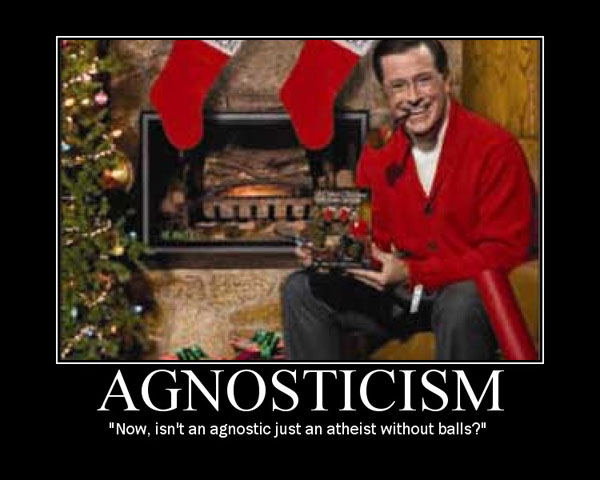 We live in an age of extremism. Our politics is stained by the polarization of left and right. Even our entertainment, leisure and shopping is often shaped by the red state and blue state divide. Underlining all of this is not just our politics, but the culture wars that revolve around fundamental religious belief. In fact, nothing has become more extreme and more polarized then religion itself. But is there an alternative to religious extremism? As we seek middle ground in our politics, driven by good will and good intentions, can we in fact find a middle ground between the extreme views of fundamentalism and atheism? Famed prosecutor Vince Bugliosi thinks so. In fact he thinks that agnosticism is not only that middle ground, but that its the real position of morality and faith.
With the same verve with which he prosecuted Charles Manson, examined the Kennedy assassination and successfully prosecuted 105 criminal jury trials in the L.A. District Attorney's office, he now takes on the religious extremists (Divinity of Doubt: The God Question)
We live in an age of extremism. Our politics is stained by the polarization of left and right. Even our entertainment, leisure and shopping is often shaped by the red state and blue state divide. Underlining all of this is not just our politics, but the culture wars that revolve around fundamental religious belief. In fact, nothing has become more extreme and more polarized then religion itself. But is there an alternative to religious extremism? As we seek middle ground in our politics, driven by good will and good intentions, can we in fact find a middle ground between the extreme views of fundamentalism and atheism? Famed prosecutor Vince Bugliosi thinks so. In fact he thinks that agnosticism is not only that middle ground, but that its the real position of morality and faith.
With the same verve with which he prosecuted Charles Manson, examined the Kennedy assassination and successfully prosecuted 105 criminal jury trials in the L.A. District Attorney's office, he now takes on the religious extremists (Divinity of Doubt: The God Question)
Tuesday Apr 12, 2011
Tuesday Apr 12, 2011
 For many of us, the second biggest expense we will ever make, after a home purchase, is our kids college education. A four year education at a private or even a State University, can cost well over $160,000. For the first time in this country student debt has outpaced credit card debt. Lately much has been written about the cost benefit analysis of that education. We know that among the college educated unemployment has only been around 5% compared with the non college educated at well over 10%. Yet many question not only the value of that education, but most of all the processes that has become both an American ritual, and a right of passage for both kids and parents; a process that Andrew Ferguson says can make us a little bit crazy. Ferguson is a senior editor at the Weekly Standard, and the author of Crazy U: One Dad's Crash Course in Getting His Kid Into College
Friday Apr 08, 2011
Friday Apr 08, 2011
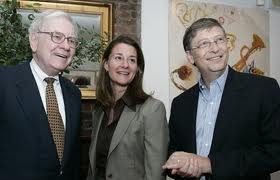
 . My conversation with Joel Fleishman:
Thursday Apr 07, 2011
Thursday Apr 07, 2011
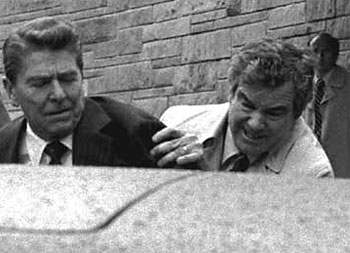
 Regardless of your political views about Reagan, it was a seminal historical moment. My conversation with Del Quentin Wilber:
Wednesday Apr 06, 2011
Wednesday Apr 06, 2011
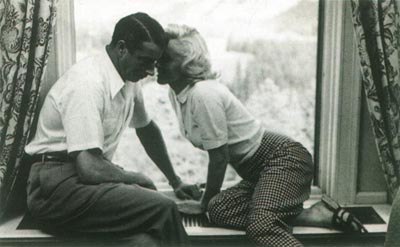
 gives us a DiMaggio much more nuanced and arguably much more human. My conversation with Jerome Charyn:
Tuesday Apr 05, 2011
Tuesday Apr 05, 2011
 Who are we but the sum total of all that we remember? What if we had total control over what we choose to remember? Imagine if there was a kind of valve to control memory? How much of what we think we have forgotten is still lodged permanently within our memory? Would more control of our memory allow us to alter our personality or even how we see the world around us? Certainly it would help us remember names at cocktails parties and help us to find our car in the parking garage, but what other impact might it have. These issues of memory are dealt with in a bestselling new book by Joshua Foer, Moonwalking with Einstein: The Art and Science of Remembering Everything
Thursday Mar 31, 2011
Thursday Mar 31, 2011
 Most of us have grown up thinking that Airports are at best a nuisance. Living near an Airport has been seen as negative, and we've consistently built our Airports far outside urban area.
But much as we used to build sports stadiums away from downtown and have now reversed that trend, to add vibrancy to our cities, so too are Airports becoming important economic hubs which, in much of the world, have spawned whole cities around them. Just as ports, harbors and rail stations used to be the central focus of our cites, today new cites will be build with the Airport as their focus. Journalist Greg Lindsay, along with John Kasarda explain it all and talk about the concept of Aerotropolis. My conversation with Greg Lindsay:
Most of us have grown up thinking that Airports are at best a nuisance. Living near an Airport has been seen as negative, and we've consistently built our Airports far outside urban area.
But much as we used to build sports stadiums away from downtown and have now reversed that trend, to add vibrancy to our cities, so too are Airports becoming important economic hubs which, in much of the world, have spawned whole cities around them. Just as ports, harbors and rail stations used to be the central focus of our cites, today new cites will be build with the Airport as their focus. Journalist Greg Lindsay, along with John Kasarda explain it all and talk about the concept of Aerotropolis. My conversation with Greg Lindsay:
Thursday Mar 31, 2011
Thursday Mar 31, 2011
 Almost three years after the worst economic collapse since the Great Depression, many people still are asking how did it happen, why did it happen and could it happen again? Also, as was asked at this year's Academy Awards, why has no one payed any kind of a price for such irresponsible and some would say corrupt, Wall Street behavior?
Few understand all of this better then Roger Lowenstein. He is one of our nation's most prominent financial journalists and his book The End of Wall Street
Almost three years after the worst economic collapse since the Great Depression, many people still are asking how did it happen, why did it happen and could it happen again? Also, as was asked at this year's Academy Awards, why has no one payed any kind of a price for such irresponsible and some would say corrupt, Wall Street behavior?
Few understand all of this better then Roger Lowenstein. He is one of our nation's most prominent financial journalists and his book The End of Wall Street
Wednesday Mar 30, 2011
Wednesday Mar 30, 2011

 . My conversation with Vikram Mansharamani:
Monday Mar 28, 2011
Monday Mar 28, 2011
 Normally great cities change. Even Paris and New York have gone through radical transformations. Jerusalem it seems, has remained true to its roots, troubled and seeped in violence though it may be. Perhaps, it is because the city has become a kind of religious and philosophical Rorschach test, on to which we projects so many of our dreams fears and hopes? Is there really some special power to Jerusalem, as that "shinning city on the hill," or is it simply its historical context that gives it its unique power? James Carroll, the brilliant former Catholic Priest, former chaplain at Boston University, and author of Constantine's Sword, An American Requiem and House of War, reaches deep into the history of Jerusalem to give us both the real and the fantasy City. My conversation with James Carroll:
Monday Mar 28, 2011
Monday Mar 28, 2011

Friday Mar 25, 2011
Friday Mar 25, 2011
 The laws of physics tell us that for every action there is a reaction of equal or greater force. The progress of the 60’s, the Great Society, the awakening of women, gays and the Civil Rights movement, all would prompt a reaction in the 70's that would create a backlash to be exploited by angry populists. Combine this fear of "progress" with bad economics, the oil shortages, energy cutbacks and Jimmy Carter's malaise and you have one of the dreariest decades in the 20th Century.
Couple all of this with our loss of confidence in basic institutions, Watergate, Iran, a dramatic increase in crime, our failures during the cold war and the impotency of the Carter Presidency, and it’s no wonder people ended the decade Mad as Hell. Historian Dominic Sandbrook, in his book Mad as Hell: The Crisis of the 1970s and the Rise of the Populist Right
The laws of physics tell us that for every action there is a reaction of equal or greater force. The progress of the 60’s, the Great Society, the awakening of women, gays and the Civil Rights movement, all would prompt a reaction in the 70's that would create a backlash to be exploited by angry populists. Combine this fear of "progress" with bad economics, the oil shortages, energy cutbacks and Jimmy Carter's malaise and you have one of the dreariest decades in the 20th Century.
Couple all of this with our loss of confidence in basic institutions, Watergate, Iran, a dramatic increase in crime, our failures during the cold war and the impotency of the Carter Presidency, and it’s no wonder people ended the decade Mad as Hell. Historian Dominic Sandbrook, in his book Mad as Hell: The Crisis of the 1970s and the Rise of the Populist Right
Friday Mar 25, 2011
Friday Mar 25, 2011
 With respect to China, we have talked frequently about the great migration of people from the rural areas to the cities. The fact is, this is being played out around the world. At least one-third of the worlds population is currently, or about to be, on the move from rural areas to the world's cities. They are headed to what journalist Doug Saunders calls Arrival City.
In a pattern that has played out throughout history, urbanization is exploding. Just as Europe and North America experienced this great migration in the 19th Century, the rest of the world is now joining the efforts for jobs and for hope. How this plays out, how the world, East and West, deals with this, could very well determine the success or failure of the 21st Century. My conversation with Doug Saunders:
With respect to China, we have talked frequently about the great migration of people from the rural areas to the cities. The fact is, this is being played out around the world. At least one-third of the worlds population is currently, or about to be, on the move from rural areas to the world's cities. They are headed to what journalist Doug Saunders calls Arrival City.
In a pattern that has played out throughout history, urbanization is exploding. Just as Europe and North America experienced this great migration in the 19th Century, the rest of the world is now joining the efforts for jobs and for hope. How this plays out, how the world, East and West, deals with this, could very well determine the success or failure of the 21st Century. My conversation with Doug Saunders:
Wednesday Mar 23, 2011
Wednesday Mar 23, 2011

 we see how their lives, like Rick and Ilsa's, will never be the same. My conversation with Penelope Rowlands:
Tuesday Mar 22, 2011
Tuesday Mar 22, 2011
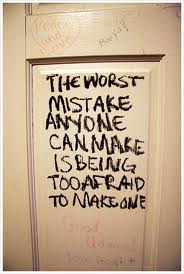 For many of us, men especially, being right is the most important thing. We live in a society that praises perfection, that rewards certainty. Countless stories have been told and written about the importance of kids getting it right in order to get into the right college, choose the right career and the right spouse. After all, isn't getting it right what Tiger moms would want?
Given the proliferation of choices we face today, can we ever get it right that often or, is the baseball metaphor more apt, that if we only hit 300, we're doing pretty well? Couple this with the conflicting messages we get as kids, that making mistakes helps us to learn, and helps us to make better choices in order to get it right the next time. Author, journalist and N.Y. Times columnist Alina Tugend tries to sort out all of these conflicting messages in her new book Better by Mistake: The Unexpected Benefits of Being Wrong
For many of us, men especially, being right is the most important thing. We live in a society that praises perfection, that rewards certainty. Countless stories have been told and written about the importance of kids getting it right in order to get into the right college, choose the right career and the right spouse. After all, isn't getting it right what Tiger moms would want?
Given the proliferation of choices we face today, can we ever get it right that often or, is the baseball metaphor more apt, that if we only hit 300, we're doing pretty well? Couple this with the conflicting messages we get as kids, that making mistakes helps us to learn, and helps us to make better choices in order to get it right the next time. Author, journalist and N.Y. Times columnist Alina Tugend tries to sort out all of these conflicting messages in her new book Better by Mistake: The Unexpected Benefits of Being Wrong
Monday Mar 21, 2011
Monday Mar 21, 2011
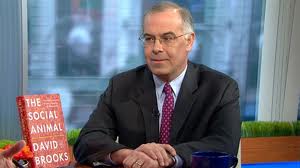 For almost 50 years we’ve talked about and often admired the best and the brightest in our government, our businesses and in our political and economic institutions. Yet during this same period, we've seen colossal failure. We have some of the most socially adept politicians, and we are accused of living in a therapeutic culture, yet when confronted with the reality of quality public policy, we get it wrong. Where is the disconnect? How can so many smart people be so wrong, so often? Clearly it’s not a failure of intelligence, but perhaps a failure of imagination, of vocabulary, or more specifically a failure to fully take into account our social nature and the duality between emotions, ideas and reason in a rapidly changing world.
This is a central premise of the new book by N.Y. Times columnist David Brooks entitled The Social Animal: The Hidden Sources of Love, Character, and Achievement
For almost 50 years we’ve talked about and often admired the best and the brightest in our government, our businesses and in our political and economic institutions. Yet during this same period, we've seen colossal failure. We have some of the most socially adept politicians, and we are accused of living in a therapeutic culture, yet when confronted with the reality of quality public policy, we get it wrong. Where is the disconnect? How can so many smart people be so wrong, so often? Clearly it’s not a failure of intelligence, but perhaps a failure of imagination, of vocabulary, or more specifically a failure to fully take into account our social nature and the duality between emotions, ideas and reason in a rapidly changing world.
This is a central premise of the new book by N.Y. Times columnist David Brooks entitled The Social Animal: The Hidden Sources of Love, Character, and Achievement
Friday Mar 18, 2011
Friday Mar 18, 2011
Yesterday we talked about pitching star Tim Lincecum and how this 26 year old, 13 million dollar a year star spent his off season, hanging with his buddies and playing video games. In so many ways he is simply reflective of young men today who see themselves not on any kind of scripted path to adulthood, but rather stuck in a conflicting state of both success and financial independence on the one hand and extended adolescence on the other.
Is it simply the fact that we are living longer that allows these young men to delay the onset of adulthood, or is it some more profound cultural shift? As women become more independent, as the number of women graduating from college, medical school and law school exceed the numbers for men, as women earn more in some cities; are these men simply finding themselves increasingly threatened, insecure for even irrelevant? How is it that Don Draper been replaced by Owen Wilson and does it matter? Author and journalist Kay Hymowitz, in her new book Manning Up: How the Rise of Women Has Turned Men into Boys,
Thursday Mar 17, 2011
Thursday Mar 17, 2011

Thursday Mar 17, 2011
Thursday Mar 17, 2011
 For women coming of age in the post war America of the late 50's and early 60's, it was a complicated piece of business. Then, if women wanted to have it all, the only road was through the work of men. If smart, creative women wanted to have a hand in the creation of art or literature, that world and the men in it, were even more complicated. To navigate this minefield was a feat of both sheer intelligence and sexual cunning, all coupled with a remarkable bout of courage.
Few did this better then award winning writer Anne Roiphe. Growing up in the 40's and 50's in a world of privilege on Park Avenue, she would become a kind of muse to many of the great writer of the mid 20th Century. Writers like Plimpton, Mailer, Styron and others, would today be her "friends" on Facebook. Her new memoir, Art and Madness: A Memoir of Lust Without Reason
For women coming of age in the post war America of the late 50's and early 60's, it was a complicated piece of business. Then, if women wanted to have it all, the only road was through the work of men. If smart, creative women wanted to have a hand in the creation of art or literature, that world and the men in it, were even more complicated. To navigate this minefield was a feat of both sheer intelligence and sexual cunning, all coupled with a remarkable bout of courage.
Few did this better then award winning writer Anne Roiphe. Growing up in the 40's and 50's in a world of privilege on Park Avenue, she would become a kind of muse to many of the great writer of the mid 20th Century. Writers like Plimpton, Mailer, Styron and others, would today be her "friends" on Facebook. Her new memoir, Art and Madness: A Memoir of Lust Without Reason , takes us into this often romanticized, but very real world. My conversation with Anne Roiphe:
Tuesday Mar 15, 2011
Tuesday Mar 15, 2011
 Most writers and thinkers are lucky if their work touches or impacts thousands of people. For the greats, it might be even more. But for James Redfield, author of the mega bestseller THE CELESTINE PROPHESY and its subsequent installments, he has impacted millions. What nerve has he continued to touch for 17 years?
In an age of religious extremism he has found the sweet spot that he calls "authentic spirituality." In so doing he not only co-opts, but incorporates all of the world's great belief systems. Now, in his first book in twelve years, he brings us the forth installment of the Celestine series, The Twelfth Insight. My conversation with James Redfield:
Most writers and thinkers are lucky if their work touches or impacts thousands of people. For the greats, it might be even more. But for James Redfield, author of the mega bestseller THE CELESTINE PROPHESY and its subsequent installments, he has impacted millions. What nerve has he continued to touch for 17 years?
In an age of religious extremism he has found the sweet spot that he calls "authentic spirituality." In so doing he not only co-opts, but incorporates all of the world's great belief systems. Now, in his first book in twelve years, he brings us the forth installment of the Celestine series, The Twelfth Insight. My conversation with James Redfield:
Monday Mar 14, 2011
Monday Mar 14, 2011
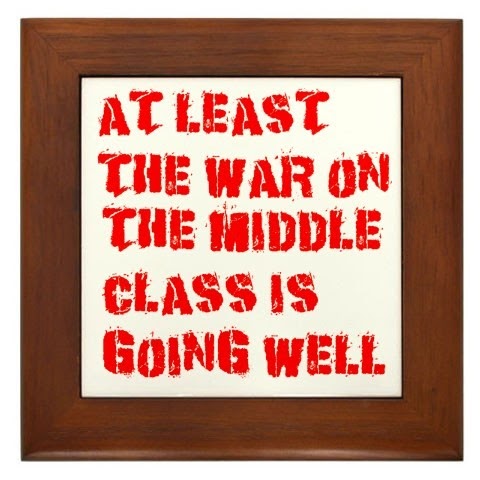 While the media is quick to give us lifestyles of the rich and famous, and anxious to point out the good deeds of wealthy philanthropists and the importance of a market driven culture, most of the middle class today are leading lives of quiet desperation. For many though, being “quiet” means taking small progressive steps to try and make the system more equitable. Sometimes those steps are outside the boundaries of what is right, but well within the bounds of what is moral. That is the focus of Lisa Dodson book The Moral Underground: How Ordinary Americans Subvert an Unfair Economy
Friday Mar 11, 2011
Friday Mar 11, 2011
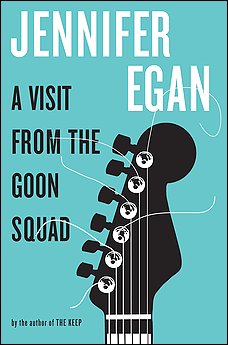 The way that music short circuits time and makes yesterday's events, todays reality; the state of the music business today and pushing the boundaries of the literary from, are all part of A Visit from the Goon Squad. Jennifer Egan's fascinating novel, that's this years winner of the National Book Critics Circle award for Fiction. My conversation with Jennifer Egan:
Friday Mar 11, 2011
Friday Mar 11, 2011
 In much of our debate about education policy today, it seems we leave out the kids. The kids sometimes seem like fungible chess pieces that we move around some kind of public policy Monopoly board. To often, to many of these kids go directly to jail, without ever passing go! A good example of our misguided policy priority is how little we fund the Head Start program. It's efficacy should be a settled issue. The statistics are clear that those kids with quality, early education are more likely to graduate from high school, go to college, stay healthy and earn 35% more. Economists calculate the benefit to cost ratio at an amazing seventeen-to-one. Yet today's N.Y. Times has a story about how Republicans still want to severely cut the funding for Head Start. Education policy expert David Kirp strongly disagrees.
David Kirp thinks we need a new kind of policy. A simple one really. One that puts kids at the center of the discussion. Starting with 5 simple ideas, he seeks to reshape America's failing approach to our kids and outlines it in his book Kids First: Five Big Ideas for Transforming Children's Lives and America's Future
In much of our debate about education policy today, it seems we leave out the kids. The kids sometimes seem like fungible chess pieces that we move around some kind of public policy Monopoly board. To often, to many of these kids go directly to jail, without ever passing go! A good example of our misguided policy priority is how little we fund the Head Start program. It's efficacy should be a settled issue. The statistics are clear that those kids with quality, early education are more likely to graduate from high school, go to college, stay healthy and earn 35% more. Economists calculate the benefit to cost ratio at an amazing seventeen-to-one. Yet today's N.Y. Times has a story about how Republicans still want to severely cut the funding for Head Start. Education policy expert David Kirp strongly disagrees.
David Kirp thinks we need a new kind of policy. A simple one really. One that puts kids at the center of the discussion. Starting with 5 simple ideas, he seeks to reshape America's failing approach to our kids and outlines it in his book Kids First: Five Big Ideas for Transforming Children's Lives and America's Future
Wednesday Mar 09, 2011
Wednesday Mar 09, 2011
 Much as we might like it to be otherwise, our times are often defined by our leaders. Certainly in contemporary times, we remember the post war 50’s, reflected by Ike. The country moving forward again under Kennedy. The chaos of the Great Society and Vietnam under Johnson and then Nixon. We've talked a lot recently of the prosperity of the 90’s under Bill Clinton, and certainly the nation's shift to the right under Reagan in many ways, even more then disco, defined the 80’s.
Even though history is already kind to the Reagan legacy, perhaps because he seems so moderate by the Republican standards of today, it’s important to remember the impact of Reagan on the nation and more importantly of his polarizing presence and the opposition that Reagan gave rise to. An opposition that sought to consolidate the progressive gains of the 60’s and 70’s, even as the nation was lurching rightward. It truly was the political equivalent of the irresistible force vs. the immovable object. That’s the social and political backdrop of Bradford Martin's look at the Reagan years, The Other Eighties: A Secret History of America in the Age of Reagan
Much as we might like it to be otherwise, our times are often defined by our leaders. Certainly in contemporary times, we remember the post war 50’s, reflected by Ike. The country moving forward again under Kennedy. The chaos of the Great Society and Vietnam under Johnson and then Nixon. We've talked a lot recently of the prosperity of the 90’s under Bill Clinton, and certainly the nation's shift to the right under Reagan in many ways, even more then disco, defined the 80’s.
Even though history is already kind to the Reagan legacy, perhaps because he seems so moderate by the Republican standards of today, it’s important to remember the impact of Reagan on the nation and more importantly of his polarizing presence and the opposition that Reagan gave rise to. An opposition that sought to consolidate the progressive gains of the 60’s and 70’s, even as the nation was lurching rightward. It truly was the political equivalent of the irresistible force vs. the immovable object. That’s the social and political backdrop of Bradford Martin's look at the Reagan years, The Other Eighties: A Secret History of America in the Age of Reagan
Tuesday Mar 08, 2011
Tuesday Mar 08, 2011
 We tend to think of hackers as misanthrope teenagers locked in the back bedroom. In fact hacking, or at least the modern variant of it, is part of a sophisticated international crime network, that stretches from the Bay Area to the furthest reaches of the world. Fueled by the easy and international movement of money in a globalized economy, stolen data is turned into billions of illegal dollars. Kevin Poulsen, once a hacker himself, now the senior editor of Wired.com, in his book Kingpin: How One Hacker Took Over the Billion-Dollar Cybercrime Underground
Monday Mar 07, 2011
Monday Mar 07, 2011
 Yesterday's New York Times Magazine had a story about business tycoon David Murdock and his quest to live until 125. The fact is, there are scientists today who think we could live forever! Pulitzer Prize and National Book Critics Circle Award winner Johnathan Weiner, in his new book Long for This World: The Strange Science of Immortality