
Jeff Schechtman talks with authors, journalists, and thought leaders.
Episodes
Apr 15, 2010
Apr 15, 2010
19 min
.jpg)
 . My conversation with Douglas Merrill:
Apr 14, 2010
Apr 14, 2010
24 min

 , is a kind of sampler of his work that, taken together, accentuates his love of politics, sports and the importance of timeless narrative non-fiction. My conversation with David Maraniss:
Apr 12, 2010
Apr 12, 2010
25 min

 . In it, he documents not only the Cold War arms race, but the residual impact and the weapons of mass destruction that still imperil the planet. My conversation with David Hoffman:
 Apr 9, 2010
Apr 9, 2010
21 min
 Through science, religion and art we have, for centuries, tried to make sense of the universe. In modern times, we've believed that science would answer the great cosmic questions. Relativity and Quantum Mechanics certainly seemed to lead us in that direction. But still physicists have been stymied in trying to find that elusive theory of everything. What if there is no such theory? What if the universe really is random and asymmetric? How does that alter our view of our place in that universe? These are the issues explored by physicist and Dartmouth professor Marcelo Gleiser in his book A Tear at the Edge of Creation: A Radical New Vision for Life in an Imperfect Universe
Apr 8, 2010
Apr 8, 2010
25 min
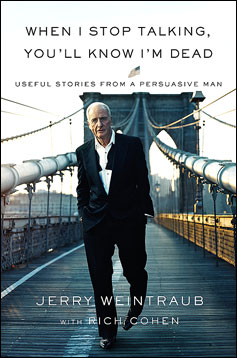
 , tells us of the people that have taught him. If ever there were a primer on networking, the power of mentors and chutzpa, this is it. My conversation with Jerry Weintraub:
Apr 7, 2010
Apr 6, 2010
Apr 6, 2010
24 min

 . Judith is a literary critic, a former New York Times and Slate columnist and her new book allows a different view of how we spend of leisure time.
My conversation with Judith Shulevitz:
. Judith is a literary critic, a former New York Times and Slate columnist and her new book allows a different view of how we spend of leisure time.
My conversation with Judith Shulevitz:
Apr 5, 2010
Mar 30, 2010
Mar 30, 2010
28 min
War always has unintended consequences. Since the days of the American invasion of Iraq, millions of Iraqis have fled their country. Mostly Sunni and mostly from Iraq's educated middle class, this has had a profound impact on the country and the region. It has given rise to a Sunni/Iraq Diaspora with the ability to either help stabilize or profoundly destabilize the Middle East. This is the backdrop for NPR correspondent Deborah Amos' new book Eclipse of the Sunnis: Power, Exile, and Upheaval in the Middle East

Mar 29, 2010
Mar 29, 2010
29 min

Mar 24, 2010
Mar 24, 2010
30 min
 is the Carl Sagan of engineering. He explains how it is engineering that really will allow our reach to exceed our grasp. My conversation with Henry Petroski:
Mar 23, 2010
Mar 23, 2010
30 min
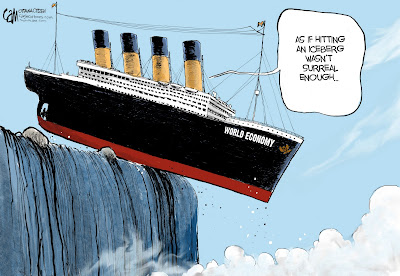 In addition to the fall of Lehman and AIG, last year's financial crisis also saw the economies of entire nations collapse. Iceland, Greece and most notably Ireland have been economically devastated. In Ireland, the Celtic Tiger, once the home of an economic miracle, now will take decades and billions to recover. How did this happen? What role did Wall Street play and what role did the Irish government play in propping up one of the worlds great real estate bubbles and how did it precipitated the crisis? Ireland's premiere financial journalist, Fintan O'Toole, in his book Ship of Fools: How Stupidity and Corruption Sank the Celtic Tiger
Mar 15, 2010
Mar 15, 2010
14 min

Mar 12, 2010
Mar 12, 2010
19 min

 examines the seemingly odd notion that religion, in its most traditional, non dogmatic form, may hold the secret to unite rather than divide us.
My conversation with Sam Keen:
examines the seemingly odd notion that religion, in its most traditional, non dogmatic form, may hold the secret to unite rather than divide us.
My conversation with Sam Keen:
Mar 8, 2010
Mar 8, 2010
22 min

 . In it, some of the worlds leading experts in risk assessment and management, discuss how we can successfully navigate the hazards of the 21st century. My conversation with Howard Kunreuther:
Mar 5, 2010
Mar 5, 2010
29 min

 . My conversation with Debbie Millman:
Mar 4, 2010
Mar 4, 2010
31 min

 . Written with access to virtually all of the "players" Gormley connects the dots to a story and a history we all lived but perhaps never fully understood. My conversation with Ken Gormley:
Mar 1, 2010
Mar 1, 2010
32 min

 . My conversation with Cahn and Carbone:
Mar 1, 2010
Mar 1, 2010
18 min

 tells us riveting stories about her immigrant patients at Bellevue. Living and dying in the foreign country we call home, they have much to teach us about the American way, in sickness and in health. Additionally, journalist Helen Thorpe in her book Just Like Us: The True Story of Four Mexican Girls Coming of Age in America
 gives us a powerful account of our young Mexican woman coming of age in Denver - two of whom have legal documents, and two whom do not. My conversations with Helen Thorpe and Danielle Ofri
Mar 1, 2010
Feb 27, 2010
Feb 27, 2010
19 min

 . My conversation with Mark Yost:
Feb 20, 2010
Feb 20, 2010
20 min
.jpg)
 looks inside the minds of fighters to give us a view of the mental game. My conversation with Sam Sheridan:
Feb 18, 2010
Feb 18, 2010
23 min
 If there is a dysfunction symptomatic of our times, perhaps it is procrastination. It often separates those who succeed from those who don't. It causes lose of productivity. It prevents so many from fully achieving what they are truly capable of. Why is it so prevalent, how do psychiatrists see it, and why is it so hard to correct. Dr. Jane Burka, a psychologist, has been looking at this problem for over twenty-five years. Her book Procrastination: Why You Do It, What to Do About It Now
Feb 16, 2010
Feb 16, 2010
27 min

Feb 15, 2010
Feb 15, 2010
25 min

Feb 15, 2010
Feb 15, 2010
17 min

 , Ted Conover takes a look at how roads work, for good and ill, and what their future likely holds. My conversation with Ted Conover:
Feb 15, 2010
Feb 15, 2010
23 min

 he says that in 40 years even more Americans will move to new suburbs and will be less reliant on cities. His arguments run counter to the views of the New Urbanists and people like Richard Florida. Is Kotkin's vision really a view of the continued Walmartiation of America?
Feb 14, 2010
Feb 14, 2010
21 min
 Washington Post special military correspondent, and Pulitzer Prizer winner Thomas Ricks predicts that the war in Iraq is likely to last at least another five to ten years. He argues that invading Iraq was perhaps the worst decision in the history of American foreign policy. As such, we've made a mess that won't be easy to clean up and that this preemptive and false war will continue to haunt us. Iraq was an epic mistake for which there are now few good solutions. He concludes that the worst may still be ahead of us. His book The Gamble: General Petraeus and the American Military Adventure in Iraq
Feb 10, 2010
Feb 10, 2010
26 min
 While executions in the U.S. are considered public policy, they are carried out in private; often far, far away from public scrutiny. In Texas, the execution capital of America, they happen with barely a mention. Yet, at least outside of Texas, the tide may be turning against state sponsored murder. David R. Dow, the litigation director of the Texas Defender Service and a Professor at the University of Houston Law Center, in his new book The Autobiography of an Execution gives us an up close and personal look inside the death penalty. My conversation with David Dow:
Feb 7, 2010
Feb 7, 2010
23 min

 , we will understand the ideas of complexity theory that he believe underpins some of the most confounding mysteries in life and provides simples answers to why they occur. My conversation with Dr. Len Fisher:
Feb 3, 2010
Feb 3, 2010
21 min
 Whether we are discussing the war on terrorism, the onslaught of modern technology, or the rightward shift of the Supreme Court, we continue see within them the erosion of the right to privacy in America. Thought history, it seems that it's the one right we've always been willing to cede for what we often mistakenly perceive as the great good. Journalist and attorney Frederick Lane, in his new book American Privacy: The 400-Year History of Our Most Contested Right, explains that "the history of America is the history of the right to privacy." Yet Lane explains that the right to privacy has never kept pace with technological and social change.
My conversation with Fredrick Lane:
Whether we are discussing the war on terrorism, the onslaught of modern technology, or the rightward shift of the Supreme Court, we continue see within them the erosion of the right to privacy in America. Thought history, it seems that it's the one right we've always been willing to cede for what we often mistakenly perceive as the great good. Journalist and attorney Frederick Lane, in his new book American Privacy: The 400-Year History of Our Most Contested Right, explains that "the history of America is the history of the right to privacy." Yet Lane explains that the right to privacy has never kept pace with technological and social change.
My conversation with Fredrick Lane:
Feb 1, 2010
Feb 1, 2010
26 min

Jan 29, 2010
Jan 29, 2010
20 min

Jan 25, 2010
Jan 25, 2010
30 min

Jan 22, 2010
Jan 22, 2010
23 min
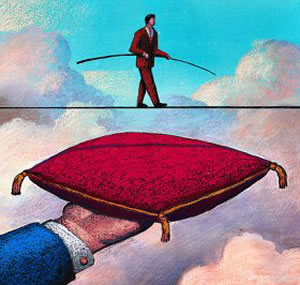
 edited by Wharton Risk Center Managing Director Erwann Michel-Kerjan. My conversation with Erwann Michel-Kerjan:
Jan 18, 2010
Jan 18, 2010
21 min

 science writer Ethan Watters shows that we are not only changing the way the world understands and treats mental illness, but that we are actually trying to redefine the symptoms of others to fit into our own pharmacologically driven solutions. Good for big pharma, bad for diversity and human compassion. My conversation with Ethan Watters:
Jan 15, 2010
Jan 15, 2010
23 min
 The outpouring of aid and support for Haiti has been overwhelming. It should make us wonder if we are somehow hardwired to be compassionate, empathic and altruistic. Over the past year, amidst the financial crisis, the ideas of Ayn Rand and the supposed virtues of selfishness have gained new converts. Yet more and more science tells us that compassion, far from being weak, is the very quality that has enabled the successful evolution of our species and will ultimately determine our fate.
The Greater Good Science Center, led by renown psychologist Dacher Keltner and based at UC Berkley, has been in the vanguard of this movement. The Center has, for the first time, published its writings in a new book entitled The Compassionate Instinct: The Science of Human Goodness. My conversation with Dacher Keltner:
The outpouring of aid and support for Haiti has been overwhelming. It should make us wonder if we are somehow hardwired to be compassionate, empathic and altruistic. Over the past year, amidst the financial crisis, the ideas of Ayn Rand and the supposed virtues of selfishness have gained new converts. Yet more and more science tells us that compassion, far from being weak, is the very quality that has enabled the successful evolution of our species and will ultimately determine our fate.
The Greater Good Science Center, led by renown psychologist Dacher Keltner and based at UC Berkley, has been in the vanguard of this movement. The Center has, for the first time, published its writings in a new book entitled The Compassionate Instinct: The Science of Human Goodness. My conversation with Dacher Keltner:
Jan 14, 2010
Jan 14, 2010
20 min

Jan 13, 2010
Jan 13, 2010
22 min

Jan 12, 2010
Jan 12, 2010
25 min
