
Jeff Schechtman talks with authors, journalists, and thought leaders.
Episodes
Monday Jan 07, 2013
Monday Jan 07, 2013
 With US domestic markets facing greater competition; with the margins on most products shrinking, American companies are looking for international opportunities. When they do, the first place they usually look is to the worlds largest market, in China.
But doing business in China is no easy task. The customs, the culture, the paperwork are sometimes daunting. For many business people, brokers and middlemen exists to help you with this process. But nothing beats knowing the facts and relationships yourself. Stanley Chao has guided many through the process. Now he takes us all on the journey in Selling to China: A Guide to Doing Business in China for Small- and Medium-Sized Companies
My conversation with Stanley Chao:
Thursday Jan 03, 2013
Thursday Jan 03, 2013
 Scott Fitzgerald said that "there are no second acts in American lives." Yet today we know there are third and fourths. Coupled we this, we've all heard about the impact of eduction and the value, especially for older workers, of retraining and the importance of our Community Colleges. In fact the discussion about Community Colleges, has become a kind o holy grail when talking about the future of work.
Yet what's really happening on the ground? How is it working and what can be done better. UCLA Professor Mike Rose takes this up in his new work Back to School: Why Everyone Deserves A Second Chance at Education
My conversation with Mike Rose:

Thursday Dec 27, 2012
Thursday Dec 27, 2012
 For Baby Boomers who grew up in the shadow of the Cold War and the nuclear age, we thought all of that ended with the collapse of the Soviet Union in 1989. It seemed as if the Cuban missile crisis, 50 years ago, was the apogee of our nuclear fears.
But today, if we're paying attention, we see that the nuclear age has spread. There are not two, but nine nuclear states in the world today; and while it’s a lot less than the twenty-five that JFK thought we’d have by the 80’s, its enough to make the world of nuclear weapons 2.0, a very dangerous place.
This is the launching pad for Yale Professor Paul Bracken’s new book. The Second Nuclear Age: Strategy, Danger, and the New Power Politics
For Baby Boomers who grew up in the shadow of the Cold War and the nuclear age, we thought all of that ended with the collapse of the Soviet Union in 1989. It seemed as if the Cuban missile crisis, 50 years ago, was the apogee of our nuclear fears.
But today, if we're paying attention, we see that the nuclear age has spread. There are not two, but nine nuclear states in the world today; and while it’s a lot less than the twenty-five that JFK thought we’d have by the 80’s, its enough to make the world of nuclear weapons 2.0, a very dangerous place.
This is the launching pad for Yale Professor Paul Bracken’s new book. The Second Nuclear Age: Strategy, Danger, and the New Power Politics
Friday Dec 14, 2012
Friday Dec 14, 2012
 John Stuart Mill said, back in 1848, that "It is hardly possible to overstate the value, in the present low state of human improvement, of placing human beings in contact with persons dissimilar to themselves, and with modes of thought and action dissimilar to themselves, and with modes of thought and action unlike those with which they are familiar ... Such communication has always been, and is particularly in the present age, one of the primary sources of progress."
Given the globalized nature of our world, nothing could be more true, even 164 years later. Jesse Aizenstat has done exactly that. Using his love of surfing, he forged a common bond with the disparate peoples of the Middle East and proved, beyond a shadow of a doubt, the ability of our common humanity to transcend those man made constructs that divide us.
My conversation with Jesse Aizenstat about Surfing the Middle East: Deviant Journalism from the Lost Generation
Tuesday Dec 11, 2012
Tuesday Dec 11, 2012
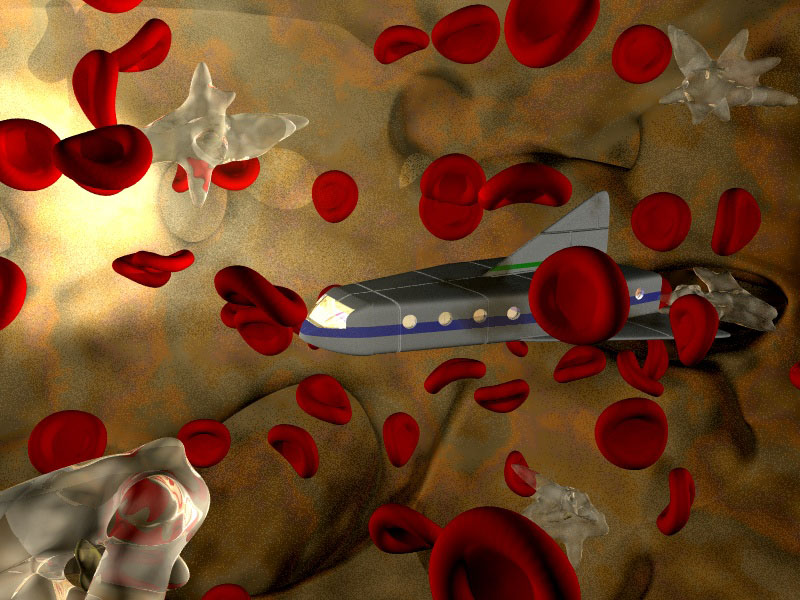 Many fear that technology is out of control. But perhaps, what’s really out of control is an imbalance of values. Over the last few centuries we humans have drastically valued technology as a solution to the problems of life. Consequently the emotional aspect of problem solving has often been left by the wayside. Few understand this dichotomy better than bestselling novelist Dr. Robin Cook. He has used this imbalance to scare the bejesus out of us in his books like Coma, Cure, and Fever. Now in his latest work, Nano
My conversation with Robin Cook:
Thursday Dec 06, 2012
Thursday Dec 06, 2012
 If we were talk about a time of bitter angry partisanship, flawed leaders lusting after women and power, worried perhaps more about their legacy than their constituents. Politicians who were accused of being pragmatic rather than idealistic. Who sometimes did care about ideas, but to the determent of good politics. We might easily be talking about current members of Congress, President Obama, President Clinton or Jack Kennedy. In fact, we’d also be talking about Thomas Jefferson. The man whose idealization has in many ways clouded how we should see and understand the better nature of politics...even today.
Pulitzer prize winning biographer and journalist Jon Meacham, in his new book Thomas Jefferson: The Art of Power
My conversation with Jon Meacham:
Wednesday Dec 05, 2012
Wednesday Dec 05, 2012
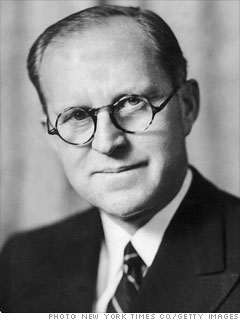 Forty-nine years ago last month JFK’s assassination brought the end of Camelot. Yet the Kennedy legacy and even the Kennedy Dynasty still continues. A political dynasty that was, at its core, the dream of one man. Joseph Patrick Kennedy the father of Jack, and Bobby and Teddy. Joseph Kennedy was a Zelig like character, whose impact was part of almost everything in the first half of the 20th century.
To the extent that the Kennedys have had a profound effect on this nation, then Joseph Kennedy was the progenitor of that impact. It’s worth taking a look at his remarkable, and complex life, as David Nasaw has done in The Patriarch: The Remarkable Life and Turbulent Times of Joseph P. Kennedy
My conversation with David Nasaw:
Tuesday Dec 04, 2012
Tuesday Dec 04, 2012
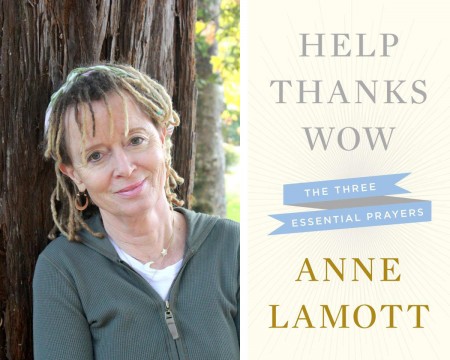 Faith today is a complicated business. There is organized religion, politics, irony and expectation. Yet, at its core it’s a simple idea. The notion that we don't have all the answers, that we should express gratitude for what we do have and that we can stop and smell the proverbial roses.
In these basic beliefs Anne Lamott has brought together in Help, Thanks, Wow: The Three Essential Prayers,
Faith today is a complicated business. There is organized religion, politics, irony and expectation. Yet, at its core it’s a simple idea. The notion that we don't have all the answers, that we should express gratitude for what we do have and that we can stop and smell the proverbial roses.
In these basic beliefs Anne Lamott has brought together in Help, Thanks, Wow: The Three Essential Prayers,
Monday Dec 03, 2012
Monday Dec 03, 2012
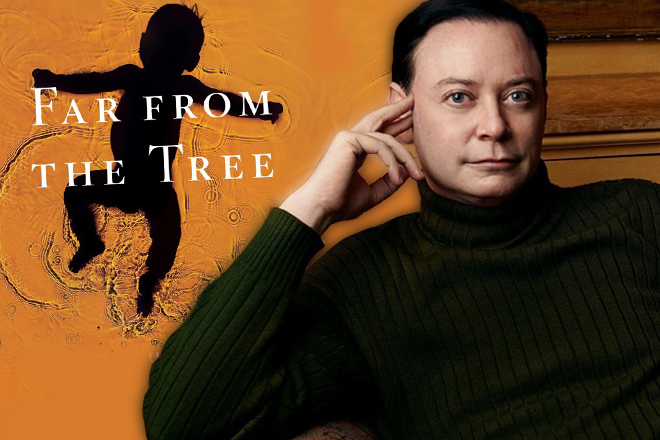 Once we were a nation defined by our sameness and by our homogenization. The Levittown like subdivisions, The Organization Man, The Man in the Grey Flannel Suit. Today we are a nation defined by our differences; from each other and from any kind of an artificial norm.
Yet the one difference we can’t ever seem to really grasp, is when our children are profoundly different from us. Where the apple does in fact, fall far from the tree.
We cling to the foundational idea that our children must do better than us. From 30k a year preschools, to endless driving to extra curricular activities. But what happens when this can’t be the case? When our children cannot live up to our ideal. When they have a physical or mental illness or a disability, or are just not the people we dreamt about. The answer is that we love them anyway! And this is the path that Andrew Solomon explores in Far From the Tree: Parents, Children and the Search for Identity
Once we were a nation defined by our sameness and by our homogenization. The Levittown like subdivisions, The Organization Man, The Man in the Grey Flannel Suit. Today we are a nation defined by our differences; from each other and from any kind of an artificial norm.
Yet the one difference we can’t ever seem to really grasp, is when our children are profoundly different from us. Where the apple does in fact, fall far from the tree.
We cling to the foundational idea that our children must do better than us. From 30k a year preschools, to endless driving to extra curricular activities. But what happens when this can’t be the case? When our children cannot live up to our ideal. When they have a physical or mental illness or a disability, or are just not the people we dreamt about. The answer is that we love them anyway! And this is the path that Andrew Solomon explores in Far From the Tree: Parents, Children and the Search for Identity
Tuesday Nov 27, 2012
Tuesday Nov 27, 2012
.jpg)
That's the story of Susannah Cahalan. She tell us her remarkable story in her memoir Brain on Fire: My Month of Madness
 .
.My conversation with Susannah Cahalan:
Tuesday Nov 20, 2012
Tuesday Nov 20, 2012
 Why are there so few big name woman chefs? How are they different than men in the kitchen? Why have both Julia Child and The Food Network done a disservice to women in the kitchen? Powerhouse food journalist Charlotte Druckman takes us behind the kitchen doors of some of some of the leading female chefs in Skirt Steak: Women Chefs on Standing the Heat and Staying in the Kitchen
My conversation with Charlotte Druckman:

Monday Nov 19, 2012
Monday Nov 19, 2012
 One of the many, but essential things that separates America and France are their attitudes toward love and sex; or as Joni Mitchell said, “in France they kiss on Main street,”
The French love, love. It occupies a special place in their pantheon of fashion, food, wine and sex. But how did this come to be? How is it that French, culture has come to embrace love in ways that set it apart from so many other western cultures?
Marilyn Yalom, a former professor of French and presently a senior scholar at Stanford, explains How the French Invented Love: Nine Hundred Years of Passion and Romance
One of the many, but essential things that separates America and France are their attitudes toward love and sex; or as Joni Mitchell said, “in France they kiss on Main street,”
The French love, love. It occupies a special place in their pantheon of fashion, food, wine and sex. But how did this come to be? How is it that French, culture has come to embrace love in ways that set it apart from so many other western cultures?
Marilyn Yalom, a former professor of French and presently a senior scholar at Stanford, explains How the French Invented Love: Nine Hundred Years of Passion and Romance
Wednesday Nov 14, 2012
Wednesday Nov 14, 2012
 It is, arguably, the civil rights issue of our times. Same sex marriage has also become one of the most politically volatile. It divides red and blue states, most profoundly divides generations and, perhaps more than any other single political issues, attitudes are changing as the recent elections in Maryland, Main and Washington showed us.
While polarized positions on issues like guns, death penalty, healthcare and immigration harden over time, in the case of gay marriage the public seems to be becoming more accepting. While we still wait to see if the US Supreme Court is going to take up California’s Prop 8, it’s clear that it will hear one of many cases on the issue of gay marriage. Because more than anywhere else the battle is being fought in the courts as well as the political battlefield.
Michael J. Klarman, is a Civil Rights historian as well as the Kirkland & Ellis Professor at Harvard Law School. He takes us inside the legal battle in From the Closet to the Altar: Courts, Backlash, and the Struggle for Same-Sex Marriage
It is, arguably, the civil rights issue of our times. Same sex marriage has also become one of the most politically volatile. It divides red and blue states, most profoundly divides generations and, perhaps more than any other single political issues, attitudes are changing as the recent elections in Maryland, Main and Washington showed us.
While polarized positions on issues like guns, death penalty, healthcare and immigration harden over time, in the case of gay marriage the public seems to be becoming more accepting. While we still wait to see if the US Supreme Court is going to take up California’s Prop 8, it’s clear that it will hear one of many cases on the issue of gay marriage. Because more than anywhere else the battle is being fought in the courts as well as the political battlefield.
Michael J. Klarman, is a Civil Rights historian as well as the Kirkland & Ellis Professor at Harvard Law School. He takes us inside the legal battle in From the Closet to the Altar: Courts, Backlash, and the Struggle for Same-Sex Marriage
Friday Nov 09, 2012
Friday Nov 09, 2012
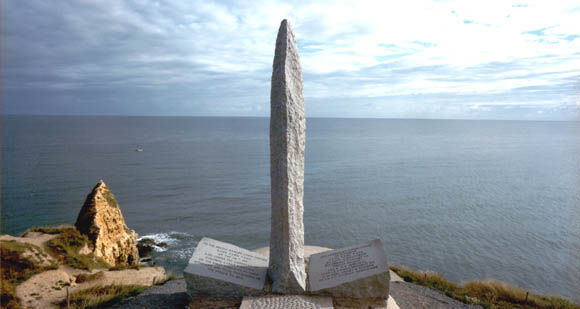 On June 6th 1984, Ronald Reagan gave one of his most powerful speeches marking “the Boys of Pointe du Hoc,” who took on one of the toughest missions of D-Day. Now, acclaimed military historian Patrick O’Donnell takes us up close and personal with these men who led the way across Europe.
O’Donnell has collected oral histories and has woven them together as the spine of his new work Dog Company. It shall forever preserve the men and their mission.
My conversation with Patrick K. O’Donnell:
On June 6th 1984, Ronald Reagan gave one of his most powerful speeches marking “the Boys of Pointe du Hoc,” who took on one of the toughest missions of D-Day. Now, acclaimed military historian Patrick O’Donnell takes us up close and personal with these men who led the way across Europe.
O’Donnell has collected oral histories and has woven them together as the spine of his new work Dog Company. It shall forever preserve the men and their mission.
My conversation with Patrick K. O’Donnell:
Monday Nov 05, 2012
Monday Nov 05, 2012
Thursday Nov 01, 2012
Thursday Nov 01, 2012
 Deep within the American DNA is the faith in rugged individualism. The idea that we are the captains of our fate and that what we accomplish is solely by our own initiative and the sweat of our own brow. The problem is the reality is far different. Much of this is simply because our origin story is so inconsistent with how America works and has worked.
That gap, lies at the heart of political debate in America today. It may very well be what this coming election turns on. Who made that, how do we recover from disasters, how do we solve problems and the role of government in the 21st century
Professor and historian Steven Conn sits at ground zero of the debate, at Ohio State University. He's the editor of a collection of essays To Promote the General Welfare: The Case for Big Government
Deep within the American DNA is the faith in rugged individualism. The idea that we are the captains of our fate and that what we accomplish is solely by our own initiative and the sweat of our own brow. The problem is the reality is far different. Much of this is simply because our origin story is so inconsistent with how America works and has worked.
That gap, lies at the heart of political debate in America today. It may very well be what this coming election turns on. Who made that, how do we recover from disasters, how do we solve problems and the role of government in the 21st century
Professor and historian Steven Conn sits at ground zero of the debate, at Ohio State University. He's the editor of a collection of essays To Promote the General Welfare: The Case for Big Government
Monday Oct 29, 2012
Monday Oct 29, 2012
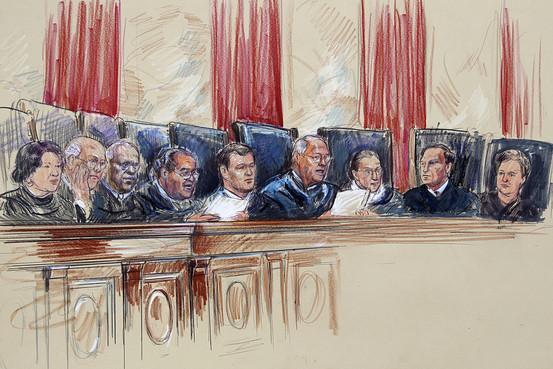 Perhaps more than at any other time in the history of the world, democracy is on the march. But the idea that people, individual citizens could engage in the practice of self government wasn't always so. In fact, it was only with the creation of our constitution, launched 225 years ago, that the idea was even appropriately articulated.
But that constitution as brilliant and profound and clever as it was, was not the be all and end all of democracy. It was a starting point from which we would develop laws, establish precedent, and nourish institutions which would provide the foundations of self government. Those things have grown to become, what Akhil Amar, the Sterling Professor of Law and Political Science at Yale, calls America's Unwritten Constitution.
My conversation with Akhil Amar:
Thursday Oct 25, 2012
Thursday Oct 25, 2012
 It was Scott Fitzgerald who said that "the rich are different than you and me." Today that difference goes a lot deeper. The very rich are very different! And that difference, that gap, is coming to define the future of America and of democracy.
Former Supreme Court Justice Louis Brandies got it exactly right when he said "you can have large amounts of money in the hands of the very few, or you can have democracy. You can’t have both."
Thompson Reuters digital editor Chrystia Freeland looks at this growing gap in Plutocrats: The Rise of the New Global Super-Rich and the Fall of Everyone Else
It was Scott Fitzgerald who said that "the rich are different than you and me." Today that difference goes a lot deeper. The very rich are very different! And that difference, that gap, is coming to define the future of America and of democracy.
Former Supreme Court Justice Louis Brandies got it exactly right when he said "you can have large amounts of money in the hands of the very few, or you can have democracy. You can’t have both."
Thompson Reuters digital editor Chrystia Freeland looks at this growing gap in Plutocrats: The Rise of the New Global Super-Rich and the Fall of Everyone Else
Wednesday Oct 24, 2012
Wednesday Oct 24, 2012
 This week we mark what was arguably the height of the Cold War, in the 50 anniversary of the Cuban Missile Crisis. That Cold War would, for years, permeate every aspect of our culture. The paranoia and anxiety of the period was perhaps most notably reflected in our films, and the divisions of the of the time were part and parcel of the industry that produced them.
One of our nations most distinguished film critics, J Hoberman looks at this connection between American movies and the Cold War in his new book An Army of Phantoms: American Movies and the Making of the Cold War
This week we mark what was arguably the height of the Cold War, in the 50 anniversary of the Cuban Missile Crisis. That Cold War would, for years, permeate every aspect of our culture. The paranoia and anxiety of the period was perhaps most notably reflected in our films, and the divisions of the of the time were part and parcel of the industry that produced them.
One of our nations most distinguished film critics, J Hoberman looks at this connection between American movies and the Cold War in his new book An Army of Phantoms: American Movies and the Making of the Cold War
Monday Oct 22, 2012
Monday Oct 22, 2012
Now it seems Netflix is under siege. Digital delivery has replaced the DVD rental model and we’ll see how all this plays out. Taking a look at this emblematic history is journalist Gina Keating, author of the much talked about book Netflixed: The Epic Battle for America's Eyeballs

My conversation with Gina Keating:
Friday Oct 19, 2012
Friday Oct 19, 2012
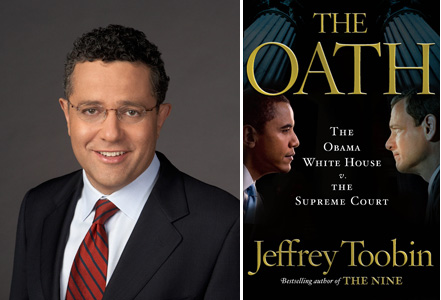 We are reminded every day how polarized our politics have become. The gap between the Republican and Democratic parties is wider than ever. The lack of bipartisanship is not because we have leaders of ill will, but because the gap in ideas and vision has become so wide.
This is reflected in our elections, in our news, in Congress and in the Supreme Court of the United States. Barack Obama, our 44th President and John Roberts, our 17th Chief Justice personify the apex of that divide.
This is the back drop for Jeffrey Toobin's new book The Oath: The Obama White House and the Supreme Court
Monday Oct 15, 2012
Monday Oct 15, 2012
 The longest serving US Senator from South Carolina made a career out of what he called “unreconstructed racism.” Arguing in a 1948 presidential campaign speech, that "there are not enough troops in the army to force the southern people to break down segregation,” but segregation did change, as did Thurmond.
When we look at the Republican party today we see that it has changed greatly in the past 50 years, particularly in the south and sun belt. Many of us attribute much of this to Nixon's “southern strategy.” But it was only after his death that the full complexity emerged about Thurmond’s role in creating what is, for better or worse, today's Republican party.
Joseph Crespino looks at all of this in his new look at Thurmond in Strom Thurmond's America
My conversation with Joseph Crespino:

Monday Oct 08, 2012
Monday Oct 08, 2012
 We are all part of networks. Facebook, Twitter, Pinterest, Instagram. All bring people together to share news, opinions and life. But in all this excitement about social networks, are we missing something? Why aren’t we using them to better decipher our collective national temperature and to better understand, appreciate and help each other? Rather than the “long tail” of technology pulling us apart as some claim, perhaps it really is the key to bringing us together. Perhaps only by using networks and crowdsourcing to bring us closer together, can we really see the gulf between us.
Steven B. Johnson, author of WHERE GOOD IDEAS COME FROM, points to the power of these peer networks in his new book Future Perfect: The Case For Progress In A Networked Age
We are all part of networks. Facebook, Twitter, Pinterest, Instagram. All bring people together to share news, opinions and life. But in all this excitement about social networks, are we missing something? Why aren’t we using them to better decipher our collective national temperature and to better understand, appreciate and help each other? Rather than the “long tail” of technology pulling us apart as some claim, perhaps it really is the key to bringing us together. Perhaps only by using networks and crowdsourcing to bring us closer together, can we really see the gulf between us.
Steven B. Johnson, author of WHERE GOOD IDEAS COME FROM, points to the power of these peer networks in his new book Future Perfect: The Case For Progress In A Networked Age
Tuesday Oct 02, 2012
Tuesday Oct 02, 2012
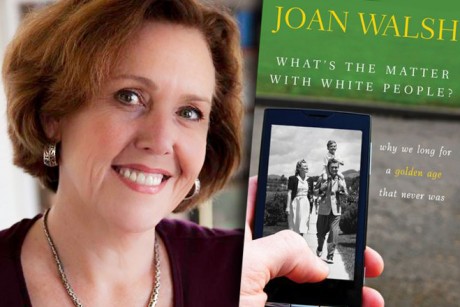 Back in 1980 Ronald Reagan rode into office on the strength of what were then called “Reagan Democrats.” Blue collar, less educated, middle class workers who, until Reagan, were part of the New Deal coalition.
Today, many of these voters are lost to the Democrats. And while President Obama certainly has done better with them than Al Gore or John Kerry, the culture war issues and the societal changes that they reflect, continue to drive a wedge between those voters and the Democratic party.
Joan Walsh, editor at large for Salon.com, and an MSNBC political analyst looks at this changing political landscape in What's the Matter with White People: Why We Long for a Golden Age That Never Was
My conversation with Joan Walsh:
Friday Sep 28, 2012
Friday Sep 28, 2012
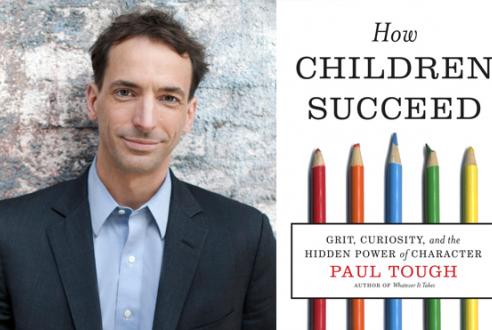 Why is it that poor children seem to do consistently worse academically than middle class kids? On the other hand, why do some wealthy children fail or breakdown while occasionally kids from the mean streets of urban neighborhood, can reach monumental heights of success?
Is it just IQ or temperament, or is there something else? Something that has to do with the innate character and perseverance of the child?
Paul Tough, who introduced many to the work of Geoffrey Canada and the Harlem Children's Zone and who is a contributing editor the NY Times Magazine, has spent a year reporting on what makes kids succeed and fail in school and in life. How Children Succeed: Grit, Curiosity, and the Hidden Power of Character,
Why is it that poor children seem to do consistently worse academically than middle class kids? On the other hand, why do some wealthy children fail or breakdown while occasionally kids from the mean streets of urban neighborhood, can reach monumental heights of success?
Is it just IQ or temperament, or is there something else? Something that has to do with the innate character and perseverance of the child?
Paul Tough, who introduced many to the work of Geoffrey Canada and the Harlem Children's Zone and who is a contributing editor the NY Times Magazine, has spent a year reporting on what makes kids succeed and fail in school and in life. How Children Succeed: Grit, Curiosity, and the Hidden Power of Character,
Thursday Sep 27, 2012
Thursday Sep 27, 2012
 Rahm Emanuel, the current Mayor of Chicago and the President's former Chief Of Staff said, during the height of the economic crisis "that you should never let a serious crisis go to waste." Obama did not. And now Time Magazine senior editor Michael Grunwald shows how the Obama administration heeded that advice.
Grunwald argues that the stimulus, that helped to save the US economy, a stimulus that we’re barely talking about in the context of the current election, was one of the most profound pieces of legislation since the New Deal. It is perhaps the 800 billion pound gorilla that is reshaping America..
My conversation with Michael Grunwald:
Wednesday Sep 26, 2012
Wednesday Sep 26, 2012
 My conversation with Randy Cohen:
Tuesday Sep 25, 2012
Tuesday Sep 25, 2012
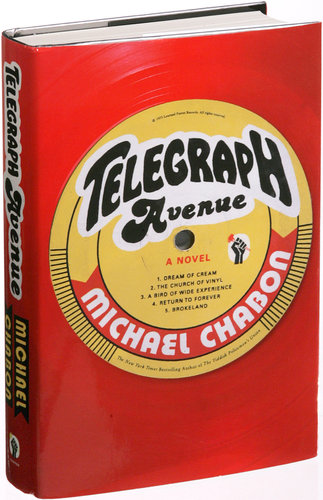 Set in 2004, in Berkeley, Michael Chabon's new novel, Telegraph Avenue, his first in five years, gives us characters trying to hold back the end of an era; a time when 70's values and ideas are fading into the sunset, and the full onslaught of the 21st Century is coming upon them.
My conversation with Michael Chabon:
Set in 2004, in Berkeley, Michael Chabon's new novel, Telegraph Avenue, his first in five years, gives us characters trying to hold back the end of an era; a time when 70's values and ideas are fading into the sunset, and the full onslaught of the 21st Century is coming upon them.
My conversation with Michael Chabon:
Thursday Sep 20, 2012
Thursday Sep 20, 2012
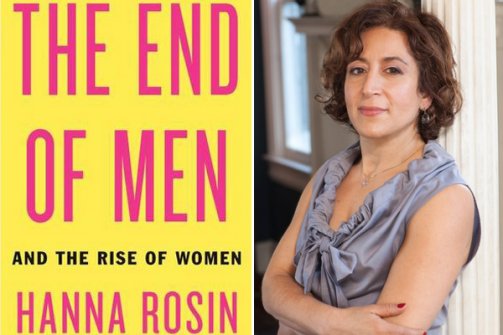
How did we get here and what does it mean for our future? In a way it’s a perfect storm. The changing nature of work, the move from an industrial to an information based economy, requiring a different set of skills, plus the social revolution of the 60's, the civil rights movement, title IX, and finally the failure, around the world, of patriarchy in all its forms, all played some part.
As a result, have we reached the end of 200,000 years of human history OR is this simply a mid course correction on the road to greater gender equality and the full flourishing of both sexes? Atlantic senior editor
Hanna Rosin brings it all into focus in her bestselling book The End of Men: And the Rise of Women
 .
.My conversation with Hanna Rosin:
Wednesday Sep 19, 2012
Wednesday Sep 19, 2012
 If there is any one problem that has run through the center of American foreign policy over the past 30 years, through five successive administrations, Republican and Democrat alike, it is the poisoned relationship with Iran
As students yelled “death to the Shah” in 1979, it set in motion a chain of events, an anti Americanism, that has become a part to the DNA of the country itself. Trying to understand it, and treat it has been one of the central pillars of our foreign policy. Yet with each successive treatment, the disease always threatens to burst out and become full blown. This is where we are once again, and why we need take a look as new book by the senior historian for the federal government, David Crist.
My conversation with David Crist about The Twilight War: The Secret History of America's Thirty-Year Conflict with Iran
Tuesday Sep 18, 2012
Tuesday Sep 18, 2012

 he painstakingly recreates the dramatic and unsettling history of how J. Edgar Hoover worked closely with then California Governor Ronald Reagan to undermine student dissent, arrest and expel members of Berkeley's Free Speech Movement, and fire the University of California's president, Clark Kerr.
My conversation with Seth Rosenfeld:
he painstakingly recreates the dramatic and unsettling history of how J. Edgar Hoover worked closely with then California Governor Ronald Reagan to undermine student dissent, arrest and expel members of Berkeley's Free Speech Movement, and fire the University of California's president, Clark Kerr.
My conversation with Seth Rosenfeld:
Monday Sep 17, 2012
Monday Sep 17, 2012
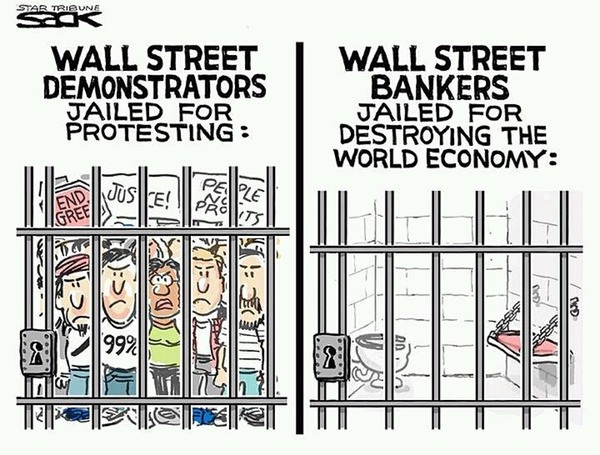 To date there has not been a single prosecution, much less a serious investigation into the events that brought the US economy to its knees. The SEC has not changed the rules, the Senate has repeatedly kowtowed to the big banks and "too big to fail" is still the name of the game.
Are these just random issues, or is Wall Street simply too powerful for any part of the government to take on? Or should it even try? Former White House and Senate staffer, Jeff Connaughton takes a look at all of this in The Payoff: Why Wall Street Always Wins
My conversation with Jeff Connaughton:
Friday Sep 14, 2012
Friday Sep 14, 2012

 , journalist Sasha Issenberg reveals the increasingly technical and micro-targeted tactics and strategies being employed by major political campaigns, including those of Barack Obama and Mitt Romney.
My conversation with Sasha Issenberg:
, journalist Sasha Issenberg reveals the increasingly technical and micro-targeted tactics and strategies being employed by major political campaigns, including those of Barack Obama and Mitt Romney.
My conversation with Sasha Issenberg:
Wednesday Sep 12, 2012
Wednesday Sep 12, 2012
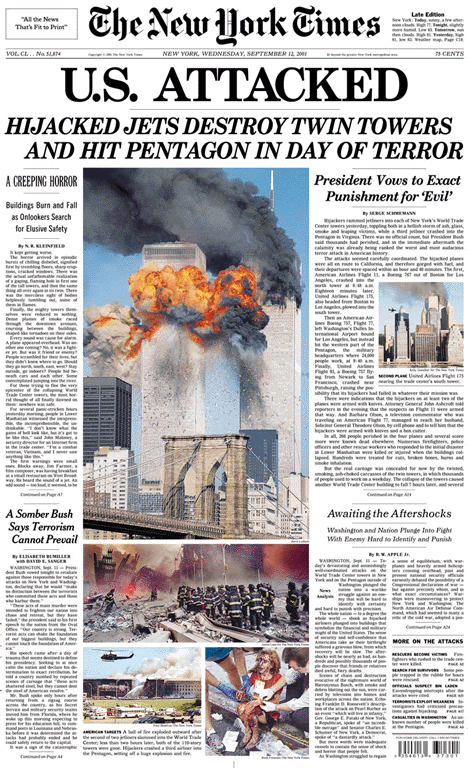 For eleven years U.S. foreign policy and even domestic attitudes about our place in the world, have been shaped by the reaction to the events of 9/11. But that reaction did not take place in a vacuum. In many ways, as we are coming to learn, the Bush administration's reaction was shaped by what they knew, when they knew it and what they did or did not do about it.
Further the mistakes made in the eighteen months after 9/11, created a kind of alternative universe in which policy was shaped not by real events, but by a perception of reality, shaped by repeated mistakes. This is the backdrop for prize winning and best selling author Kurt Eichenwald, in his new work 500 Days: Secrets and Lies in the Terror Wars
For eleven years U.S. foreign policy and even domestic attitudes about our place in the world, have been shaped by the reaction to the events of 9/11. But that reaction did not take place in a vacuum. In many ways, as we are coming to learn, the Bush administration's reaction was shaped by what they knew, when they knew it and what they did or did not do about it.
Further the mistakes made in the eighteen months after 9/11, created a kind of alternative universe in which policy was shaped not by real events, but by a perception of reality, shaped by repeated mistakes. This is the backdrop for prize winning and best selling author Kurt Eichenwald, in his new work 500 Days: Secrets and Lies in the Terror Wars
Monday Sep 10, 2012
Monday Sep 10, 2012
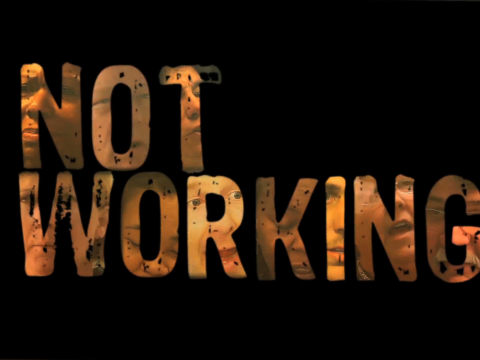
In the post-depression years, Studs Terkel in his seminal project, "Working," gave us the best picture yet of working men and woman. In so doing he raised popular oral history to an important and respectable level. He gave people a chance to talk and gave all of the country a chance to listen and better understand each other.
Today, it is those who are not working, who are experiencing the real personal pain of economic dislocation, that we must understand in order to better understand each other. DW Gibson, has traveled the country to compile and tell these powerful and unifying stories in his book Not Working: People Talk About Losing a Job and Finding Their Way in Today's Changing Economy
 Rather than the “long tail” of technology pulling us apart, as some claim, perhaps these stories really are the key to bringing us together.
My conversation with DW Gibson:
Friday Sep 07, 2012
Friday Sep 07, 2012
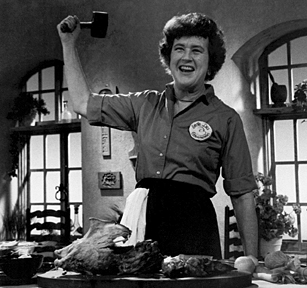 Today the Wine Country has become the Hollywood of celebrity chefs. But back in the 50’s there was no cooking channel, and their were no foodies. There were just TV dinners, tuna noodle casserole and the emergence of fast food culture.
 .
My conversation with Bob Spitz:
.
My conversation with Bob Spitz:Tuesday Sep 04, 2012
Tuesday Sep 04, 2012
 Almost every aspect of lives moves at rapid pace. We struggle to keep up. We’re told we have to keep up or get left behind. That to delay, is to procrastinate and that just may be the cardinal sin of the digital age.
But what if delay, be it a few seconds, a few weeks or more, helps us to make better decisions and achieve better outcomes? In life, in business, in the pursuit of happiness, delay may be our friend. Just maybe the procrastinators know something that we don’t. Law and Finance Professor Frank Partnoy explains in Wait: The Art and Science of Delay
My conversation with Frank Partnoy.
Thursday Aug 30, 2012
Thursday Aug 30, 2012


Wednesday Aug 29, 2012
Wednesday Aug 29, 2012
 People are often shocked by profanity, but after all, that’s the point. Profanity is a kind of social punctuation that we use when we need to shock, or describe in ways that other words just may not suffice. Perhaps few profanities today are as common or more attuned to our celebrity culture than the A-Word. A word that linguist Geoffrey Nunberg, in his new work Ascent of the A-Word: Assholism, the First Sixty Years
My conversation with Geoffrey Nunberg:
Friday Aug 17, 2012
Friday Aug 17, 2012
 I’ve often quoted the former head of Sun Microsystems, Scott McNeally who once said, almost a decade ago that, “there is no privacy, get over it.” And that was before Facebook, apps, Foursquare, location based retail, etc.
To a large extent this raises the issue of a generational divide regarding our attitudes about privacy. But what we don’t often think about is whether or not our attitudes about privacy are shaped by culture, economics and class. Harper's contribing editor Garret Keizer offers an interesting new anaylsis in his new book Privacy.
I’ve often quoted the former head of Sun Microsystems, Scott McNeally who once said, almost a decade ago that, “there is no privacy, get over it.” And that was before Facebook, apps, Foursquare, location based retail, etc.
To a large extent this raises the issue of a generational divide regarding our attitudes about privacy. But what we don’t often think about is whether or not our attitudes about privacy are shaped by culture, economics and class. Harper's contribing editor Garret Keizer offers an interesting new anaylsis in his new book Privacy. 